When Family Disputes Turn Legal: Understanding Probate Claims Through Form N2
The death of a loved one often brings families together, but inheritance disputes can tear them apart just as quickly. When beneficiaries, family members, or creditors believe a will is invalid, unfair, or incomplete, the legal system provides a formal mechanism to challenge it. Form N2, the probate claim form, serves as the gateway to these complex proceedings in England and Wales, transforming private family disagreements into matters for the courts to decide.
This specialised claim form differs significantly from standard civil litigation documents. It operates within the unique framework of probate law, where decades-old family relationships, mental capacity questions, and the final wishes of the deceased intersect with strict legal requirements. Understanding how to navigate this process can mean the difference between a successful challenge and a costly legal defeat.
The Legal Battleground: Types of Probate Disputes That Trigger Form N2
Probate claims encompass a surprisingly diverse range of legal challenges, each requiring different evidence and legal arguments. The most common disputes fall into several distinct categories, though many cases involve multiple overlapping issues.
Validity challenges form the backbone of probate litigation. These disputes question whether the will meets legal requirements or whether the deceased had the mental capacity to make it. Claims might argue the testator lacked testamentary capacity due to dementia, depression, or other mental health conditions. Alternatively, they may allege undue influence from family members, carers, or other parties who pressured the deceased into changing their will.
The legal test for testamentary capacity, established in Banks v Goodfellow, requires the testator to understand the nature of making a will, the extent of their property, and the claims of potential beneficiaries. Medical evidence often becomes crucial, with expert witnesses examining the deceased's mental state at the time of will-making.
Family provision claims represent another major category, where family members argue the will fails to make reasonable financial provision for them. The Inheritance (Provision for Family and Dependants) Act 1975 allows spouses, children, and other dependants to challenge wills that leave them inadequately provided for, regardless of the will's validity.
These claims require careful assessment of the claimant's financial needs, their relationship with the deceased, and the size of the estate. Courts consider factors including the claimant's age, physical or mental disability, conduct towards the deceased, and other obligations the deceased had.
Rectification and construction claims address situations where the will's wording doesn't reflect the deceased's true intentions. Perhaps the solicitor made an error in drafting, or ambiguous language creates uncertainty about beneficiaries or bequests. These technical disputes require detailed analysis of the testator's instructions and the circumstances surrounding the will's creation.
Decoding Form N2: Section-by-Section Navigation
Form N2's structure reflects the specialised nature of probate proceedings, with specific fields designed to capture the essential elements of inheritance disputes. Each section serves a particular purpose in establishing the court's jurisdiction and the claim's foundation.
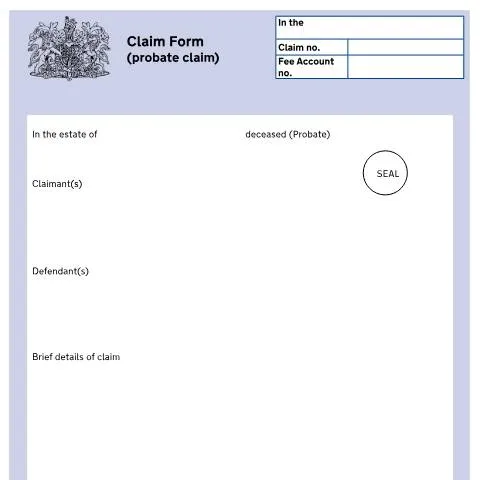
The case identification section requires careful attention to detail. The claim number remains blank initially, as the court assigns this upon issue, but the fee account number allows legal representatives to charge costs to pre-established accounts. The estate identification must precisely match probate records, using the deceased's full legal name and date of death.
| Required Information | Format/Details | Common Errors |
|---|---|---|
| Deceased's name | Full legal name as on death certificate | Using common names instead of legal names |
| Date of death | DD/MM/YYYY format | Incorrect date format or wrong date |
| Defendant details | Full names and addresses with postcodes | Incomplete addresses or missing executors |
The parties section demands strategic thinking about who to include as claimants and defendants. Claimants might include disappointed beneficiaries, excluded family members, or creditors. Defendants typically encompass the executors or administrators of the estate, but may also include beneficiaries who would lose out if the claim succeeds.
Deciding who to sue requires careful consideration of the Civil Procedure Rules and potential costs implications. Including unnecessary defendants increases legal costs, while omitting essential parties can lead to procedural complications or incomplete remedies.
The brief details of claim section provides the first substantive description of the dispute. This summary must be concise yet comprehensive enough to give defendants and the court a clear understanding of the issues. Common approaches include phrases like "Challenge to the validity of the will dated [date] on grounds of lack of testamentary capacity and undue influence" or "Claim for reasonable financial provision under the Inheritance Act 1975".
The Human Rights Act checkbox requires careful consideration in probate claims. While not commonly invoked, human rights arguments occasionally arise in inheritance disputes, particularly involving property rights under Article 1 of Protocol 1 or family life under Article 8. Most straightforward probate claims won't engage human rights issues, but complex cases involving discrimination or procedural fairness might.
Strategic Timing: When and How to Launch Your Probate Challenge
Timing in probate disputes operates under multiple overlapping deadlines, each carrying different consequences for delay. Understanding these timeframes is crucial for preserving your legal position and avoiding procedural pitfalls that could derail even strong substantive claims.
The six-month rule governs family provision claims under the Inheritance Act 1975. Claimants must generally issue proceedings within six months of the grant of representation (probate or letters of administration). This deadline is strict, though courts have discretion to extend time in exceptional circumstances.
Factors influencing extensions include the strength of the underlying claim, reasons for delay, prejudice to other parties, and the estate's current position. Courts are increasingly reluctant to grant extensions without compelling justifications, making early action essential for family provision claims.
Validity challenges don't face the same rigid six-month deadline, but practical considerations make swift action advisable. Evidence deteriorates over time, witnesses' memories fade, and estate assets may be distributed to beneficiaries. Once assets leave the estate, recovery becomes significantly more complex and expensive.
The caveat system provides a temporary protective mechanism. Lodging a caveat with the probate registry prevents grant of probate for six months, giving potential challengers time to investigate and prepare their case. Caveats can be renewed, but persistent use without genuine grounds may lead to court intervention.
Pre-action considerations often prove crucial in probate disputes. The Civil Procedure Rules require parties to attempt resolution before issuing proceedings, though the informal nature of many probate disputes means formal pre-action protocols may not apply strictly.
Effective pre-action steps include requesting disclosure of relevant documents (medical records, earlier wills, correspondence with the deceased), attempting mediation or family conferences, and clearly articulating the legal basis for the challenge. These steps not only comply with court expectations but may resolve disputes without expensive litigation.
The Paper Trail: Essential Documentation and Evidence Gathering
Successful probate claims depend heavily on documentary evidence, much of which may be difficult to obtain or interpret. Building a comprehensive evidence base requires systematic investigation across multiple sources, often involving sensitive family materials and confidential records.
Medical evidence forms the cornerstone of capacity challenges. GP records, hospital notes, consultant reports, and care home documentation all provide insights into the deceased's mental state around the time of will-making. However, medical records alone rarely provide definitive answers about testamentary capacity.
The key lies in correlating medical evidence with witness testimony about the deceased's behaviour and decision-making abilities. A diagnosis of dementia doesn't automatically invalidate a will if made during a lucid interval, while absence of medical records doesn't preclude capacity challenges if witness evidence suggests cognitive impairment.
Expert medical evidence often becomes necessary, with specialists in psychiatry, neurology, or geriatrics reviewing records and providing opinions on capacity. These experts must understand the legal test for testamentary capacity, not just medical definitions of mental impairment.
Contemporaneous documents carry particular weight in probate disputes. Letters, diary entries, emails, or text messages from around the time of will-making may reveal the deceased's intentions, concerns about family members, or evidence of pressure from others.
Bank records can show unusual transactions, particularly large gifts or changes in spending patterns that might indicate undue influence. Care home records may document visitors and their interactions with residents, potentially revealing attempts to influence will-making decisions.
Previous wills and drafts provide crucial context for validity challenges. Comparing different versions may reveal sudden, unexplained changes in beneficiaries or dispositions that support undue influence claims. Instructions to solicitors, attendance notes, and draft documents help establish the deceased's true intentions.
The solicitor's file often contains the most valuable evidence, including capacity assessments, notes of meetings with the testator, and correspondence about the will's preparation. However, obtaining these documents may require court orders if the solicitor claims legal professional privilege.
Courtroom Realities: What Happens After Filing Form N2
Once Form N2 reaches the court, probate claims follow a structured procedural pathway designed to manage these often emotionally charged disputes efficiently. The process differs from standard civil litigation in several important respects, reflecting the specialised nature of inheritance law.
Initial case management begins with the court's administrative processing of the claim form. The court assigns a case number and serves the claim on defendants, who then have 14 days to acknowledge service and 28 days to file a defence. However, probate cases often involve multiple parties with conflicting interests, making case management more complex than straightforward two-party disputes.
Defendants may include executors who take a neutral stance, beneficiaries who actively defend the will, and other family members with varying positions on the dispute. The court must coordinate responses from all parties while managing potential conflicts of interest, particularly when executors also benefit from the will.
Case management conferences play a crucial role in shaping probate litigation. These hearings allow judges to assess the dispute's complexity, identify key issues, and set timetables for evidence exchange. Judges often encourage alternative dispute resolution at this stage, recognising that family relationships may survive mediation better than adversarial litigation.
The court will typically order disclosure of relevant documents, including the deceased's medical records, previous wills, and correspondence with solicitors. This process can be extensive in probate cases, particularly where capacity challenges require detailed medical evidence or undue influence claims demand investigation of family dynamics over extended periods.
Expert evidence directions frequently become necessary in probate disputes. Medical experts may need to assess capacity, handwriting experts might examine disputed signatures, and property valuers could be required for estate assessment. The court manages expert evidence carefully, often directing joint experts to reduce costs and complexity.
Trial preparation in probate cases often involves extensive witness statements from family members, friends, carers, and professionals who knew the deceased. These witnesses must address not only factual matters but also their observations of the deceased's mental state and family relationships.
Financial Implications: Costs, Fees, and Economic Consequences
Probate litigation carries significant financial risks that extend beyond standard legal costs. The unique nature of estate disputes means unsuccessful parties may face liability for multiple sets of legal costs, while even successful claimants might find their victories pyrrhic if legal expenses exceed any benefit gained.
Court fees for Form N2 depend on the claim's value and complexity. The initial issue fee ranges from hundreds to thousands of pounds, with additional hearing fees and application fees accumulating throughout proceedings. Unlike some civil claims, probate disputes often involve multiple interim applications, each carrying separate fees.
The court fee structure recognises that probate claims may seek non-monetary remedies, such as declarations about will validity. However, family provision claims must be valued based on the financial provision sought, potentially triggering higher fees for substantial estates.
Legal costs in probate litigation can escalate rapidly due to the evidence-intensive nature of these disputes. Medical expert fees, document disclosure costs, and extensive witness preparation all contribute to mounting legal bills. Hourly rates for specialist probate solicitors typically exceed those for general litigation, reflecting the specialised knowledge required.
The court's approach to costs in probate cases follows established principles but with important variations. Unsuccessful claimants generally face liability for defendants' costs, but courts may make more nuanced orders reflecting the conduct of parties and the reasonableness of bringing or defending claims.
Estate-based cost orders represent a unique feature of probate litigation. In appropriate cases, courts may order that some or all legal costs be paid from the estate rather than by individual parties. This approach recognises that probate disputes often arise from ambiguities or deficiencies in the deceased's arrangements rather than unreasonable conduct by the parties.
Factors influencing estate-based costs orders include whether the deceased's actions contributed to the dispute, whether the claim raised important points requiring judicial determination, and whether all parties acted reasonably in their positions.
Beyond the Courtroom: Settlement, Mediation, and Family Dynamics
While Form N2 initiates formal legal proceedings, the majority of probate disputes resolve through negotiation or alternative dispute resolution rather than trial. Understanding these options and their implications helps parties make informed decisions about how to pursue their claims most effectively.
Family mediation offers particular advantages in inheritance disputes, where ongoing relationships may matter more than legal victories. Specialist probate mediators understand both the legal framework and the emotional dynamics that drive these conflicts. They can help families explore creative solutions that courts cannot order, such as staged payments, shared assets, or arrangements that preserve family connections.
Mediation also provides confidential discussions about family history, the deceased's intentions, and parties' real concerns without the adversarial atmosphere of litigation. These conversations often reveal underlying issues that legal proceedings might miss, such as feelings of exclusion, concerns about fairness, or practical needs that money alone cannot address.
Structured negotiations frequently prove more effective than traditional settlement discussions in probate cases. Rather than simple monetary offers, parties might consider complex arrangements involving property transfers, ongoing support obligations, or phased distributions that address different family members' needs.
Professional trustees or independent executors sometimes facilitate these discussions, providing neutral oversight of settlement implementation. Their involvement can reassure parties about compliance with agreements and provide ongoing administration for complex arrangements.
Deed of family arrangement represents the formal mechanism for implementing probate settlements. These documents allow beneficiaries to vary will provisions or intestacy rules, potentially achieving tax advantages while resolving disputes. However, deeds require careful drafting to ensure they achieve parties' intentions and comply with relevant legal requirements.
The two-year rule for inheritance tax purposes provides additional flexibility, allowing family arrangements made within two years of death to be treated as if specified in the original will. This can facilitate settlements that might otherwise create adverse tax consequences for the estate or beneficiaries.
Probate disputes reflect the intersection of law, family relationships, and human emotions at their most intense. Form N2 provides the formal gateway to legal resolution, but success requires more than completing paperwork correctly. It demands strategic thinking about evidence, timing, costs, and family dynamics, combined with realistic assessment of legal prospects and practical outcomes. Whether pursuing or defending probate claims, parties must navigate not only complex legal rules but also the lasting consequences for family relationships that survive long after court proceedings end.