When Court Enforcement Goes Wrong: Understanding Warrant Reissue Requests
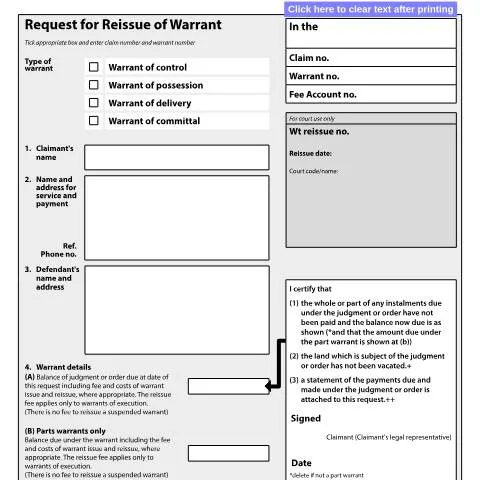
When a court bailiff fails to execute a warrant or when circumstances change after enforcement proceedings have begun, creditors and claimants often find themselves in a frustrating limbo. The judgment remains unpaid, the property remains undelivered, or the defendant continues to occupy premises despite a possession order. In these situations, Form N445 becomes the essential gateway back into the enforcement system, allowing parties to restart or redirect court-ordered recovery actions through HM Courts & Tribunals Service.
This mechanism addresses one of the most common bottlenecks in civil enforcement: what happens when initial attempts at execution fail or become outdated. Whether due to changed addresses, new information about a defendant's assets, or non-compliance with suspended orders, the reissue process provides a structured pathway to reinvigorate enforcement proceedings without starting the entire judgment process from scratch.
The Four Pathways: Types of Warrant Eligible for Reissue
Form N445 accommodates four distinct categories of enforcement warrants, each serving different recovery purposes and operating under specific legal frameworks. Understanding these distinctions proves crucial for determining both eligibility and the appropriate approach to reissue requests.
Warrants of Control: Asset Recovery and Enforcement
Warrants of control represent the most common type of enforcement action, authorising court bailiffs to seize and sell a defendant's goods to satisfy judgment debts. These warrants may require reissue when initial attempts prove unsuccessful due to incorrect addresses, concealed assets, or changed circumstances since the original warrant was issued.
The reissue process for control warrants involves specific fee implications, as the court charges for each reissue attempt. Claimants must calculate the outstanding balance including both the original judgment amount and accumulated enforcement costs, ensuring accurate financial disclosure in section 4(A) of the form.
Possession Warrants: Property Recovery Mechanisms
Possession warrants enforce court orders requiring defendants to vacate residential or commercial premises. These warrants frequently require reissue when initial enforcement attempts fail, particularly in cases involving suspended possession orders where defendants have breached agreed payment terms or occupancy conditions.
For possession warrant reissues, claimants must demonstrate that the property remains occupied contrary to the court order. The certification requirements in Form N445 specifically address this scenario, requiring confirmation that "the land which is subject of the judgment or order has not been vacated."
Delivery Warrants and Committal Orders
Warrants of delivery enforce orders requiring defendants to return specific goods or property to claimants, whilst committal warrants relate to enforcement actions that may result in imprisonment for contempt of court or non-compliance with court orders.
| Warrant Type | Primary Purpose | Reissue Fee Applied | Special Requirements |
|---|---|---|---|
| Control | Debt recovery through asset seizure | Yes | Updated asset information preferred |
| Possession | Property recovery/eviction | No | Occupancy status verification required |
| Delivery | Specific goods recovery | Varies | Current location details helpful |
| Committal | Contempt enforcement | No | Compliance status documentation |
Suspended Orders: The Payment Compliance Maze
Suspended possession orders create particularly complex scenarios for warrant reissue, as they involve ongoing payment obligations and conditional enforcement arrangements. When defendants fail to maintain agreed payment schedules or breach other terms of suspension, landlords and creditors must navigate specific evidential requirements to trigger warrant reissue.
Documentation Requirements for Suspended Orders
Form N445 mandates that applicants seeking reissue of suspended possession warrants must provide comprehensive payment statements showing both amounts due and payments actually received. This requirement reflects the court's need to verify genuine breaches of suspension terms rather than mere allegations of non-compliance.
The statement must detail all payment due dates, amounts expected, and actual payments received, creating a clear audit trail of compliance or breach. This documentation serves as the evidential foundation for the court's decision on whether reissue is justified and proportionate.
Timing Considerations for Suspended Order Breaches
The timing of reissue requests following suspected breaches of suspended orders can significantly impact success rates. Courts expect applicants to demonstrate reasonable attempts to resolve payment issues before seeking immediate enforcement, particularly in residential possession cases where tenant welfare considerations apply.
However, excessive delays in seeking reissue following clear breaches may prompt courts to question whether enforcement remains appropriate or whether circumstances have changed sufficiently to warrant reconsideration of the underlying order.
Calculating Financial Obligations: Balancing Judgments and Enforcement Costs
One of the most technically challenging aspects of Form N445 involves accurately calculating and presenting the financial position at the time of reissue request. The form's section 4 requires different approaches depending on whether the application relates to the full judgment amount or partial warrant enforcement.
Full Warrant Reissue Calculations
For standard reissue requests covering the entire outstanding judgment, applicants must calculate the total balance including the original judgment sum, accrued interest, previous enforcement costs, and the reissue fee itself. This cumulative approach ensures that all enforcement attempts recover the complete amount owed to the claimant.
The calculation must reflect the position at the date of the reissue request, accounting for any partial payments received since the original warrant was issued. Form N445 emphasises the importance of immediate notification to the court of any payments received after submitting the reissue request, preventing double recovery or enforcement confusion.
Part Warrant Complications
Part warrants, where enforcement targets only a portion of the total judgment debt, create additional complexity in financial calculations. Section 4(B) of Form N445 requires separate disclosure of the amount due under the specific warrant being reissued, alongside confirmation of the remaining balance after warrant satisfaction.
This dual calculation system allows courts to understand both the immediate enforcement target and the broader financial context, ensuring proportionate enforcement decisions and preventing excessive recovery attempts.
Strategic Timing: When Reissue Requests Make Commercial Sense
The decision to seek warrant reissue involves both legal and commercial considerations that extend beyond mere eligibility requirements. Successful applicants typically demonstrate clear strategic thinking about timing, cost-effectiveness, and realistic prospects of successful enforcement.
Address Intelligence and Asset Tracing
Many reissue requests stem from improved intelligence about defendant locations or assets discovered after initial enforcement attempts failed. Form N445's "Reasons for requesting reissue" section provides space for applicants to present new information that makes enforcement more likely to succeed.
Common scenarios include defendants relocating to known addresses, discovery of previously unknown assets, or changes in employment status that create new enforcement opportunities. Courts respond more favourably to reissue requests supported by concrete intelligence rather than speculative enforcement attempts.
Cost-Benefit Analysis for Ongoing Enforcement
The cumulative costs of multiple reissue attempts can quickly exceed the value of smaller judgment debts, making commercial assessment essential before proceeding. Whilst Form N445 itself carries relatively modest court fees, the associated bailiff costs and potential legal expenses create significant financial exposure for unsuccessful enforcement campaigns.
Experienced practitioners often recommend setting internal enforcement limits based on judgment values, pursuing reissue only where realistic prospects justify the additional investment in recovery proceedings.
Court Processing: From Application to Enforcement Authority
Once submitted, Form N445 enters the court's administrative processing system, where judicial officers assess the application against established criteria for warrant reissue. Understanding this internal process helps applicants prepare more effective submissions and manage realistic expectations about timescales and outcomes.
Judicial Assessment Criteria
Courts evaluate reissue requests against several key factors, including the completeness of financial disclosure, the reasonableness of enforcement attempts, and the proportionality of continued enforcement action. Applications demonstrating clear changes in circumstances or new enforcement opportunities typically receive more favourable consideration than routine resubmissions without additional justification.
The court's assessment also considers any representations from defendants, particularly in possession cases where human rights considerations may influence enforcement decisions. Form N445's requirement for detailed reasoning helps judicial officers balance competing interests and make informed enforcement decisions.
Administrative Processing and Warrant Activation
Approved reissue requests generate new warrant numbers and enforcement authority for court bailiffs, effectively resetting the enforcement timeline whilst preserving the underlying judgment. The court's administrative systems track reissue history, enabling judicial oversight of repeated enforcement attempts and identification of potentially problematic cases.
Successful applications typically result in warrant activation within 7-14 days of court processing, depending on local court workloads and the complexity of the underlying case. Applicants receive confirmation of the new warrant details and can expect bailiff contact regarding enforcement arrangements within a reasonable period thereafter.
Certification Requirements: Legal Declarations and Professional Responsibility
Form N445's certification section creates significant legal obligations for applicants and their representatives, requiring formal declarations about payment status, property occupation, and supporting documentation. These certifications carry potential consequences for false or misleading statements, making accuracy and honesty essential throughout the application process.
Professional Standards for Legal Representatives
Solicitors and other legal professionals completing Form N445 on behalf of clients must ensure compliance with professional conduct rules regarding accuracy and client instructions. The certification requirements create personal liability for representatives who sign declarations without proper verification of the underlying facts.
Best practice involves maintaining detailed client files documenting payment histories, enforcement attempts, and communications with defendants, providing evidential support for the certifications required in warrant reissue applications.
Consequences of Inaccurate Certifications
False certifications in Form N445 may result in warrant discharge, cost sanctions, or professional disciplinary proceedings against legal representatives. Courts take particular exception to misleading financial disclosures or incorrect statements about property occupation status, viewing such errors as undermining the integrity of the enforcement system.
The form's emphasis on immediate notification of post-application payments reflects judicial concerns about double recovery and enforcement abuse, requiring ongoing honesty throughout the reissue process rather than merely accurate statements at the point of application.
Beyond Reissue: Alternative Enforcement Strategies and Limitations
Whilst Form N445 provides an important enforcement tool, repeated reissue failures often indicate the need for alternative recovery strategies or realistic assessment of judgment enforceability. Understanding these broader options helps applicants make informed decisions about continued enforcement investment versus alternative approaches to debt recovery.
Alternative enforcement mechanisms include third-party debt orders, charging orders on property, and attachment of earnings orders, each offering different advantages depending on defendant circumstances and asset profiles. Some judgments may prove practically unenforceable despite multiple reissue attempts, requiring commercial decisions about write-offs or settlement negotiations.
The reissue process also provides valuable intelligence about defendant behaviour and asset positions, informing future enforcement strategy and helping creditors develop more sophisticated approaches to judgment recovery. Form N445 therefore serves not only as an immediate enforcement tool but as part of a broader strategic approach to civil debt recovery through the court system.
Understanding Different Types of Warrants Subject to Reissuance
The N445 form accommodates various categories of warrants that may require reissuance, each governed by distinct procedural requirements and timescales. Warrants of execution represent the most common category, typically issued following county court judgments where debtors have failed to satisfy monetary obligations. These warrants authorise High Court Enforcement Officers or county court bailiffs to seize and sell goods to recover debts, but they carry a statutory limitation period of twelve months from the date of issue.
When a warrant of execution expires without being executed—perhaps due to the debtor's temporary absence, insufficient goods on the premises, or administrative delays—creditors must seek reissuance rather than applying for a fresh warrant. The distinction proves crucial: reissuance maintains the original warrant's priority date, protecting the creditor's position against subsequent creditors who might otherwise leapfrog their claim through later but active warrants.
Fill in your form directly online
No printing: type your details into the boxes of the official form, tick, then download the PDF ready to send.
- 1Type into the form boxes
- 2Tick in one click
- 3Save and download the PDF
Warrants of possession present different complexities, particularly in housing cases where landlords seek to recover residential properties. These warrants, once issued by district judges following successful possession claims, authorise county court bailiffs to physically remove occupiers and restore possession to landlords. However, the six-month limitation period for possession warrants creates frequent reissuance scenarios, especially where tenants negotiate extended departure dates or where court bailiff availability constrains enforcement scheduling.
The N445 process for possession warrant reissuance includes specific safeguards reflecting the serious consequences of residential eviction. Courts may require updated evidence that service of notice remains valid, that no successful applications to suspend the warrant have been filed, and that the property remains in the same condition as when the original warrant was granted. Vulnerable occupiers—including families with young children, elderly residents, or individuals with documented health conditions—may trigger additional judicial scrutiny during the reissuance assessment.
Warrants of delivery apply to cases involving specific goods rather than monetary claims, typically arising from hire purchase disputes, retention of title claims, or conversion actions. These warrants authorise enforcement officers to seize particular items and deliver them to successful claimants. The reissuance process must demonstrate that the goods remain identifiable, accessible, and in substantially the same condition as when originally claimed.
Commercial creditors dealing with mixed warrant portfolios—combining execution, possession, and delivery elements—face particular challenges when multiple warrants against the same debtor expire simultaneously. The N445 form allows consolidated applications, but applicants must clearly distinguish between different warrant types and provide separate justifications for each category of reissuance sought.
Strategic Timing Considerations and Tactical Implications
The timing of N445 applications carries significant strategic implications that extend beyond mere administrative compliance. Pre-expiry applications—filed within the final weeks before warrant expiration—offer tactical advantages by maintaining continuous enforcement pressure on debtors while providing courts with fuller context about ongoing recovery efforts. Many experienced practitioners submit reissuance applications approximately six weeks before expiration, allowing time for court processing while preserving negotiation leverage with debtors who may be more amenable to settlement discussions under active warrant pressure.
However, post-expiry applications require more sophisticated justification, as courts must be satisfied that the delay in seeking reissuance was reasonable and that circumstances haven't materially changed to prejudice other parties. Common acceptable explanations include: debtor representations about imminent payment that proved false; seasonal business considerations affecting the debtor's ability to pay; ongoing settlement negotiations conducted in good faith; or administrative delays within the court system itself.
The six-month rule governing when courts may refuse reissuance applications creates particular pressure points. This discretionary power typically applies where creditors have shown no enforcement activity for extended periods, where debtor circumstances have fundamentally changed, or where reissuance would conflict with subsequent legal developments such as insolvency proceedings or successful applications for stays of execution.
Seasonal enforcement patterns significantly influence reissuance strategies, particularly for retail creditors dealing with consumer debts. Many practitioners avoid seeking possession warrant reissuance during December and January, recognising both the practical difficulties of enforcement during holiday periods and the increased judicial reluctance to authorise residential evictions in winter months. Conversely, commercial debt recovery often intensifies during these periods as businesses address year-end cash flow pressures.
The emergence of debtor asset tracing technologies has created new strategic considerations for warrant reissuance timing. Creditors who have identified previously unknown debtor assets—through updated credit reference searches, social media monitoring, or professional investigation services—may time their N445 applications to coincide with optimal enforcement opportunities. However, courts expect creditors to demonstrate that such intelligence gathering represents genuine enforcement effort rather than speculative fishing expeditions.
Cross-border enforcement considerations add complexity where debtors have relocated within the UK or moved assets between England and Wales, Scotland, or Northern Ireland. While county court warrants don't automatically extend across these jurisdictions, the N445 reissuance process may be the first step in establishing enforcement platforms for subsequent reciprocal enforcement applications under inter-UK protocols.
Common Pitfalls and Procedural Safeguards
The N445 reissuance process contains numerous procedural traps that can result in application rejection, wasted costs, or unintended prejudice to creditor positions. Incomplete warrant identification represents the most frequent error, where applicants provide insufficient detail about the original warrant's scope, limitations, or current status. Courts require precise warrant numbers, exact enforcement addresses, and clear descriptions of any partial execution that may have occurred since original issue.
Many applicants underestimate the importance of demonstrating continuous enforcement intent throughout the warrant's original life. Courts may reject reissuance applications where creditors cannot evidence reasonable enforcement efforts, such as instructing bailiffs, conducting debtor asset searches, or maintaining regular contact with enforcement agents. The mere passage of time without creditor action suggests abandonment of the enforcement process and undermines reissuance justification.
Conflicting court orders create particularly complex scenarios where debtors have successfully applied for stays of execution, time to pay orders, or instalment arrangements since the original warrant's issue. Creditors seeking reissuance must demonstrate either that such orders have been breached, that their terms have been satisfied, or that circumstances have changed sufficiently to justify setting aside previous arrangements. Failure to address existing court orders can result in automatic application rejection and potential adverse costs orders.
The change of circumstances doctrine requires careful navigation where debtor situations have evolved since original warrant issue. Courts possess inherent jurisdiction to refuse reissuance where debtors have entered formal insolvency processes, where enforcement would conflict with subsequent charging orders or third-party debt orders, or where the original judgment debt has been satisfied through alternative means not reflected in court records.
Service requirements for N445 applications vary depending on warrant type and debtor status. While many reissuance applications proceed without formal debtor notice—particularly for straightforward execution warrants—courts may require service where reissuance could prejudice debtor rights or where significant time has elapsed since original enforcement attempts. Practitioners must carefully assess whether their specific circumstances trigger mandatory service obligations to avoid procedural invalidity.
Costs protection strategies become crucial where reissuance applications face potential opposition or where courts indicate concern about the reissuance request. The Civil Procedure Rules' costs-shifting provisions generally apply to N445 applications, meaning unsuccessful applicants may face adverse costs orders covering debtor legal expenses. However, courts retain discretion to make protective costs orders or to limit costs exposure where creditors can demonstrate reasonable grounds for seeking reissuance despite ultimate application failure.
The interaction between data protection obligations and warrant reissuance creates emerging compliance challenges. Creditors must ensure that their continued retention and processing of debtor personal data remains lawful throughout extended enforcement periods. The UK GDPR's storage limitation principle may require creditors to demonstrate legitimate interests in maintaining enforcement records beyond typical retention periods, particularly where warrants have remained unexecuted for extended periods.
Multi-party creditor scenarios require sophisticated coordination where several creditors hold warrants against the same debtor or where enforcement affects jointly-owned assets. The N445 process may need to address priority disputes, proportionate recovery arrangements, or the impact of reissuance on other creditors' enforcement positions. Courts may require comprehensive disclosure about other known creditor interests to ensure that reissuance decisions don't inadvertently prejudice broader creditor arrangements.