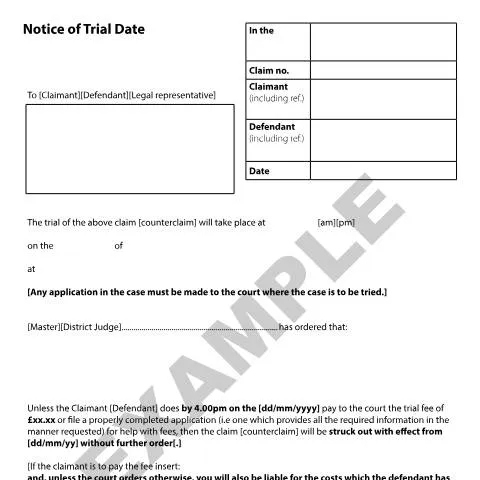
Navigating the Essentials of Form N172: Notice of Trial Date
The Form N172: Notice of Trial Date plays a pivotal role in the civil court process within the UK legal system, specifically under the jurisdiction of the HM Courts & Tribunals Service. For anyone involved in litigation, understanding the details encapsulated in this document is vital to ensure a smooth trial process. This guide will explore the intricacies of the form, elucidate its importance, and provide practical advice for its effective utilization.
Understanding the Context: When You Receive Form N172
Receiving a Notice of Trial Date can often feel daunting. This document signifies that your civil case is progressing to a critical phase: the trial. Here’s a breakdown of what you can expect:
- Who receives this notice? The form is sent to the claimant and defendant, as well as their legal representatives, ensuring all parties are informed of the trial date and details.
- What it indicates: It confirms that the court has scheduled a trial date, providing crucial details such as the date, time, and the judge assigned to the case.
- Legal implications: The notice serves as a reminder of upcoming obligations, such as payment of trial fees and the necessity to bring relevant documents to court.
Key Components of the Form
Form N172 contains several important sections, each delineating specific information that parties must pay attention to:
- Trial Date and Time: Clearly stated, this section dictates when the trial will commence.
- Fee Notification: The form outlines the necessity to pay a trial fee by a specified deadline, or risk having the claim struck out.
- Cost Implications: It warns that if the claim is not pursued, the claimant may still be responsible for costs incurred by the defendant.
- Judicial Oversight: The name of the presiding judge is included, signaling who will oversee the proceedings.
The Trial Fee: A Crucial Element
One of the most critical aspects of the Form N172 is its stipulation regarding the trial fee. Understanding this requirement can significantly affect how you prepare for your trial. Here’s what to keep in mind:
- Timeliness in Payment: Fees must be paid by the time indicated on the notice—failure to do so by the stipulated 4.00 pm deadline can lead to your claim being struck out without further notice.
- Fee Assistance: If you cannot afford the fee, the form provides an option to apply for help with court fees. It’s essential that your application is completed correctly to avoid complications.
- Non-Refundability: Be aware that trial fees are non-refundable. If the case settles prior to the trial date, the fee obligation is waived, but once paid, it cannot be reclaimed.
Practical Steps Following Receipt of Form N172
Upon receiving the Notice of Trial Date, several practical steps should be taken:
- Verify Details: Check the date and time of the trial, ensuring that no conflicts exist with your schedule.
- Prepare Documentation: Gather all relevant documents and evidence that you intend to present at trial. This may include contracts, correspondence, and witness statements.
- Consult Your Legal Representative: If you have legal counsel, discuss the implications of the trial date and strategize on trial preparation.
Connecting the Dots: Interplay with Other Court Documents
The Notice of Trial Date does not exist in a vacuum; it is part of a broader legal framework. Understanding how it interacts with other forms and documents is essential:
- Form N1: This is the claim form that initiates proceedings. The Notice of Trial Date serves as the next step in the process, confirming that your claim has reached trial status.
- Form N244: If a party wishes to make an application to the court during the trial, such as an application for an adjournment, they may use this form.
- Pre-Trial Checklists: In some instances, parties may be required to complete a pre-trial checklist to ensure all necessary preparations are in place before the trial date.
Understanding Limitations of the Form
While the Notice of Trial Date is a significant document, it has its limitations. Some points to consider include:
- No Detailed Instructions: The document does not provide extensive guidance on trial procedures or what to expect in court.
- Non-Refundability of Fees: As previously mentioned, once paid, the trial fee is non-refundable, regardless of the case outcome.
- Strict Deadlines: The requirement to pay trial fees by a specific deadline leaves little room for flexibility; missing this deadline can have dire consequences for your claim.
Essential Terminology for Navigating the Legal Landscape
To effectively navigate the implications of the Form N172, familiarity with legal terminology is beneficial. Here’s a glossary of key terms that may appear within the document and during the trial process:
| Term | Definition |
|---|---|
| Claimant | The party bringing the case to court. |
| Defendant | The party defending against the claim. |
| Trial Fee | The fee required to be paid in order for the trial to proceed. |
| Strike Out | The court's action to dismiss a claim from the register. |
| Fast Track | A court procedure designed to expedite lower-value claims. |
Preparing for Possible Outcomes at Trial
As you approach the trial date indicated in your Form N172, it's imperative to prepare for various outcomes. Here's how you can best position yourself:
- Know Your Case: Familiarize yourself with every aspect of your claim or defense. Anticipate questions and counterarguments.
- Cost Preparation: Prepare to discuss costs incurred during the proceedings. This is particularly important in fast track cases where costs are assessed at trial.
- Settlements: Consider the possibility of settling before the trial date, as this can save time and resources.
Conclusion: Your Action Points Post-Form N172
Receiving the Form N172: Notice of Trial Date is a significant milestone in the journey through the legal system. It requires swift action and clear understanding of your responsibilities:
- Pay or apply for help with the trial fee by the deadline outlined.
- Prepare your case with all relevant documents and evidence.
- Consult your legal advisor to refine your strategy ahead of the court date.
By comprehensively understanding the form and its implications, you position yourself favorably for your upcoming trial, fostering a proactive approach to navigating the complexities of the UK legal system.
Understanding the Purpose of Form N172 in Civil Proceedings
Form N172 serves as a crucial step in the civil litigation process within the UK. It is used to notify involved parties of the trial date, marking a significant progression in the court proceedings. This form is particularly pertinent in civil matters, where participants need clear and formal communication regarding the scheduling of their court appearance. The notice ensures that all parties can adequately prepare for the trial by knowing when it will take place.
Fill in your form directly online
No printing: type your details into the boxes of the official form, tick, then download the PDF ready to send.
- 1Type into the form boxes
- 2Tick in one click
- 3Save and download the PDF
The significance of the trial date cannot be overstated. It defines the timeline for all pre-trial activities, including the submission of evidence and witness statements. Failing to comply with the deadlines associated with Form N172 can lead to adverse results, such as the dismissal of a claim or a judgment being made in default.
Who Needs to File Form N172 and When?
The obligation to file Form N172 typically lies with the claimant, although it can also be the responsibility of the court depending on specific circumstances. Understanding who is responsible for this form hinges on the nature of the case and the court's directions. It is essential to identify the correct party to ensure compliance with the procedural rules.
Key considerations regarding the timing of filing include the stage of the proceedings. The form should be submitted after the case has been allocated to a specific track, usually during the pre-trial stage. The court will issue directions that dictate the timeline for submitting Form N172, which must be adhered to strictly. If the form is submitted late, it may result in further delays and complications in the case.
The Implications of Failing to Respond to Form N172
Failure to respond appropriately to Form N172 can lead to severe consequences. If a party does not adhere to the notice, they may risk missing the trial date entirely. This absence can lead the court to proceed in their absence, often resulting in a judgment that could be unfavorable. For instance, in cases where the defendant fails to appear, the court may rule in favour of the claimant by default, potentially awarding damages without the defendant's input.
Moreover, ignoring the notice can negatively affect a party's ability to appeal any decisions made at the trial. The court may interpret the lack of response as a waiver of the right to contest the proceedings. Consequently, it is crucial for all parties involved to be vigilant and proactive in responding to the notice issued through Form N172. Engaging with the court in a timely manner can safeguard one's interests, ensuring they do not miss the opportunity to present their case effectively.