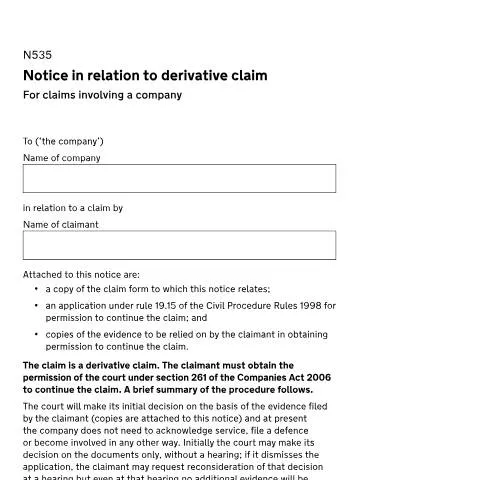
Understanding the Derivative Claim Process: An In-Depth Examination of Form N535
When navigating the intricate landscape of corporate law in the UK, understanding how to initiate a derivative claim is essential for both claimants and companies. Form N535 facilitates the legal process surrounding derivative claims — actions taken on behalf of a company by its shareholders. This article breaks down the components of the Notice in relation to a derivative claim, focusing on how to effectively utilise it and what to expect during the process.
The Context of Derivative Claims in UK Law
Derivative claims serve as a significant legal tool, particularly for minority shareholders who believe that a company's directors have wronged the company itself. Under the Companies Act 2006, derivative claims can address grievances such as mismanagement or breaches of fiduciary duty by the company's directors.
These claims are vital because they ensure that directors can be held accountable for their actions, protecting the interests of the company and its shareholders. The process outlined in Form N535 allows claimants to secure the court's permission before proceeding, reflecting the serious nature of such claims.
Key Features of Form N535
- Claim Form Attachment: The claimant must attach a copy of the claim form that this notice relates to, which sets the foundation for the court's review.
- Application for Permission: The claim involves an application under rule 19.15 of the Civil Procedure Rules 1998 seeking permission to continue the derivative claim.
- Evidence Submission: The claimant is required to provide copies of the evidence that supports the request for permission, forming the basis for the court’s initial assessment.
How to Navigate the Derivative Claim Process
Beginning a derivative claim can feel daunting, but understanding the steps involved can simplify the process. Here’s a structured approach to utilising Form N535 effectively:
Step 1: Preparing Your Documentation
- Compile Evidence: Gather all relevant evidence that substantiates the claim. This may include emails, financial reports, meeting minutes, and any other documentation that highlights the alleged wrongdoing by the directors.
- Complete the Claim Form: Ensure that the claim form clearly states the basis of the derivative claim, including specific instances of director misconduct.
- Fill Out the N535 Form: Accurately complete Form N535 by providing all necessary details about the company, claimant, and the nature of the claim.
Step 2: Submitting Your Application
Once all documentation is prepared, the next step is to submit your application to the court. The court will review your request based on the attached evidence and documents.
Step 3: Awaiting Court Decisions
The court’s initial decision is crucial:
- If the court finds that sufficient evidence has been presented, it will allow the claim to proceed. The company will then have an opportunity to respond.
- If the application is dismissed, the claimant can request a hearing for reconsideration but must bear in mind that no new evidence will be taken into account during this hearing.
Who Should Use Form N535?
Form N535 is indispensable for any shareholder contemplating a derivative claim against a company. Typically, this includes:
- Minority Shareholders: Individuals holding a small percentage of shares who may not have the power to influence company decisions directly.
- Companies Facing Allegations: Those who have been accused of mismanagement or breaches that warrant a derivative claim.
- Legal Representatives: Solicitors or legal advisors dealing with corporate disputes involving shareholder actions.
Common Procedural Questions Regarding Form N535
Understanding the procedural aspects is critical for smooth navigation through the derivative claim process. Below are common queries that arise:
What Happens If the Claim is Dismissed?
If the court dismisses the application, the claimant has the right to request a hearing for reconsideration. However, it is crucial to emphasise that only the evidence provided with the initial application will be considered. Therefore, ensuring that your submission is comprehensive is imperative.
Do Companies Need to Acknowledge Service?
Initially, companies involved in a derivative claim do not need to acknowledge service or file a defence. The court typically assesses the application based solely on the documents submitted by the claimant.
What Factors Does the Court Consider?
As outlined in Section 263 of the Companies Act 2006, several factors influence the court’s decision:
- The likelihood of success in the claim.
- The best interests of the company as a whole.
- The nature of the harm and potential repercussions for the company.
The Limitations of Form N535
Despite its importance, Form N535 is not without its constraints. Understanding these limitations can help manage expectations during the process:
Scope of Claims
Form N535 is specifically designed for derivative claims initiated by shareholders. It does not apply to other types of legal actions, such as personal claims against directors or disputes that do not involve the company’s interests.
No New Evidence During Reconsideration
If the initial application is dismissed and the claimant opts for a hearing, it is crucial to note that no additional evidence can be introduced at this stage. This places a significant emphasis on the quality and thoroughness of the initial submission.
Continuous Communication with the Court
Throughout the derivative claim process, communication with the court is essential. The court will notify the company regarding the progress and outcomes at each stage, ensuring transparency. This communication also highlights the importance of keeping track of timelines and procedural requirements.
Understanding Court Orders
Should the court find merit in the initial application, it may adjourn the application, allowing the company the opportunity to present its evidence and respond to the claims. The court will then issue any necessary orders based on its findings.
Key Takeaways for Claimants
Filing a derivative claim requires careful attention to detail and adherence to procedural rules. Below are essential takeaways for claimants looking to utilise Form N535 effectively:
- Thorough Documentation: Ensure all evidence supporting the claim is well-organised and relevant.
- Understand the Legal Framework: Familiarise yourself with the Companies Act 2006 and Civil Procedure Rules to navigate the claims process adeptly.
- Monitor Communication: Stay informed about court notifications and be prepared to respond promptly to any requests or directives.
Navigating the Complexities of Corporate Governance
In the realm of corporate governance, derivative claims represent a crucial means for shareholders to seek redress. By utilising Form N535, claimants can take proactive steps to hold directors accountable and protect their investments. Understanding the nuances of the claims process — from the initial evidence collection to potential court hearings — empowers shareholders to act decisively in safeguarding their interests within the corporate framework.
Ultimately, while the derivative claim process may pose challenges, being well-informed about the nuances of Form N535 and the overall procedure can significantly enhance the likelihood of a successful outcome.
Understanding the Derivative Claim Process
In the UK, a derivative claim is a unique legal mechanism that allows shareholders to initiate proceedings on behalf of a company where the company itself has suffered a wrong, typically due to the actions of its directors. The process is governed by the Companies Act 2006, particularly under sections 260 to 264. A derivative claim can be initiated when the directors are unwilling or unable to act, and it seeks to protect the interests of the company, rather than the personal interests of the shareholders.
The essence of a derivative claim is to uphold the principle that a company is a separate legal entity. Therefore, any wrongdoing must be addressed through the company’s own legal actions, unless shareholders step in. This intervention is vital for ensuring accountability among directors and safeguarding the company's assets. It’s important to note that derivative claims are not straightforward; several conditions must be satisfied before proceeding.
One of the first steps in the derivative claim process involves obtaining permission from the court to proceed, which generally requires a robust evidentiary basis. The court will assess whether the claim is in the best interests of the company before granting permission, and this stage can significantly influence the outcome. Shareholders contemplating a derivative claim should consult legal advisors to ensure that they have a well-founded case that meets the necessary legal criteria.
Completing Form N535: Key Considerations
Form N535 is a critical document in the context of initiating a derivative claim within the UK legal framework. The form itself is designed to facilitate the process by capturing essential information about the claimant, the company involved, and the nature of the claim being pursued. Completing this form accurately is a vital step in the journey towards obtaining court permission to proceed with a derivative claim.
When filling out Form N535, it is essential to provide comprehensive details regarding:
- The basis of the claim: Clearly articulate the alleged wrongdoings by the company’s directors and how these actions have adversely impacted the company itself.
- Your status as a shareholder: Include evidence of your shareholding status, such as share certificates or statements from the company’s register of members.
- Details of previous resolutions: If any attempts were made to resolve the issue before resorting to legal action, these should be documented. This demonstrates to the court that the claimant has made an effort to resolve the dispute amicably, which may influence the court's decision.
Moreover, it is critical to adhere to deadlines when submitting Form N535, as delays may impede the claim’s progress. The form must be filed with the appropriate court, typically the High Court of Justice, and accompanied by the requisite fees. Consulting with a legal professional during this stage can ensure that all elements are adequately addressed and that the form complies with the necessary legal standards.
The Role of Legal Representation in Derivative Claims
Engaging legal representation is invaluable when navigating the complexities of derivative claims. While it is possible for shareholders to represent themselves, the intricacies of the law and court procedures often necessitate expert guidance. Legal professionals specializing in corporate law can provide crucial assistance throughout the entire process, including the preparation of Form N535 and representing the claimant in court hearings.
A solicitor experienced in this area can help in several ways:
- Assessment of Validity: They can critically assess whether the grounds for the derivative claim are valid and if there is sufficient evidence to persuade the court to grant permission.
- Drafting and Filing Documents: Legal experts can ensure that all paperwork, including Form N535 and any accompanying documentation, is accurately completed and submitted within required deadlines.
- Strategic Guidance: Understanding the potential outcomes of a derivative claim and strategizing accordingly is best done with professional legal insight. A solicitor can advise on how to present the case effectively, including potential settlement negotiations or alternative dispute resolution options.
- Representing at Hearings: Should the matter proceed to court, having legal representation ensures that your interests are effectively advocated. Solicitors are skilled in legal argumentation and can navigate the courtroom environment far more effectively than a layperson.
Overall, while the cost of legal representation may seem daunting to some shareholders, the potential benefits of having skilled counsel far outweigh the risks of attempting to navigate the derivative claim process without professional support. Legal advisors can also provide insights into funding options, including conditional fee agreements, which may alleviate some financial pressures.