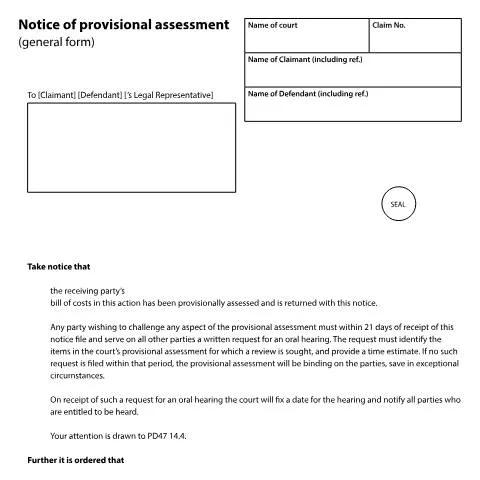
Understanding the Notice of Provisional Assessment Form N253A
The Form N253A is a crucial document in the UK legal system, specifically within the purview of the HM Courts & Tribunals Service. This notice is issued when a bill of costs submitted in a case has been provisionally assessed. Receiving such a notice signals the next steps involved in challenging or accepting the assessment. Comprehending the implications of this document can significantly affect the outcome of legal proceedings.
Key Elements of the Provisional Assessment Notice
This notice encapsulates several vital aspects that parties engaged in legal disputes must grasp:
- Parties Involved: The notice is directed to the claimant, defendant, or their legal representatives, establishing who is responsible for responding to the contents.
- Timeframe for Challenge: It explicitly states that parties wishing to contest the provisional assessment have a strict deadline of 21 days from receiving the notice to file a written request.
- Review Protocol: The request must detail which items from the court’s assessment are being challenged, accompanied by a time estimate for the oral hearing.
- Consequences of Inaction: If no request is made within the stipulated time, the provisional assessment stands as binding unless exceptional circumstances arise.
Decoding the Legal Jargon
Understanding the terminology used in the N253A notice is essential to navigate the process effectively. Here are some terms that often cause confusion:
- Provisional Assessment: This refers to the court's preliminary determination of costs, which is subject to challenge within the prescribed timeframe.
- Oral Hearing: A formal court session where parties can argue their positions regarding disputed items in the cost assessment.
- Bill of Costs: A detailed account of the costs incurred in legal proceedings, which the receiving party must submit upon acceptance of the provisional assessment.
Steps Following Receipt of the N253A
Upon receipt of the N253A notice, parties are faced with several pivotal decisions. Here’s a step-by-step approach to navigate this process:
- Review the Provisional Assessment: Closely examine the details provided in the notice, particularly the assessed amount and the rationale behind it.
- Decide on Action: Determine whether to accept the assessment or challenge it based on the merits of the case.
- Prepare the Request for Oral Hearing: If opting to challenge, draft a clear and detailed request identifying specific disputed items and an appropriate time estimate for the hearing.
- File and Serve the Request: Ensure that the request is filed with the court and served to all other parties within the 21-day deadline.
- Attend the Hearing: If an oral hearing is scheduled, be prepared to present arguments and evidence to support the challenge against the provisional assessment.
Interplay with Other Legal Documents
The N253A notice does not exist in isolation; it interacts with a range of other legal documents and procedures:
| Document | Description |
|---|---|
| Form N254 | Application for a costs order, often used before the assessment stage. |
| Form N263 | Request for a review of a costs order, used when appealing cost decisions. |
| Practice Directions (PD47) | Guidance notes providing detailed procedures concerning costs assessments. |
Understanding the interrelation of these documents can aid in crafting a robust legal strategy.
Who Needs to Engage with This Document?
The N253A notice is particularly relevant for various stakeholders in the legal system:
- Claimants: Who may have received a bill of costs following a successful claim and must assess if they wish to challenge the costs.
- Defendants: Who may find themselves liable for costs and need to understand their options regarding the provisional assessment.
- Legal Representatives: Solicitors and barristers who must advise their clients on the implications of the notice and assist in preparing a response.
The Significance of Timeliness and Procedural Compliance
Adherence to timelines is paramount in legal proceedings. The 21-day window for challenging a provisional assessment is not merely a suggestion; it is a strict requirement:
- Consequences of Delay: Failure to act within this period can result in the loss of the right to contest the assessment, binding the parties to the court’s decision.
- Exceptional Circumstances: While there are limited grounds for challenging a binding assessment after the deadline, these scenarios are rare and often require substantial justification.
Legal representatives should stress the importance of timely responses to their clients, reinforcing the need for strategic planning post-receipt of the N253A notice.
Conclusion: Navigating the Challenges Ahead
The receipt of the N253A Notice of Provisional Assessment can be a pivotal moment in legal proceedings, marking a transition to critical decisions about the costs involved. Parties are urged to engage with the notice comprehensively, understanding not just the content but the strategic implications of their choices. By staying informed and proactive, claimants and defendants alike can effectively navigate the procedural landscape that follows this important document.
Ultimately, the N253A serves as a reminder of the complexities involved in legal cost assessments and the importance of meticulous attention to detail throughout the litigation process.
Understanding the Provisional Assessment Process
The provisional assessment process is a crucial element in managing disputes regarding income tax and self-assessment in the UK. It's essential to grasp not just the form itself, Form N253A Notice of Provisional Assessment, but also the broader context of when and why a provisional assessment might occur. A provisional assessment is typically issued when HMRC believes that an individual or business has understated their income or has not submitted a complete tax return.
The provisional assessment allows HMRC to estimate the tax owed based on available information, which might include previous years’ tax returns or other financial data. Key scenarios that might trigger this include failure to submit a Self Assessment tax return by the deadline (31 January), or HMRC querying reported figures based on discrepancies or unusual patterns in financial activity. In such cases, HMRC is obliged to inform the taxpayer of the estimated amount through the Notice of Provisional Assessment.
It is imperative to respond adequately to a Notice of Provisional Assessment. Taxpayers typically have the right to challenge the provisional assessment by providing additional evidence or information that supports their tax position. If the provisional assessment is not contested, the estimated tax becomes payable, potentially leading to penalties or interest charges if the actual tax owed differs significantly from the provisional amount.
Fill in your form directly online
No printing: type your details into the boxes of the official form, tick, then download the PDF ready to send.
- 1Type into the form boxes
- 2Tick in one click
- 3Save and download the PDF
Common Mistakes When Completing Form N253A
Filing Form N253A can be daunting, especially for those unfamiliar with tax regulations or who are filing for the first time. One common mistake is failing to provide all requested information, which can lead to delays or incorrect assessments. Accurate record-keeping is essential to ensure that all relevant financial data is included when filling out the form. In particular, taxpayers should pay careful attention to ensuring that their National Insurance number is correctly entered; this is crucial for HMRC’s identification and processing of the claim.
Another frequent error is misunderstanding the deadlines associated with provisional assessments. Taxpayers must be aware that after receiving Form N253A, they generally have 30 days to respond with any additional information or contest the provisional assessment. Missing this deadline can result in the provisional amount being finalized, which may not reflect the true tax liability of the taxpayer.
Additionally, individuals may misinterpret the implications of a provisional assessment. It’s important to note that just because HMRC has issued a provisional assessment does not mean that the tax owed is final. Taxpayers have the right to present their case and provide evidence to dispute the figures. Being proactive in addressing provisional assessments can prevent further complications, such as appeals or additional audits.
The Impact of Provisional Assessments on Future Tax Returns
Understanding how provisional assessments affect future tax returns is vital for accurate financial planning. When a provisional assessment is issued, it creates an obligation for the taxpayer—this amount will often be deducted from future tax liabilities once the final tax return is submitted and assessed.
Moreover, a provisional assessment can influence a taxpayer's future interactions with HMRC. If a taxpayer consistently receives provisional assessments, it could indicate to HMRC that there may be an ongoing issue with compliance or accuracy in reporting. This can lead to increased scrutiny in future tax years, potentially resulting in more frequent audits or requests for information.
Furthermore, taxpayers should be mindful that any adjustments made following a provisional assessment can affect how future tax returns are prepared. For instance, if a taxpayer successfully contests a provisional assessment and the amount owed is adjusted, it may impact the reported figures in subsequent tax returns, particularly if similar situations arise. This emphasizes the importance of maintaining thorough records and clear communication with HMRC throughout the entire process.