Navigating the Appeals Process: Understanding the Form D259
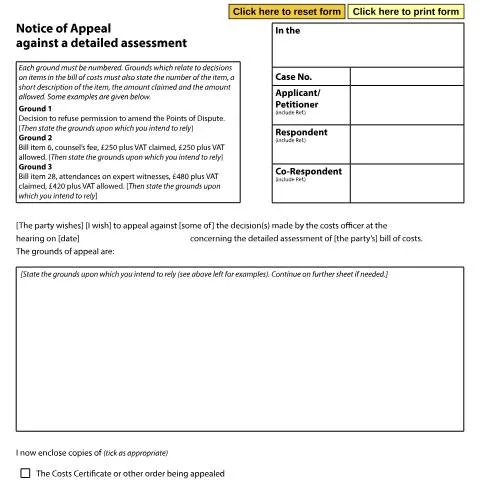
Encountering a detailed assessment in legal proceedings can be a daunting experience, especially when financial matters are at stake. When a party disagrees with the costs determined by a Costs Officer, the Notice of Appeal against a Detailed Assessment: Form D259 becomes essential. This guide aims to illuminate the intricacies surrounding this document, providing clarity on its use, implications, and procedural context.
Target Audience: Who Benefits from the Form D259?
The Form D259 is primarily designed for individuals or entities that have undergone a detailed assessment process regarding their legal costs. This may include:
- Applicants or Petitioners: Those seeking to appeal a specific decision about costs incurred during legal proceedings.
- Respondents: Parties involved in the case who may share interest in the appeal's outcome.
- Solicitors: Legal representatives managing the finer points of the appeal process on behalf of their clients.
Understanding the nuances of this document is crucial, particularly in cases where a party feels that the costs awarded do not align with the services rendered. Such situations underscore the necessity for clarity and precision in articulating grounds for appeal.
Key Components of the D259: Breaking It Down
The Form D259 comprises several critical sections that require careful consideration:
- Grounds for Appeal: The appellant must clearly outline each ground for appeal, numbering them sequentially. For instance:
- Ground 1: Decision to refuse permission to amend the Points of Dispute.
- Ground 2: Specific item in the bill of costs, such as counsel’s fees, detailing amounts claimed vs. amounts allowed.
- Supporting Evidence: The form prompts appellants to enclose copies of relevant documents, such as the Costs Certificate and any written reasons provided by the Costs Officer.
- Signature and Date: The form must be signed by the party appealing or their solicitor, along with the date of submission.
Procedure and Timing: Recognizing Key Deadlines
Engaging with the D259 necessitates adhering to specific procedural timelines. Typically, the appeal must be filed promptly after the Costs Officer's decision, and any documentation must be submitted within stipulated timeframes to ensure consideration.
It is advisable to consult the appropriate court rules or legal advice to ascertain the exact timelines relevant to the case, as these can vary depending on the jurisdiction and nature of the appeal.
Common Misinterpretations: Avoiding Pitfalls in the Appeal Process
While navigating the Form D259, it is vital to avoid several common misinterpretations that may jeopardize the appeal:
- Inadequate Grounds: Simply disagreeing with the Costs Officer's decision does not constitute a valid ground for appeal. Each ground must be explicitly articulated and justified.
- Failure to Support Claims: Omitting necessary documentation can significantly weaken the appeal. Ensure all relevant documents are included as specified by the form.
- Ignoring Legal Advice: Legal intricacies can be complex. Engaging with a solicitor familiar with costs appeals can greatly enhance the chance of a successful outcome.
Comprehending the Limits: What the D259 Does Not Cover
It is essential to understand the boundaries of what the Form D259 addresses. While it facilitates appeals against detailed cost assessments, it does not serve as a vehicle for:
- Appealing broader judicial decisions unrelated to cost assessments, such as merit-based rulings of the case itself.
- Addressing procedural errors not directly tied to the Costs Officer's decisions.
- Submitting new evidence or arguments that were not previously presented during the detailed assessment hearing.
Integration with Other Documents: A Cohesive Approach
The Form D259 does not exist in isolation; rather, it is part of a broader suite of documents and procedures within the appeals process. Other relevant materials include:
| Document | Purpose |
|---|---|
| Costs Certificate | Provides formal documentation of the costs awarded by the Costs Officer. |
| Bill of Costs | Details all costs incurred, itemized for transparency. |
| Points of Dispute | Outlines the appellant’s objections to the original costs as assessed. |
Each document plays a specific role, and failure to present any of them can result in complications or delays in the appeal process.
Conclusion: Empowering Your Appeal Strategy with the D259
Engaging with the Notice of Appeal against a Detailed Assessment: Form D259 can initially seem intimidating, yet understanding its structure and procedural requirements is paramount for effectively challenging a Costs Officer's decision. By adhering to the guidelines laid out in this document and leveraging the available resources, appellants can reinforce their position and navigate the complexities of the legal system with confidence.
It is imperative to approach this process with diligence, ensuring that each ground for appeal is well-grounded and substantiated by appropriate evidence. With thorough preparation and legal support, parties can advocate effectively for a reconsideration of costs, ultimately influencing the financial dimensions of their legal undertaking.
Understanding the Detailed Assessment Process
The detailed assessment process is a critical component of the UK's legal and financial framework, particularly when it comes to disputes regarding legal costs. Often, after a case has concluded, parties may find themselves in disagreement over the costs incurred. This is where detailed assessments come into play. They involve a thorough examination of the costs and expenses claimed by a party, ensuring that they are reasonable and justifiable.
A detailed assessment is typically carried out by a costs judge or a costs officer, depending on the nature of the dispute. The process allows parties to submit evidence, including invoices, time sheets, and any other relevant documentation to justify the costs claimed. The court will then evaluate this evidence, and it's crucial to provide comprehensive documentation to support your claims. Without this, you risk having your appeal dismissed or not receiving the full amount of costs you believe you are entitled to.
Understanding the precise nature of what can be contested during a detailed assessment is paramount. For example, if you believe that the rates charged by the solicitors are excessive or that the amount of time billed for certain activities is unreasonable, these are valid points of contention. However, it’s important to note that the appeal will not revisit the substantive elements of the case itself but will strictly assess the reasonableness and necessity of the costs incurred.
Furthermore, parties need to be aware of the timeline involved in the detailed assessment. Following the outcome, there is generally a period during which you can lodge an appeal if you disagree with the costs judge’s decision. Therefore, keeping track of all relevant dates is essential to ensure your rights are protected.
Common Pitfalls When Filing Form D259
While Form D259 serves as a vital tool for appealing a detailed assessment, it is also common for individuals to encounter pitfalls during the filing process. One of the most significant mistakes is failing to adhere to the proper formatting guidelines as prescribed by the HM Courts & Tribunals Service. Each section of the form has specific requirements, and overlooking these can lead to delays or outright rejection of your appeal.
Another prevalent issue is neglecting to include relevant documentation. Supporting evidence, such as your original bill of costs and any correspondence related to the detailed assessment, should be attached when submitting Form D259. Ensure that your documents are clearly labelled and easy to follow; any disorganisation can create confusion and may adversely affect your case.
Fill in your form directly online
No printing: type your details into the boxes of the official form, tick, then download the PDF ready to send.
- 1Type into the form boxes
- 2Tick in one click
- 3Save and download the PDF
Additionally, presenting a vague or poorly articulated argument can be detrimental. The court requires clear, concise reasoning as to why you believe the detailed assessment was incorrect. It’s advisable to outline specific discrepancies between the costs assessed and those you believe should be awarded, supported by factual evidence. Failure to do so can weaken your appeal considerably.
Lastly, another common mistake is overlooking the importance of adhering to deadlines. The deadline for submitting Form D259 is usually 21 days from the date you receive the detailed assessment. Missing this deadline can result in your appeal being dismissed, so it is crucial to keep track of all relevant dates and ensure timely submission.
Impact of Legal Representation on Detailed Assessments
When navigating the complexities of a detailed assessment, the impact of having legal representation cannot be overstated. Qualified legal professionals possess the expertise to guide you through the nuances of the appeals process, especially when it comes to completing Form D259. Understanding the intricate legal language and the requirements set forth by the courts can be overwhelming for someone without legal training.
Legal representatives can assist in several areas, including identifying the strengths and weaknesses of your case. They can help you determine what specific costs should be challenged, as well as provide insights on how to effectively document and present your arguments. Additionally, they can draft supportive documentation that conforms to the court's expectations and standards.
Another advantage of having legal representation is that they can facilitate communication with the other party involved in the cost dispute. This can be crucial for negotiating settlements and might save you from lengthy court proceedings if both parties can reach an agreement without further escalation.
Moreover, legal professionals are also well-versed in the broader implications of the costs incurred during litigation. They can help you understand how the results of the detailed assessment appeal may affect your overall case, including potential future costs or the risk of being ordered to pay the opposing party’s costs.
However, it is important to note that while legal representation can significantly aid your case, it also incurs additional costs. Therefore, weighing the potential benefits against the financial implications is essential when deciding whether to engage legal services for your detailed assessment appeal.