Navigating the Provisional Assessment Hearing Notice: Form N261
When the complexities of legal fees arise, individuals may find themselves confronted with the necessity of understanding the Provisional Assessment Hearing Notice, formally known as Form N261. This document serves as a critical communication tool, enabling claimants and defendants to navigate the often intricate waters of legal assessments. Understanding this notice not only clarifies your obligations but also empowers you to make informed decisions regarding your legal proceedings.
Unpacking the Essentials of the N261 Notice
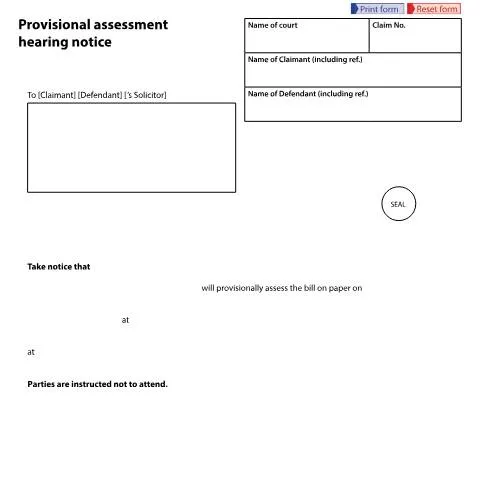
The N261 notice is a communication issued by the HM Courts & Tribunals Service, specifically intended for use in civil litigation. It typically arrives at a crucial moment in the legal process: after a bill of costs has been submitted, and the court is ready to provisionally assess those costs. Here’s what the notice entails:
- Details of Court and Claim Number: Essential for identification, ensuring the right case is being addressed.
- Name of Claimant and Defendant: Identifies the parties involved, along with their respective reference numbers.
- Assessment Date and Time: Indicates when the provisional assessment will take place.
- Instructions for Attendance: Clearly states that parties are instructed not to attend, which is a common feature in provisional assessments.
This document is pivotal as it shifts the focus from a physical courtroom presence to a paper-based evaluation, which can have significant implications for the involved parties.
Who Benefits Most from Form N261?
The scope of the N261 notice extends primarily to claimants and defendants engaged in civil litigation where legal costs are in question. However, various scenarios can make this notice indispensable:
- Claimants Seeking to Recover Costs: If you have initiated a claim and are pursuing reimbursement of legal fees, the N261 is a vital part of that process.
- Defendants Challenging Costs: If you are a defendant contesting the costs claimed against you, this document guides you through the assessment, which can ultimately influence the final ruling.
- Legal Representatives: Solicitors and legal advisors also rely on the N261 to understand the procedural aspects and implications for their clients.
In essence, anyone involved in the assessment of legal fees as part of a civil case should familiarize themselves with the nuances of the N261 notice to fully understand their rights and responsibilities.
Step-by-Step: Utilizing the N261 Notice
Receiving the N261 notice can feel overwhelming, but breaking down the process can simplify your understanding. Here’s how you can effectively utilize this document:
1. Review the Notice Thoroughly
Start by scrutinizing the contents of the notice. Look for the following:
- Correct names and case numbers.
- The schedule for the provisional assessment.
- Any court directions or specific instructions included.
2. Prepare Documentation
Even though attendance is not required, you may still need to provide supporting documents that justify the costs claimed. This can include:
- Invoices for legal services rendered.
- Evidence of work completed.
- Any agreements or contracts relevant to the costs.
3. Understand the Implications
The provisional assessment is conducted based on the documentation you provide. Therefore, be aware that:
- The court will primarily rely on the written evidence, which must be clear and compelling.
- You may have limited opportunity to contest the assessment once a decision has been made, so it's crucial to be thorough and precise.
4. Await the Court's Decision
After the provisional assessment is made, a notice will be dispatched to all parties involved, detailing the court's conclusions regarding costs. It is imperative to check this notice for accuracy and clarity.
Common Procedural Questions Surrounding the N261
Understanding the procedures related to the N261 can alleviate many concerns. Here are some frequent inquiries:
What Happens if I Disagree with the Provisional Assessment?
If you find the provisional assessment unsatisfactory, you may have the option to appeal or seek a reconsideration, depending on the specifics of your case. It’s advisable to consult a legal professional to explore your options.
How is the Assessment Conducted?
The assessment itself is carried out based on the paperwork submitted. The judge reviews the claims and justifications presented and makes a ruling based on that information. No oral evidence is typically heard.
What is the Timeframe for the Assessment?
While the N261 notice will specify the date of assessment, the overall timeline for resolution of costs can vary. Monitoring deadlines and ensuring timely submission of evidence are critical to ensure a smooth process.
Limitations and Scope of the N261 Documentation
The N261 notice, while a powerful tool in cost assessments, is not without its limitations. Here’s what you should be aware of:
- Focus on Legal Costs Only: This notice does not cover other areas of dispute; it is strictly for the assessment of legal fees incurred in civil litigation.
- No Opportunity for Oral Representation: As the process is paper-based, there is no chance for verbal arguments to be made during the provisional assessment.
- Possibility of Limited Recourse: If the assessment is unfavourable, pursuing further action may not be straightforward and can involve complex legal steps.
Understanding these limitations can help parties avoid missteps and manage their expectations effectively.
Key Concepts and Terminology Related to N261
To navigate the implications of the N261 notice successfully, it’s crucial to grasp some key legal and procedural concepts:
- Bill of Costs: A detailed list of the costs incurred, which the court will assess to determine what is recoverable.
- Provisionally Assessed Costs: The costs determined by the court based on the documents provided, subject to challenge or acceptance.
- Solicitor-Client Costs: Costs charged by your legal representative, which can vary based on agreements and the nature of services rendered.
Being familiar with these terms will enhance your understanding and ability to engage with the process effectively.
Consolidating Your Understanding of the N261 Notice
As you navigate the complexities of the N261 notice, remember that clarity and preparation are your best allies. Whether you are a claimant seeking to recover costs or a defendant challenging them, a thorough understanding of the provisional assessment process will empower you to manage your legal proceedings with confidence.
Engaging with the N261 notice requires diligence and attention to detail. By approaching it step-by-step and understanding its implications, you can ensure that you are well-equipped to handle the legal challenges that may arise.
Understanding the Provisional Assessment Process
The provisional assessment process is a method used by HM Courts & Tribunals Service to expedite the resolution of financial disputes, particularly in cases where full hearings may not be necessary. This process is particularly useful in situations involving small claims or straightforward financial disagreements. A provisional assessment hearing can be requested when the amount in dispute can be clearly defined, allowing the court to determine the final outcome based on the documents submitted without the need for a full hearing.
Fill in your form directly online
No printing: type your details into the boxes of the official form, tick, then download the PDF ready to send.
- 1Type into the form boxes
- 2Tick in one click
- 3Save and download the PDF
In the context of Form N261, which serves as the notice of hearing for a provisional assessment, it is essential to grasp the implications of the assessment procedure. The tribunal will consider the evidence presented through written submissions. Therefore, preparation is key. This includes the careful compilation of relevant documents, such as contracts, invoices, and correspondence, to substantiate your claims or defenses.
Furthermore, it is crucial to understand that the tribunal may also reserve the right to assess the case based on the likelihood of a full hearing, should either party contest the provisional decision. This means you must be prepared to detail your arguments succinctly and convincingly to facilitate the tribunal's decision-making process. If you believe a provisional assessment might not sufficiently address your case's complexities, you may opt to request a full hearing instead.
Your Rights and Responsibilities during the Provisional Assessment Hearing
While participating in a provisional assessment hearing, it is paramount to be aware of your rights and responsibilities. Both parties involved in the dispute must be given a fair opportunity to present their case. This means you have the right to submit evidence, provide documentation, and articulate your viewpoint effectively. However, with these rights come responsibilities to ensure that all submissions are made in a timely manner and that any evidence provided is relevant and truthful.
Moreover, it’s important to adhere to the deadlines set by the tribunal. For instance, relevant documents should typically be submitted alongside Form N261 or shortly thereafter, as the tribunal will review these documents prior to making a decision. Understand that failure to comply with these deadlines could result in the tribunal dismissing claims or defenses that are not adequately supported by evidence.
Additionally, be prepared to engage respectfully with the tribunal and the other party during the hearing. The tribunal is tasked with maintaining order and will expect all participants to conduct themselves professionally. Disruptive behavior or dismissive attitudes could negatively influence the tribunal’s perception of your case.
Post-Hearing Procedures Following a Provisional Assessment
Once the provisional assessment hearing concludes, the tribunal will issue a decision based on the evidence presented. This decision will be formally communicated through a written notice, which may outline the terms of the decision, including any financial obligations or consequences for the parties involved. It's critical to read this notice thoroughly, as it may include timelines for compliance and any further steps that need to be taken.
In cases where you disagree with the tribunal’s decision, there are procedures in place for appeals. The notice will typically specify how to appeal the decision, including the timeframe within which an appeal must be filed. Generally, you have 21 days from the date of the decision to lodge an appeal, but always refer to the specific tribunal notice for accurate timelines.
Furthermore, if the decision includes an order for payment, ensure that you understand the implications of non-compliance. Ignoring such orders can lead to further legal action, potentially resulting in additional costs or enforcement measures. Therefore, it is advisable to seek advice from a legal professional if you are uncertain about your next steps following a provisional assessment hearing.
Moreover, after the hearing, if you are the receiving party of an award or decision, it’s also prudent to monitor the compliance of the other party. Should they fail to meet their obligations, keeping records of all communications and attempts to resolve the matter amicably can be beneficial if further actions are necessary down the line.