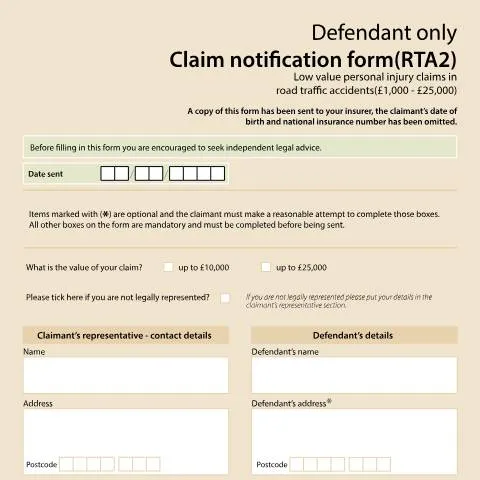
Navigating the Road Traffic Accident Claim: An In-Depth Look at Form RTA2
In the complex world of personal injury claims stemming from road traffic accidents, understanding the administrative processes can be daunting. For defendants involved in low-value personal injury claims, the Form RTA2: Defendant only claim notification serves as a vital document. It is crucial for those who find themselves in the unfortunate scenario of being a defendant in a personal injury claim to know the ins and outs of this form, its implications, and the subsequent steps required to navigate the claims process effectively.
The Essential Role of Form RTA2 in Road Traffic Accident Claims
Form RTA2 is specifically designed for defendants who need to notify the courts and relevant parties about their position in a personal injury claim resulting from a road traffic accident. This form is primarily aimed at low-value cases, with claims ranging between £1,000 and £25,000. Completing this form is not merely a bureaucratic exercise; it is a critical component of the legal process that can determine the outcome of a claim.
- Defendants’ Perspective: The form enables defendants to formally present their side of the case, ensuring that their rights and interests are adequately represented.
- Claim Notification: By submitting the RTA2, defendants fulfill their obligation to inform the court and the claimant about the details of the claim.
Who Should Complete the RTA2?
The RTA2 form is primarily filled out by defendants involved in personal injury claims arising from road traffic accidents. This includes various scenarios, such as:
- Individuals who were driving the vehicle at the time of the accident.
- Those who were passengers in a vehicle owned by another party.
- Defendants who own the vehicle but were not driving it during the incident.
- Pedestrians and cyclists involved in the accident.
A Step-by-Step Guide to Completing Form RTA2
Filling in the RTA2 form requires careful attention to detail. Each section is designed to collect specific information relevant to the claim. Missing or incorrect information can lead to delays or complications. Here’s a breakdown of the key sections and what they require:
Section A: Claimant’s Details
This initial section collects basic information about the claimant, including:
- Name and address.
- Vehicle registration number (if applicable).
- Date of the accident.
Note that some boxes are marked optional, but defendants should make a reasonable attempt to complete them. This section sets the foundation for the claim, so accuracy is paramount.
Section B: Injury and Medical Details
This section focuses on the nature of the injuries sustained by the claimant. Here, defendants should be prepared to provide:
- The type of injury (e.g., soft tissue injury, whiplash).
- Details regarding any medical attention the claimant has sought.
- Information on whether the claimant has had to take time off work due to the injury.
Understanding the claimant's medical situation helps paint a picture of the impact of the accident, which can influence the claim substantially.
Section C: Rehabilitation Needs
Injuries often necessitate rehabilitation, and this section aims to capture any recommendations from medical professionals regarding further treatment. Key points to document include:
- Whether any rehabilitation treatment has been recommended.
- Details of any rehabilitation needs the claimant may have.
This information can be crucial, especially if further care is anticipated and may escalate the claim's value.
Section D: Vehicle Damage
If the claimant is seeking compensation for vehicle damage, this section must be filled out accurately. Points of concern include:
- The type of insurance cover held by the claimant.
- Details regarding whether the claim for vehicle damage is proceeding through the claimant's insurer.
- Current status of vehicle repairs and whether the defendant's insurer needs to organize repairs.
Clear details about vehicle damage can significantly affect the claim's scope and urgency.
Section E: Alternative Vehicle Provision
For claimants who require an alternative vehicle while their car is being repaired, this section captures relevant data, such as:
- The name and address of the vehicle provider.
- Rental start and end dates.
Failure to accurately represent this need can complicate the claims process for both parties.
Following Submission: What Happens Next?
Once the Form RTA2 is completed and submitted, defendants often wonder what to expect next. The process typically unfolds as follows:
- Submission: The completed form must be sent to HM Courts & Tribunals Service, as well as the relevant insurance companies involved.
- Acknowledgment: Defendants will receive confirmation of receipt from the court, which usually includes a timeline for the next steps.
- Investigation: The insurer will conduct an investigation into the claim, contacting both parties to gather evidence and statements.
- Negotiation: Depending on the findings, negotiations may take place between the parties involved to reach a settlement.
- Court Hearing (if necessary): If a settlement cannot be reached, the case may proceed to court, where both parties will present their evidence.
Handling Obstacles: Errors, Missing Information, and Refusals
Issues can arise at various points during the claims process. Defendants should be prepared to tackle common challenges, such as:
- Errors in Submission: If a mistake is made on the RTA2 form, defendants should promptly contact the HM Courts & Tribunals Service to rectify the information.
- Missing Information: Incomplete submissions may lead to delays. It’s advisable to review the form thoroughly before sending.
- Claim Refusals: If a claim is denied, defendants should seek clarity on the reasons, as this may provide grounds for an appeal or further negotiation.
Understanding Your Rights and Obligations
Completing the RTA2 form is not just about obeying legal protocols; it is also about understanding the rights and responsibilities of all parties involved. Defendants must be aware of:
- Their right to contest the claim and provide evidence to support their case.
- The obligation to cooperate with the claims process and provide accurate information.
- The potential consequences of failing to meet deadlines or submitting incomplete information, which may include financial penalties or default judgments.
The Importance of Legal Representation
While completing the RTA2 form can be done without legal representation, the complexities of personal injury claims often necessitate seeking professional legal advice. A qualified solicitor can:
- Provide guidance on filling out the form accurately.
- Help defend against unfounded claims.
- Negotiate settlements that reflect the true value of any damages incurred.
Legal representation can ultimately safeguard defendants' interests and enhance their chances of a favorable outcome.
Tracking and Following Up on Your Claim
Once the form is submitted, it is crucial to stay informed about the status of the claim. Defendants can take proactive steps to track their claim by:
- Regularly checking in with HM Courts & Tribunals Service for updates.
- Maintaining open lines of communication with their insurer.
- Documenting all correspondence related to the claim for future reference.
Being proactive not only helps defendants stay informed but can also expedite the resolution of the claim.
Conclusion: Empowering Defendants in the Claim Process
The RTA2 form may seem like just another administrative hurdle, but it plays a crucial role in the broader context of personal injury claims stemming from road traffic accidents. By understanding its purpose, completing it accurately, and actively engaging in the subsequent processes, defendants can navigate the complexities of their claims more effectively. Knowledge is power, and being well-informed can lead to better outcomes in the face of challenging situations.
Understanding the RTA2 Form: Purpose and Importance
The RTA2 form, officially titled the "Defendant Only Claim Notification," plays a crucial role in the context of road traffic accidents in the United Kingdom. It is predominantly utilized in circumstances where a defendant wishes to notify their insurance provider about a claim made against them following a road traffic accident. This form is essential in streamlining the claim process, ensuring that both the claimant and defendant’s rights are respected, and that the necessary information is circulated among the relevant parties.
A primary purpose of the RTA2 form is to ensure that the defendant can respond adequately and promptly to claims. By providing all pertinent details about the accident, including the identities of those involved, the vehicle information, and the nature of the claims being made, the defendant can facilitate a more efficient handling of the situation, potentially leading to quicker resolutions. The RTA2 form ensures that the insurance company is adequately informed, allowing them to prepare a defence if needed.
Additionally, the RTA2 form serves as a formal record of the defendant's position regarding the claim. This documentation is vital should the case progress to court, where clear evidence of the communication of the claim will be required. Notably, errors or omissions in completing the RTA2 could have significant implications, making it imperative for defendants to approach the completion of this form with diligence and care.
Completing the RTA2 Form: Step-by-Step Guidance
Completing the RTA2 form accurately is paramount to avoid delays or complications with the claim process. Here’s a step-by-step guide to help defendants navigate the submission of this form:
Fill in your form directly online
No printing: type your details into the boxes of the official form, tick, then download the PDF ready to send.
- 1Type into the form boxes
- 2Tick in one click
- 3Save and download the PDF
Gather Information: Before filling out the RTA2 form, ensure that you have all necessary information at hand. This includes details of the accident, such as the date, location, and time, as well as information about the vehicles involved, driver’s details, and witness accounts if available. Having comprehensive information will not only aid in completing the form but can also support your case.
Personal and Vehicle Details: Start by filling out your personal details as the defendant. This includes your full name, address, and contact information. Additionally, provide your vehicle registration number. Accurate information is crucial here, as discrepancies might lead to issues later on.
Accident Details Section: Clearly describe the circumstances surrounding the accident. Include all relevant facts such as the conditions at the time of the incident (weather, road conditions), the sequence of events leading to the accident, and any actions taken post-accident. If there were witnesses, note their contact information as well.
Claims Information: The form will require a detailed account of the claims being made against you. This includes the nature of the claim, the type of damages being sought, and any correspondence you have had with the claimant or their representatives. Being exhaustive in this section will help your insurance provider assess the situation accurately.
Review and Submit: Once the form is completed, take the time to review all the information entered. Ensure there are no typos or missing information. Sign the form, and submit it according to the specified guidelines. Remember to keep a copy of the completed form for your records.
Follow Up: After submission, it’s advisable to follow up with your insurance provider to confirm they have received the RTA2 form and to inquire about the next steps in the process. This follow-up not only provides peace of mind but also demonstrates your proactive approach to resolving the matter.
The Consequences of Not Submitting the RTA2 Form
Failing to submit the RTA2 form can lead to significant repercussions for the defendant. Understanding these consequences is vital for any individual involved in a road traffic accident:
Legal Implications: Not submitting the RTA2 form can potentially hinder your ability to mount a robust defence in court. If the matter escalates to litigation, the absence of this vital form could result in the court taking a less favourable view of your position. Moreover, if you fail to notify your insurer of the claim promptly, you may jeopardize your coverage under your policy.
Increased Financial Liability: Without the proper documentation, you risk facing higher financial liability. The insurer may not defend you adequately if they are not notified in a timely manner, resulting in you bearing the full financial burden of any claims made against you. It’s worth noting that even if you believe the claim is unfounded, neglecting the submission of the RTA2 can lead to unwanted financial stress.
Strain on Insurance Relations: Regular and transparent communication with your insurance provider is crucial. Failing to submit the RTA2 form can introduce strain into this relationship, potentially resulting in increased premiums or, in some cases, the insurer choosing not to renew your policy. Insurers rely on timely and accurate reporting of incidents to manage their risk effectively.
Impact on Future Claims: If you do not submit the RTA2 form and the claimant proceeds with the claim, you may find it increasingly difficult to contest the matter in the future. The lack of documentation can weaken your position significantly. Future claims may also be influenced by precedents set by unresolved matters, highlighting the importance of handling each incident with care.
By understanding the RTA2 form's significance and diligently completing and submitting it, defendants can protect their interests and ensure a smoother claims process following a road traffic accident.