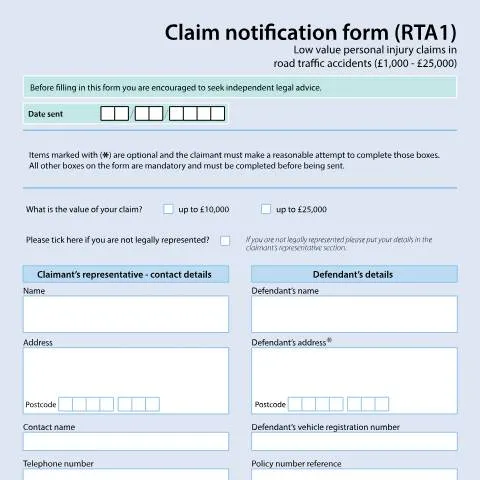
When a Road Traffic Accident Triggers Legal Action: Understanding RTA1 Claim Notifications
Every year, thousands of motorists, passengers, and pedestrians across England and Wales find themselves injured in road traffic accidents where liability disputes arise. When negotiations with insurance companies stall or when damages exceed what insurers are willing to offer, the RTA1 Claim Notification form becomes the gateway to the formal legal process. This document, administered by HM Courts & Tribunals Service, initiates claims for personal injury compensation ranging from £1,000 to £25,000 under the streamlined Road Traffic Accident portal system.
The RTA1 represents more than just another administrative hurdle—it's the mechanism that transforms an insurance disagreement into a structured legal claim with defined timescales, disclosure requirements, and settlement procedures. Understanding its intricacies can mean the difference between a straightforward resolution and costly procedural complications that delay compensation for months.
The £25,000 Threshold: Why This Figure Defines Your Legal Journey
The RTA1 operates within strict financial boundaries that fundamentally shape how your claim progresses. Claims valued between £1,000 and £25,000 must follow the Pre-Action Protocol for Low Value Personal Injury Claims in Road Traffic Accidents, commonly known as the RTA portal system. This creates a two-tier approach that affects everything from timescales to legal costs.
Portal Claims vs Traditional Litigation
| Claim Value | Process | Typical Timeline | Cost Implications |
|---|---|---|---|
| £1,000 - £25,000 | RTA Portal (RTA1 required) | 15-21 weeks standard | Fixed legal costs |
| Over £25,000 | Traditional court proceedings | 12-18 months typical | Variable legal costs |
| Under £1,000 | Small Claims Track | 6-9 months | Limited cost recovery |
The £10,000 subdivision within portal claims creates additional procedural differences. Claims exceeding £10,000 require medical reports from accredited medical experts, whilst lower-value claims may proceed with GP records and brief medical evidence. This distinction significantly impacts both the evidence-gathering phase and the overall timeline.
Strategic Valuation Considerations
Claimants face a crucial decision when estimating their claim value on the RTA1. Undervaluing a claim locks you into the portal system with its fixed cost structure, potentially limiting recovery if complications arise. Conversely, overvaluing pushes the claim into traditional litigation with higher costs but greater flexibility for complex cases involving long-term injuries or significant financial losses.
Navigating the Medical Evidence Landscape
Section B of the RTA1 delves deep into injury details, creating the foundation for all subsequent medical evidence. The form's medical questions aren't merely administrative—they trigger specific obligations and opportunities within the portal system that directly affect claim outcomes.
Injury Classification and Its Consequences
The RTA1's injury categories—soft tissue, bone injury, whiplash, and other—determine the medical evidence pathway. Whiplash claims face particularly stringent requirements following recent legislative changes, including mandatory medical examinations by accredited experts and enhanced diagnostic criteria. Soft tissue injuries require careful documentation of impact on daily activities, whilst bone injuries typically demand imaging evidence and specialist orthopaedic assessments.
The work absence questions (sections 1.2 and 1.3) establish the special damages framework. Even brief periods off work must be precisely documented, as the portal system's fixed timescales leave little room for retrospective evidence gathering. Claimants still off work when submitting the RTA1 face particular challenges, as ongoing losses complicate the settlement process and may push claims toward litigation.
Hospital Attendance and Medical Professional Engagement
Hospital attendance details (sections 1.5 and 1.6) carry significant weight in portal claims. Overnight detention typically indicates more serious injuries that may justify higher compensation bands, whilst emergency department visits demonstrate immediate medical concern. However, the absence of hospital attendance doesn't necessarily weaken a claim—many soft tissue injuries develop symptoms gradually and may not require immediate emergency treatment.
The rehabilitation section (Section C) has gained prominence following emphasis on early intervention and recovery. Medical professionals' rehabilitation recommendations create opportunities for interim payments and demonstrate proactive damage mitigation, potentially enhancing settlement prospects.
Vehicle Damage Claims: The Parallel Track Challenge
Section D addresses vehicle damage, creating a complex intersection between personal injury and property damage claims. Unlike personal injury compensation, vehicle damage claims often proceed through separate channels, creating coordination challenges that the RTA1 attempts to streamline.
Insurance Coverage Implications
The insurance coverage details (section 3.2) significantly impact how vehicle damage proceeds. Comprehensive cover typically means the claimant's insurer handles repairs under their policy, potentially recovering costs from the defendant's insurer separately. Third-party only cover leaves claimants dependent on the defendant's insurer or alternative arrangements, often complicating the claim process.
The total loss provisions (section 3.4) create particular complexity. When vehicles are written off, claimants must navigate pre-accident values, replacement costs, and potential betterment deductions. The RTA1's binary approach—complete, authorised, not yet authorised, not known—doesn't capture these nuances, potentially creating disputes later in the process.
Alternative Vehicle Provision Strategy
Section E's alternative vehicle provisions reflect significant changes in how hire costs are recovered. The form distinguishes between vehicles provided by the claimant's own insurer and those arranged independently, as different cost recovery rules apply. Credit hire arrangements—where claimants receive vehicles without immediate payment—require careful documentation, as defendants increasingly challenge necessity and reasonableness.
The vehicle specification requirements (engine size, make, model) aren't merely administrative. These details establish the appropriate hire rate category, with larger engines attracting higher daily rates. Claimants driving high-specification vehicles may face challenges justifying equivalent replacements, particularly for extended hire periods.
Reconstructing the Accident: Evidence Preservation and Presentation
Sections F and G transform accident circumstances into legal evidence, requiring careful balance between comprehensive detail and portal system constraints. The standardised accident descriptions (section 6.4) create presumptions about liability that significantly influence case progression.
Liability Categories and Their Legal Implications
The RTA1's accident categories—rear-end collisions, side road emergence, parked vehicle impacts—carry established liability presumptions. Rear-end collisions typically create strong presumptions of following driver fault, whilst roundabout accidents and lane-changing incidents require more detailed investigation. Selecting "other" provides flexibility but may delay case progression whilst insurers seek additional clarification.
Speed estimates (section 6.5) require particular care, as they establish the accident's severity and potential injury causation. Claimants often struggle with accurate speed assessment in traumatic situations, yet these figures feature prominently in medical expert evaluations and settlement negotiations.
Weather and Road Conditions: Beyond Simple Documentation
The environmental factors section (6.3) captures conditions that may affect liability distribution or injury causation. Adverse weather conditions—rain, snow, ice—may reduce expected standards of care but can also suggest contributory negligence if claimants failed to adjust their driving appropriately. Road surface conditions interact with vehicle maintenance issues, potentially introducing third-party liability for highway authorities or contractors.
Legal Representation Decisions: Self-Representation vs Professional Advocacy
The RTA1's opening question about legal representation reflects the portal system's attempt to accommodate both represented and unrepresented claimants. This choice fundamentally affects how claims progress and the support available throughout the process.
The Self-Representation Challenge
Unrepresented claimants face significant challenges navigating the portal system's technical requirements and tight timescales. The RTA1's complexity—spanning medical evidence, rehabilitation needs, vehicle damage, and accident reconstruction—demonstrates why the form encourages seeking "independent legal advice" before completion.
Self-represented claimants must understand that the portal system's fixed timescales don't accommodate learning curves. Missing deadlines or providing inadequate responses can result in automatic case exits from the portal, potentially increasing costs and extending timescales significantly.
Representative Selection and Coordination
For represented claimants, the representative details section creates the primary communication channel with defendant insurers. Reference numbers, contact protocols, and response arrangements established here govern the entire claim process. Changes in representation mid-claim can create procedural complications, making initial selection crucial.
The representative's approach to RTA1 completion often sets the tone for subsequent negotiations. Comprehensive, accurate submissions demonstrate professional competence and may encourage more realistic settlement offers, whilst incomplete or inaccurate forms can undermine credibility throughout the process.
Submission Protocols and Post-Filing Procedures
The RTA1's submission triggers a complex sequence of disclosure obligations, response deadlines, and procedural requirements that operate automatically within the portal system. Understanding these consequences helps claimants prepare for what follows and avoid common procedural pitfalls.
Defendant Response Requirements
Once submitted, the RTA1 creates strict obligations for defendant insurers. They must acknowledge receipt within specified timescales and provide comprehensive responses addressing liability, causation, and quantum. Failure to respond appropriately allows claimants to exit the portal and pursue traditional litigation, often with enhanced cost consequences for defendants.
The defendant's initial response determines whether cases proceed to settlement negotiations or require additional evidence gathering. Liability admissions accelerate the process toward medical evidence and quantum assessment, whilst liability disputes may trigger expert accident reconstruction or witness statement requirements.
The Medical Evidence Phase
Following RTA1 submission and initial responses, the medical evidence phase begins with specific requirements depending on claim value and injury type. Claims under £10,000 may proceed with GP records and brief medical reports, whilst higher-value claims require comprehensive medico-legal examinations by accredited experts.
The rehabilitation focus means medical experts must address not just current symptoms but also treatment needs, recovery prospects, and return-to-work timescales. This creates opportunities for interim settlements or rehabilitation packages that can benefit claimants before final settlement.
Common Pitfalls and Strategic Considerations for Optimal Outcomes
The RTA1's apparent simplicity masks numerous areas where inadequate completion can compromise claim outcomes. Understanding these potential difficulties helps claimants maximise their prospects while avoiding costly procedural errors.
Timing and Deadline Management
The portal system operates on strict timescales that begin running from RTA1 submission. Late submissions can result in automatic exits from the portal, potentially increasing legal costs and extending resolution timescales. Claimants must balance the need for comprehensive information gathering with the portal's efficiency requirements.
Medical evidence deadlines are particularly challenging, as they depend on expert availability and appointment scheduling beyond claimants' direct control. The RTA1's medical sections should anticipate these requirements, ensuring sufficient detail to facilitate prompt expert instruction.
Evidence Preservation and Documentation Standards
The RTA1's mandatory and optional sections create different obligations for information provision. Mandatory sections must be completed accurately and comprehensively, as inadequate responses can result in case rejection. Optional sections marked with asterisks require "reasonable attempts" at completion, providing some flexibility whilst maintaining evidential standards.
Photographic evidence, witness contact details, and contemporaneous records significantly enhance RTA1 submissions but aren't explicitly required by the form. Claimants should gather and preserve this evidence even if not immediately needed, as later retrieval may prove impossible or prohibitively expensive.
The National Insurance number requirement reflects the portal system's integration with government databases for identity verification and benefit coordination. Claimants without NI numbers—recent immigrants, children, certain visa holders—must provide clear explanations to avoid processing delays or security concerns.
Ultimately, the RTA1 serves as both a practical tool for claim initiation and a strategic document that shapes the entire litigation process. Its careful completion, informed by understanding of the portal system's requirements and limitations, can significantly influence both the speed of resolution and the final compensation achieved. For claimants navigating the aftermath of road traffic accidents, the RTA1 represents their first formal step toward legal resolution and financial recovery.
Documentation Requirements and Evidence Standards for RTA1 Claims
The strength of your RTA1 claim notification hinges significantly on the quality and comprehensiveness of supporting documentation you provide. Understanding what constitutes acceptable evidence can make the difference between a straightforward settlement and a protracted dispute requiring legal intervention.
For vehicle damage claims, photographic evidence must be taken from multiple angles, ideally showing the overall accident scene, specific damage to all vehicles involved, registration plates clearly visible, and any relevant road signs or traffic control devices. Digital photographs with embedded timestamp data are increasingly preferred by insurers, though traditional prints remain acceptable. If possible, capture images showing the vehicles' positions immediately after impact, as this can be crucial for liability determination.
Police incident reports carry substantial weight in RTA1 proceedings, particularly when fault attribution is disputed. If police attended the scene, request your incident reference number and note the attending officers' collar numbers. However, be aware that police attendance doesn't guarantee a formal report will be filed – officers may simply record basic details for statistical purposes. Where no police report exists, independent witness statements become increasingly valuable.
Fill in your form directly online
No printing: type your details into the boxes of the official form, tick, then download the PDF ready to send.
- 1Type into the form boxes
- 2Tick in one click
- 3Save and download the PDF
Medical documentation for injury claims requires particular attention to detail. Your GP records, hospital admission notes, diagnostic imaging results, and specialist consultant reports all contribute to establishing the extent and causation of injuries. Ensure any pre-existing medical conditions are properly disclosed, as failure to do so can invalidate your entire claim. Keep detailed records of all medical appointments, treatments received, and any ongoing symptoms or limitations.
Financial evidence must be meticulously maintained from the outset. Retain all receipts for vehicle recovery, temporary accommodation if required, alternative transport costs, and any emergency repairs necessary for safety. For lost earnings claims, provide payslips covering the three months preceding the accident, plus formal confirmation from your employer detailing any time off work and associated financial losses. Self-employed individuals should prepare recent accounts, tax returns, and bank statements demonstrating typical income patterns.
Vehicle-related documentation should include your driving licence, insurance certificate, MOT certificate (if applicable), and service history records. If your vehicle was subject to hire purchase or lease agreements, provide relevant documentation as this affects how settlement payments are handled. For classic or modified vehicles, recent professional valuations become essential, as standard insurance assessments may not reflect true market value.
Common Pitfalls and How to Avoid Costly Mistakes
Even well-intentioned claimants can inadvertently compromise their RTA1 claims through seemingly minor oversights or misunderstandings. Being aware of these common pitfalls can save considerable time, stress, and financial loss during the claims process.
One of the most frequent errors involves admitting fault or making statements that could be construed as accepting liability at the accident scene. Phrases like "I'm sorry" or "I didn't see you" may be intended as common courtesy but can be interpreted as admissions of guilt. Stick to factual observations only: describe what happened without speculating about causes or apportioning blame. Even seemingly innocuous comments to police officers, witnesses, or the other driver can later surface in legal proceedings.
Delayed claim notification represents another significant pitfall. While insurers typically allow reasonable time for claim submission, delays exceeding seven days often trigger additional scrutiny and may affect your policy terms. Some policies contain specific notification clauses requiring immediate contact, particularly for serious accidents involving injuries or significant property damage. Weekend and bank holiday accidents should still be reported within normal timeframes – most insurers operate 24/7 claim reporting services.
Social media activity following an accident requires careful consideration. Insurance investigators routinely monitor claimants' online presence for evidence contradicting injury claims or accident circumstances. Photographs showing physical activities inconsistent with claimed injuries, location check-ins suggesting you weren't where you claimed to be, or posts discussing the accident details can all potentially undermine your case. Consider temporarily restricting your social media activity or adjusting privacy settings during active claim periods.
Inadequate medical treatment or failure to follow prescribed treatment plans can significantly impact injury claim values. Insurers may argue that refusing recommended physiotherapy, failing to attend follow-up appointments, or not taking prescribed medications demonstrates that injuries aren't as severe as claimed. Maintain consistent medical care and document any reasons why specific treatments weren't suitable or available.
Vehicle repair decisions made without insurer approval often create complications. While you're entitled to choose your preferred repairer, using non-approved garages may result in additional excess payments or quality disputes. Some policies require multiple repair estimates, while others mandate use of approved networks. Proceeding with repairs before obtaining proper authorisation can leave you personally liable for costs exceeding approved estimates.
Financial record-keeping failures frequently undermine claims for consequential losses. Without proper documentation, proving expenses like additional childcare costs, domestic help, or specialist equipment becomes extremely difficult. Start maintaining detailed records immediately after the accident, including dates, amounts, and explanatory notes for each expense.
Understanding Settlement Negotiations and Alternative Dispute Resolution
The journey from RTA1 claim notification to final settlement often involves complex negotiations that can significantly impact your eventual compensation. Understanding the settlement process, your rights during negotiations, and available dispute resolution mechanisms empowers you to make informed decisions about your claim's progression.
Initial settlement offers from insurers are typically calculated using established databases like the Judicial College Guidelines for injury valuations, combined with actual financial losses and reasonable future costs. However, these early offers often reflect conservative assessments designed to encourage quick settlements. You're under no obligation to accept initial offers, and insurers expect some degree of negotiation in most cases.
The negotiation process typically begins once all immediate medical treatment is complete and the full extent of injuries is established. For minor injuries, this might occur within weeks of the accident. However, serious injuries requiring ongoing treatment or rehabilitation may necessitate waiting months or even years before meaningful settlement discussions can commence. Insurers may offer interim payments for immediate expenses while investigations continue.
Legal representation becomes particularly valuable during complex negotiations, especially for serious injury claims or disputes involving significant liability issues. Solicitors specialising in road traffic accidents understand insurer tactics, appropriate valuation methods, and can access medical experts for independent assessments. Many operate on conditional fee arrangements (commonly called "no win, no fee" agreements), making legal representation accessible even without immediate funds.
Alternative Dispute Resolution (ADR) mechanisms offer structured approaches to resolving disagreements without formal court proceedings. The Financial Ombudsman Service handles complaints about insurance companies' claim handling, though they focus on process fairness rather than liability determinations. For disputes about fault attribution or settlement amounts, mediation services provide neutral environments where both parties can explore compromise solutions.
Small Claims Court procedures apply to RTA claims valued under £10,000 in England and Wales, with different thresholds in Scotland and Northern Ireland. The simplified procedures make self-representation feasible for straightforward cases, though legal advice remains beneficial for understanding procedural requirements and evidence presentation strategies.
Time limitations significantly impact settlement negotiations. The Limitation Act 1980 generally provides three years from the accident date (or date of knowledge for latent injuries) to commence court proceedings. However, insurers may impose earlier deadlines for certain claim elements, and delayed settlements can affect evidence quality as witnesses' memories fade and documentation becomes harder to obtain.
Settlement agreements typically include comprehensive liability releases, preventing future claims related to the same accident. Ensure you understand exactly what you're agreeing to, particularly regarding potential future medical complications or previously undiagnosed injuries. Some agreements include provisions for reopening claims if specific conditions develop within defined timeframes, though these are relatively uncommon and require careful legal drafting.