Navigating the Complexities of FGM Protection Orders: Understanding Form FGM003
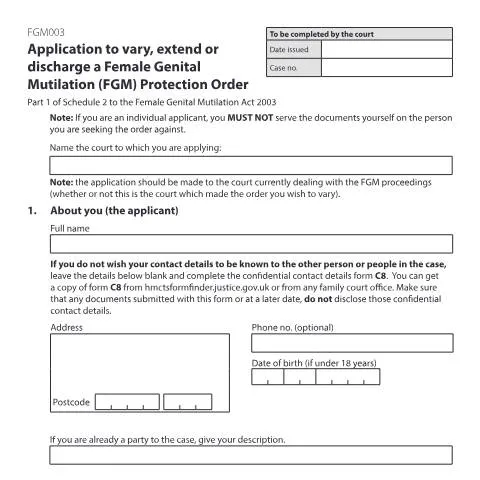
In the context of safeguarding vulnerable individuals from the deeply concerning practice of Female Genital Mutilation (FGM), the role of the Application to vary, extend or discharge a Female Genital Mutilation (FGM) Protection Order (Form FGM003) is pivotal. This document is crucial for individuals seeking changes to an existing protection order, a legal tool designed to provide necessary safeguards. Understanding its intricacies and operational framework is essential for anyone involved in the legal process surrounding FGM protection orders.
What Sets FGM003 Apart: Distinctions and Comparisons
Form FGM003 is unique within the spectrum of legal documents. While it may resemble other court application forms in structure, its specific focus on FGM protection orders distinguishes it from others, such as general family law or domestic violence applications. The implications of an FGM protection order extend beyond mere legal protections; they address cultural and societal issues surrounding FGM and provide a framework for intervention.
Key Features of FGM003
- Targeted Purpose: This form is specifically designed for individuals who have a vested interest in modifying, extending, or discharging an existing FGM protection order.
- Confidentiality Concerns: The applicant's address can remain confidential, safeguarding their identity from those against whom the order is sought.
- Statement of Truth: The inclusion of a declaration regarding the truthfulness of the information provided underpins the legal integrity of the document and ensures accountability.
Moreover, recognizing the differences between FGM003 and similar documents, such as standard protection order applications, is essential, especially for legal representatives and individuals navigating this sensitive area of law.
The Timeline of Application: Key Dates and Subsequent Actions
Understanding the timeline associated with Form FGM003 is vital for applicants. The legal process surrounding FGM protection orders encompasses several critical dates and milestones. Typically, applicants begin this journey by identifying the need for a modification or discharge of an existing order, which may arise from changing circumstances or new evidence.
From Application to Decision: A Step-by-Step Chronology
- Filing the Application: The journey starts with the completion of Form FGM003, which must be submitted to the relevant court handling the current FGM proceedings.
- Notification of Parties: After submitting the form, the applicant must ensure that all relevant parties, including respondents and individuals protected by the order, are formally notified.
- Court Hearing: A hearing will be scheduled where the applicant presents their case. This is a crucial moment where evidence and reasoning will be evaluated by the court.
- Decision Issuance: Following the hearing, the court will issue a decision regarding the application to vary, extend, or discharge the order.
- Post-Decision Actions: Depending on the outcome, the applicant may need to take further steps, such as complying with any new conditions or seeking additional legal advice.
This timeline clarifies each phase of the application process, providing applicants with a roadmap to navigate this often daunting journey.
Special Circumstances: Addressing Unique Applications
Form FGM003 is not a one-size-fits-all document; it must cater to diverse situations, including applications from minors, non-residents, or cases involving urgency. Each of these scenarios presents unique challenges and considerations that must be addressed during the application process.
Minors and Protection Orders
When the applicant is a minor or the protection order affects a minor, additional legal protocols come into play. The court is likely to require the involvement of a guardian or legal representative, and the process may take longer due to the safeguards that aim to protect young individuals.
Non-Resident Applications
Individuals residing outside the UK can also apply for an FGM protection order. Their applications may require additional documentation to establish jurisdiction and the relevance of UK law. It is crucial for these applicants to provide comprehensive evidence of their situation and the risks involved.
Urgency Considerations
In cases where immediate action is necessary to prevent harm, applicants can indicate the urgency in their application. This may expedite the court's response, but detailed justification is essential to convince the court of the need for swift intervention.
Legal Foundations: The Framework Behind FGM003
The Female Genital Mutilation Act 2003 serves as the cornerstone of the legal authority for Form FGM003. This legislation was enacted to combat FGM and protect individuals at risk within the UK and abroad. The act provides the legal basis for issuing protection orders and outlines the responsibilities of authorities in safeguarding those affected.
Key Provisions of the Female Genital Mutilation Act 2003
- Definition of FGM: The act offers a comprehensive definition of FGM, which aids in establishing the grounds for applying for a protection order.
- Legal Obligations: It imposes legal responsibilities on professionals working with children and vulnerable adults to report cases and seek protection orders when necessary.
- Judicial Discretion: The act grants courts the authority to impose conditions that aim to prevent FGM, which can be modified or discharged through Form FGM003.
Understanding the legal context not only provides clarity on the form itself but reinforces the importance of the measures it seeks to implement.
Filling Out Form FGM003: A Guide through Details
Completing Form FGM003 requires careful attention to detail, as the information provided can significantly impact the outcome of the application. The form is divided into clear sections, each demanding specific information that must be accurate and complete.
Section-by-Section Breakdown
- About You: This section requires the applicant's full name, optional contact information, and details about any representation.
- Order Details: Applicants must indicate whether they are seeking to vary, extend, or discharge an existing order, providing pertinent details regarding the original order.
- Reasons for Application: This pivotal section demands a concise explanation of the reasons behind the application, necessitating clarity and relevance.
- Service of Application: Here, the applicant must list all parties to be served, ensuring that the correct individuals are notified to uphold procedural fairness.
- Statement of Truth: This declaration is critical, as it affirms the authenticity of the application and binds the applicant legally under UK law.
Paying close attention to these sections is imperative, as any omissions or errors could result in delays or rejection of the application.
Fill in your form directly online
No printing: type your details into the boxes of the official form, tick, then download the PDF ready to send.
- 1Type into the form boxes
- 2Tick in one click
- 3Save and download the PDF
Next Steps After Submission: What to Expect
Upon submitting Form FGM003, applicants enter a crucial phase of the legal process that can feel overwhelming. Understanding what follows can alleviate some of the uncertainties associated with awaiting a court decision.
Court Proceedings and Potential Outcomes
- Hearing Preparation: Applicants should prepare to present their case, potentially with legal representation, to advocate for their position effectively.
- Outcome Notifications: Once the court reaches a decision, the applicant will receive formal notification outlining the court's ruling and any conditions that may apply.
- Right to Appeal: Depending on the outcome, applicants may retain the right to appeal if they believe the court's decision warrants reconsideration.
Being proactive and informed about these subsequent steps will arm applicants with the knowledge necessary to navigate the post-application landscape more confidently.
Final Thoughts: The Importance of Proper Guidance and Support
The journey through applying for modifications to an FGM protection order via Form FGM003 is not only a legal process but also an emotionally charged experience for many individuals. Engaging with legal professionals and support networks can provide invaluable assistance throughout this difficult time.
Accessing Legal Support
Given the complexities surrounding FGM protection orders, individuals are strongly encouraged to seek legal advice. Solicitors with expertise in family law and FGM-related issues can provide tailored guidance, ensuring that applicants understand their rights and options throughout the process.
As this landscape continues to evolve, understanding Form FGM003 and the broader implications of FGM protection orders is crucial for safeguarding vulnerable individuals and fostering a protective legal framework against harmful practices.