Understanding the DA1TA Form: A Guide for Applicants and Legal Representatives
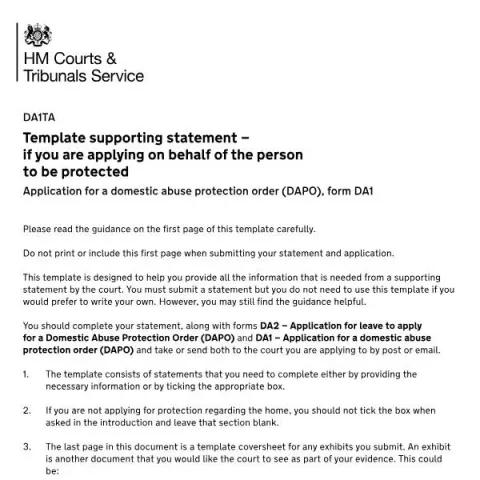
The Template Supporting Statement (form code: DA1TA) is an official document issued by the HM Courts & Tribunals Service in the United Kingdom. It is designed to facilitate the application process for a Domestic Abuse Protection Order (DAPO). This article provides a comprehensive overview of the purpose, usage, and key considerations associated with this form, particularly for those applying on behalf of a protected individual.
Purpose and Scope of the DA1TA Form
The DA1TA form serves as a supporting statement submitted alongside the main application for a DAPO. Its primary function is to provide the court with detailed information about the applicant, the respondent, and the circumstances that justify the need for protection. The form is typically used by third parties—such as family members, social workers, or legal representatives—who are applying on behalf of a person to be protected, especially when that individual cannot complete the form themselves.
It is important to note that the form is part of a broader application process, which includes completing the DA2 (Application for leave to apply for a DAPO) and the main DA1 application form. Together, these documents help the court assess the need for protective orders in cases of domestic abuse.
When and How to Use the DA1TA Form
Situations for Use
- Applications made by third parties on behalf of vulnerable individuals who cannot complete their own application due to age, incapacity, or other reasons.
- Cases where additional supporting evidence or statements are required to substantiate allegations of domestic abuse.
How to Complete the Form
The form is structured into sections requiring specific information, which applicants can fill out by providing details or ticking boxes as appropriate. It is essential to complete each section accurately to ensure the court has a clear understanding of the circumstances.
Applicants should include:
- Personal details of the applicant (or representative), including full name and address.
- Details of the person to be protected, including their name and address, unless confidentiality is requested.
- The respondent’s full name and their relationship to the protected person.
- Statements supporting the application, including any exhibits or evidence such as medical reports or communication records.
Confidentiality and Evidence Submission
In cases where the applicant wishes to keep contact details or the identity of the protected individual confidential, the form allows for this by indicating so on the relevant sections. It is crucial to respect privacy considerations, especially when submitting exhibits that may contain sensitive information.
When submitting evidence, a coversheet must be included for each exhibit, clearly indicating the nature of the document (e.g., medical report, email printout). The court advises that personal contact details should not be included in exhibits if confidentiality is to be maintained.
Points of Attention and Legal Considerations
Applicants should ensure that all information provided is truthful and supported by appropriate evidence. The form is governed by the Data Protection Act 2018 and UK GDPR, which means personal data must be handled responsibly and in accordance with legal requirements.
Fill in your form directly online
No printing: type your details into the boxes of the official form, tick, then download the PDF ready to send.
- 1Type into the form boxes
- 2Tick in one click
- 3Save and download the PDF
Completing the DA1TA accurately and thoroughly can significantly impact the court’s decision regarding the issuance of a DAPO. Therefore, applicants are encouraged to read the accompanying guidance carefully and consider seeking legal advice if unsure about any section of the form or the application process.
Submission Process
The completed form, along with the DA2 application and any exhibits, can be submitted either by post or email to the relevant court handling the case. It is advisable to keep copies of all submitted documents and to follow any specific instructions provided by the court regarding submission deadlines and formats.
In summary, the DA1TA form is a vital tool in the UK’s legal framework for protecting victims of domestic abuse. Proper completion and submission of this supporting statement can help ensure that vulnerable individuals receive the necessary legal protection promptly and effectively.