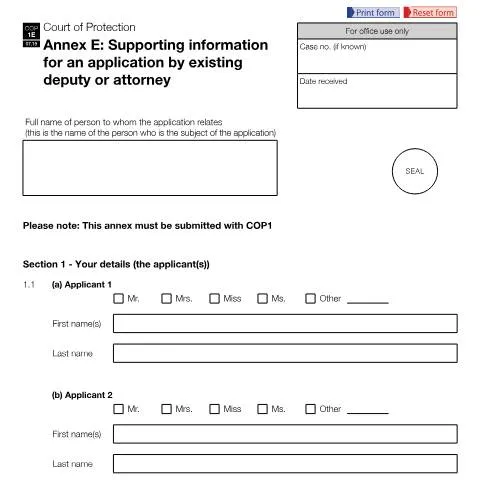
Understanding the COP1E Form: Supporting Information for Deputies and Attorneys
The COP1E form is an official document issued by the HM Courts & Tribunals Service in the United Kingdom. It is specifically designed for individuals who are already appointed as deputies or attorneys for a person under a Court of Protection order or a registered enduring or lasting power of attorney for property and financial affairs. This guide aims to clarify the purpose, scope, and key requirements of the COP1E form, helping relevant parties understand how to prepare and submit supporting information effectively.
Purpose and Scope of the COP1E Form
The primary objective of the COP1E form is to gather detailed supporting information from current deputies or attorneys when they seek to make decisions or request variations to their existing powers. It is used exclusively in cases where the applicant is already legally appointed to manage the property and financial affairs of an individual (the "person to whom the application relates").
Specifically, the form facilitates applications to vary or extend the powers granted in the original appointment. It is not intended for applications related to the initial appointment of a deputy or attorney, nor for matters concerning trustees, registration of powers, or other unrelated proceedings. This targeted scope ensures that the court receives comprehensive and relevant information to assess the application.
Who Should Use the COP1E Form?
- Individuals currently serving as deputies for property and affairs, seeking to vary or extend their powers.
- Attorneys under a registered enduring or lasting power of attorney for property and financial affairs, applying for decision-making authority beyond their current scope.
Applicants must have an existing legal authority—either through a court order or a registered power of attorney—to use this form. It is not suitable for new appointments or applications related to the registration of powers or appointment of trustees.
Key Requirements for Completing the Form
Completing the COP1E form requires detailed and accurate information to support the application. The court expects applicants to provide a comprehensive overview of the person's assets and financial situation, including:
- Capital Assets: A summary of all assets owned by the individual, such as savings, investments, and funds held at the Court Funds Office.
- Property Details: Information about any property owned, including current value, occupation status, and intentions regarding sale. Note that joint property holdings may require separate applications for sale or transfer.
- Income Sources: An estimate of the annual income, including pensions, benefits, dividends, and interest earned.
- Security Arrangements: Details of any existing security measures, premiums paid, and confirmation of their current status.
Additionally, applicants must attach relevant supporting documents, such as a copy of the original appointment order or the registered power of attorney. This evidence substantiates the application and ensures the court has complete information to make an informed decision.
Legal and Procedural Considerations
The form emphasizes that applicants must include a statement of truth, signed by the applicant, their solicitor, or litigation friend, affirming that the information provided is accurate to the best of their knowledge. The declaration must be dated and signed in accordance with court requirements.
Before submitting, applicants should review the guidance notes and ensure all relevant forms are completed and attached. The application must be sent to the Court of Protection, along with any applicable fees, at the appropriate address specified on the official government website.
Fill in your form directly online
No printing: type your details into the boxes of the official form, tick, then download the PDF ready to send.
- 1Type into the form boxes
- 2Tick in one click
- 3Save and download the PDF
Next Steps and Additional Guidance
Once the COP1E form and supporting documents are prepared, applicants should consider whether additional forms or evidence are necessary, such as the COP24 witness statement if required. It is advisable to consult the official guidance notes or seek legal advice if there is any uncertainty about the process.
For further information, including submission procedures and contact details, applicants are encouraged to visit the official government website dedicated to the Court of Protection. This resource provides comprehensive guidance to ensure proper completion and timely processing of applications.
Conclusion
The COP1E form plays a crucial role in enabling deputies and attorneys to seek court approval for variations or decisions outside their current powers. By providing detailed supporting information, applicants assist the court in safeguarding the interests of the individual they serve, ensuring that decisions are made transparently and in accordance with legal requirements.