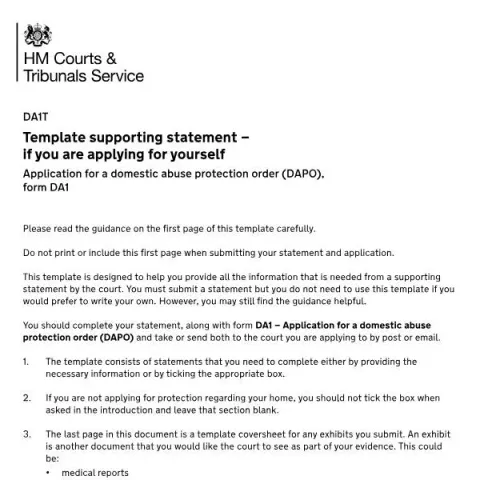
Understanding the DA1T Form: A Guide to Applying for a Domestic Abuse Protection Order in the UK
The Template Supporting Statement – Application for a Domestic Abuse Protection Order (DAPO), designated by the code DA1T, is an official document issued by the HM Courts and Tribunals Service. It plays a crucial role for individuals seeking legal protection against domestic abuse through the courts. This article provides a comprehensive overview of the purpose, who should complete it, and the steps involved in submitting this form.
What Is the Purpose of the DA1T Form?
The primary function of the DA1T form is to serve as a supporting statement accompanying the formal application for a domestic abuse protection order. It allows the applicant to provide detailed information and evidence to the court, demonstrating why an order is necessary to protect them from further harm or abuse. The form helps the court understand the context and specifics of the applicant’s situation, ensuring an informed decision regarding the protection order.
Who Should Fill Out the DA1T Supporting Statement?
This form is intended for individuals applying for a DAPO on their own behalf. Applicants who are seeking protection due to domestic abuse and wish to include supporting evidence should complete the DA1T template. It is vital that the applicant fills out this form accurately, providing truthful and detailed information about their circumstances. If the applicant is not applying for protection concerning their home, they should leave relevant sections blank, as indicated in the instructions.
How to Complete the DA1T Form
Step 1: Personal Details
- Full name: Enter your first name(s) and surname.
- Address: Provide your complete address, including building, street, town, and postcode. If you wish to keep your contact details confidential, you may indicate this as per the court’s guidance.
Step 2: Details of the Respondent
- Include the full name of the person against whom you are requesting protection.
- Describe your relationship to the respondent, such as partner, former partner, or family member.
Step 3: Information About the Protection Order
- Specify whether the order should include your home address. If applying for protection regarding your home, provide the address and details about tenancy or ownership.
- If you are requesting a without notice order, explain why immediate protection is necessary without prior notice to the respondent. This is crucial for the court to consider your safety concerns.
Step 4: Supporting Evidence and Exhibits
You may attach documents that support your application, such as medical reports, social services letters, or printouts of text messages and emails. For each exhibit, include a coversheet (also known as an exhibits list) to help the court identify and review your evidence. Remember, contact details should be omitted from exhibits if you wish to keep your information private.
Additional Guidance and Tips
While the DA1T template provides a structured format, you are not obliged to use it exclusively. You can write your supporting statement in your own words, but ensure all relevant information is included. Accuracy and honesty are essential, as false or misleading statements can have legal consequences.
When submitting your application, you should send or deliver both the completed form DA1 and the supporting statement to the appropriate court. Confirm whether the court accepts submissions by post or email, and keep copies of all documents for your records.
Fill in your form directly online
No printing: type your details into the boxes of the official form, tick, then download the PDF ready to send.
- 1Type into the form boxes
- 2Tick in one click
- 3Save and download the PDF
Common Mistakes to Avoid
- Failing to provide detailed reasons for requesting a without notice order, which could result in delays or rejection.
- Omitting relevant evidence or not including an exhibits coversheet, making it harder for the court to review your case.
- Providing incomplete or inaccurate personal or respondent information, which can undermine the application’s validity.
Conclusion
The DA1T supporting statement is a vital component of the process to obtain a domestic abuse protection order in the UK. It allows applicants to clearly present their case and provide supporting evidence to the courts. By carefully completing the form and following the guidance, individuals can improve their chances of securing the necessary legal protection to ensure their safety and well-being.