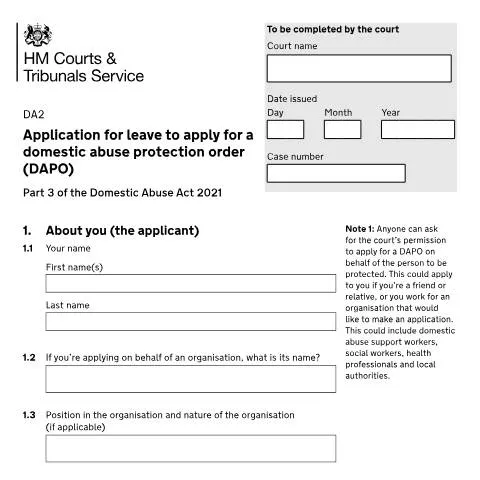
Understanding the DA2 Application Form: A Vital Step for Those Seeking Protection
In the complex landscape of domestic abuse legislation, the DA2 form serves as a crucial mechanism for individuals or organisations wishing to seek a Domestic Abuse Protection Order (DAPO) on behalf of a victim. The significance of this form cannot be overstated, as it empowers concerned parties—such as friends, relatives, or professionals—to take action in situations where the victim may be unable or unwilling to advocate for themselves. This article delves into the nuances of the DA2 form, exploring its purpose, completion, and the subsequent steps in the legal process.
Who Can Submit a DA2 Form?
Understanding the eligibility to submit the DA2 application is essential. Unlike many legal documents that are restricted to specific parties, the DA2 form opens its doors to a wider audience. Anyone can apply to the court for permission to file a DAPO on behalf of someone else, provided they have a legitimate connection to the person at risk. The typical applicants include:
- Friends or family members of the person to be protected.
- Domestic abuse support workers.
- Social workers.
- Healthcare professionals.
- Representatives from local authorities or charities.
It’s vital to note that the person at risk should ideally be aware of the application and should support it. Nonetheless, there are provisions that allow for applications to be made without the respondent's notice, particularly in urgent situations where immediate action is necessary to ensure safety.
Navigating the Application Process: Step-by-Step
Completing the DA2 form requires careful attention to detail, as each section of the form is designed to elicit specific information that is critical for the court's assessment. Here is a breakdown of the application process:
1. Fill in Personal Details
The first section of the DA2 form seeks information about the applicant. This includes:
- Your full name.
- If applicable, the name of the organisation you represent.
- Your position within the organisation and its nature.
These details help the court understand who is making the application and the authority behind it.
2. Information about the Person to be Protected
Next, you must provide the full name of the individual needing protection. This step is critical; if there are any discrepancies or errors in the name provided, it could hinder the court's ability to process the application.
3. Justifications for the Application
This section requires a concise explanation of your reasons for applying on behalf of the individual. The court will assess the following:
- Your connection to the individual at risk.
- Your understanding of their circumstances.
- The individual’s awareness and support of your application.
- Any reasons for applying without notice to the respondent.
It’s essential to articulate these points clearly, as they provide the court with the context needed to make an informed decision.
4. Statement of Truth
Lastly, the applicant or their legal representative must sign a “Statement of Truth.” This declaration underscores the importance of honesty in legal proceedings and outlines the consequences of making false statements. It serves as a formal acknowledgment that the information provided in the DA2 form is accurate to the best of the applicant's knowledge.
What Happens After Submission?
Once the DA2 form is submitted, the court will review the application and determine whether to grant permission for the DAPO application. Here’s what typically unfolds:
The Court’s Review Process
The court will consider various factors, including:
- The potential risks to the individual at risk.
- The credibility and motivations of the applicant.
- The nature of the alleged abuse.
If the court grants permission, the applicant can proceed to fill out the DA1 form to formally apply for the DAPO. However, if the request is denied, the applicant may not have the option to appeal; it’s crucial to provide robust justifications in the DA2 form to increase the chances of approval.
Supporting Documents: What You Should Prepare
Along with the DA2 form, certain supplementary documents may bolster your application. While the exact requirements may vary depending on the individual case, here are some commonly requested items:
| Document Type | Description |
|---|---|
| DA1 Form | Must be enclosed with the DA2 application. |
| Evidence of Abuse | Any documentation or witness statements that substantiate the claim of domestic abuse. |
| Professional Endorsements | Letters or testimonies from professionals who can attest to the situation. |
Providing a comprehensive set of documents can significantly enhance the credibility of your application.
Understanding Urgency: When to Act Quickly
In many cases of domestic abuse, time is of the essence. If a victim is in immediate danger, it is crucial to act swiftly. The DA2 form allows for applications to be made without notifying the respondent if there is a genuine risk involved. This provision is particularly important in scenarios where prior notice could exacerbate the situation or lead to retaliation.
However, it’s essential to justify this course of action clearly in the application. The court must be convinced of the urgency and the necessity to bypass standard procedures.
Common Misunderstandings: Distinguishing the DA2 Form from Similar Documents
Understanding the unique role of the DA2 form amidst other legal documents is vital to avoid confusion. Many people erroneously conflate it with the following:
- DA1 Form: This is the actual application for a Domestic Abuse Protection Order. The DA2 form is merely a request for permission to submit the DA1.
- Non-Molestation Orders: These orders are often pursued alongside DAPOs but serve different legal purposes. Non-molestation orders prevent contact or harassment by an abuser.
Clarifying these distinctions is crucial for anyone navigating the legal system for protection against domestic abuse.
Monitoring Your Application: What to Expect
Once the DA2 application is submitted, applicants often wonder how to monitor its progress. The following steps outline what to expect:
- Receiving Acknowledgment: The court will typically send an acknowledgment of receipt.
- Awaiting a Decision: The court may take varying lengths of time to review applications, depending on the complexity and workload.
- Follow-Up: If you do not receive a response within a reasonable timeframe, it is advisable to follow up with the court to inquire about the status of your application.
This proactive approach can help ensure that your application does not fall through the cracks.
Final Thoughts: The Importance of Legal Support
Filing a DA2 application can be a daunting process, particularly for those who are already dealing with the emotional and psychological toll of domestic abuse. Seeking legal support can provide invaluable guidance throughout the application process. Whether through solicitors experienced in domestic abuse cases or organisations dedicated to helping victims, having expert assistance can significantly enhance the effectiveness of your application.
In conclusion, the DA2 application form is more than just a bureaucratic hurdle; it represents a critical pathway towards safety and justice for victims of domestic abuse. By understanding the intricacies of the process, preparing thoroughly, and seeking guidance when necessary, you can navigate this challenging situation more effectively.
Fill in your form directly online
No printing: type your details into the boxes of the official form, tick, then download the PDF ready to send.
- 1Type into the form boxes
- 2Tick in one click
- 3Save and download the PDF
Understanding the Domestic Abuse Protection Order: Key Features and Legal Framework
The Domestic Abuse Protection Order (DAPO) is a relatively new measure introduced under the Domestic Abuse Act 2021 in England and Wales. This order provides immediate protection from an abuser and can be issued by the police without needing it to go through the courts first. It aims to create a safe space for victims and can last for an initial period of 48 hours, after which the court must review the order to determine its continuation. Importantly, it includes conditions to prohibit the perpetrator from contacting or coming near the victim, their home, or any defined location.
The legal framework guiding the issuance of DAPOs is rooted in the recognition that domestic abuse can take various forms, including physical violence, emotional abuse, and coercive control. The police are empowered to act swiftly to protect individuals at risk, reflecting the urgent needs of those experiencing domestic abuse. It’s essential for potential applicants or those assisting others to be aware of the conditions under which a DAPO can be issued. This includes understanding the necessity for the police to have reasonable grounds to believe that the order is needed to protect the victim from further harm.
Moreover, it’s crucial to highlight that a DAPO can also serve as a precursor to a longer-term solution, such as a non-molestation order or an occupation order, which requires a different legal process. As such, individuals seeking a DAPO for someone else must have a solid understanding of not only the immediate protective measures available but also the subsequent legal steps that may be necessary to ensure ongoing protection.
Who Can Apply for a DAPO on Behalf of Someone Else?
The process of applying for a Domestic Abuse Protection Order (DAPO) on behalf of someone else is nuanced and requires a clear understanding of who is eligible to make such applications. Generally, the individual seeking protection is typically the first point of contact; however, the law acknowledges that there may be scenarios where someone else can make this application on behalf of the victim. This can include family members, friends, or even professionals such as social workers or advocates working with the victim.
If you are considering applying on behalf of someone else, it’s crucial to establish a good reason for doing so. The individual for whom you're seeking the order must be unable or unwilling to make the application themselves due to various reasons such as fear, trauma, or the abuser’s coercive control. Additionally, your relationship with the victim can impact the application process. For example, family members may have a stronger standing to apply as they can demonstrate their connection and concern for the victim’s wellbeing.
The police will assess the circumstances surrounding the application and the nature of the relationship with the victim. It’s advisable to gather as much evidence as possible to support the application, including any documentation or witness statements that may demonstrate the risk to the victim’s safety. Being prepared with a well-structured application can significantly enhance its chances of success.
Implications of Applying on Behalf of Someone Else
Applying for a Domestic Abuse Protection Order (DAPO) on behalf of someone else carries important implications, both for the applicant and the victim. One of the key considerations is the victim's autonomy and consent. While the law allows for third-party applications, it’s vital to ensure that the victim is supportive of the application and understands the implications of such a step. It’s recommended to engage with the victim throughout the process to maintain trust and transparency, which can be essential for their emotional support.
Moreover, there can be legal implications if the victim does not consent to the application. The police will take the victim’s wishes into account, and if they do not wish for the application to proceed, it may not be pursued further. This emphasizes the importance of a sensitive approach when discussing the possibility of applying for a DAPO with the victim.
Additionally, applicants should be aware of potential repercussions from the abuser if they find out about the application. This can lead to an escalation of violence or further attempts to control or intimidate the victim. Therefore, it’s crucial to consider safety planning not only for the victim but also for the applicant. This may include ensuring that both parties are aware of local support services, legal advice, and potential refuge options if the situation escalates.
Finally, understanding the possible outcomes of a DAPO application is essential. If the order is granted, it can significantly enhance the victim’s safety and provide legal protection against the abuser. However, if the application is denied, it’s important to explore other avenues of support and protection, which may include pursuing a non-molestation order or seeking assistance through victim support services.