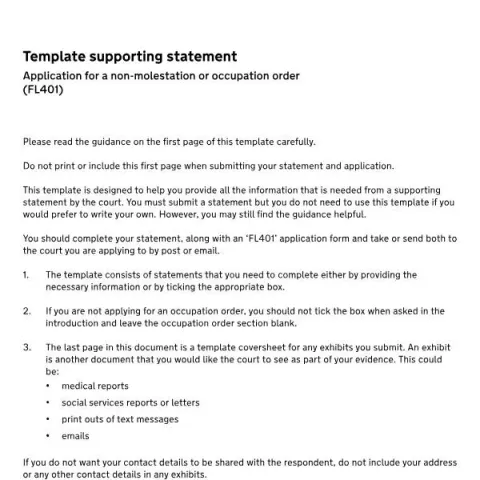
Understanding the FL401T Supporting Statement Form for Court Orders in the UK
The FL401T is an official template provided by HM Courts and Tribunals Service to assist individuals applying for a non-molestation or occupation order. These legal remedies are designed to protect individuals from harassment, abuse, or unwanted occupation by a respondent, typically in cases involving domestic violence or related concerns. This article explains the purpose of the form, when and how to complete it, and key points to consider during the process.
Purpose and Use of the FL401T Template
The FL401T serves as a supporting statement that accompanies the main application form (the FL401) when applying to the court for a non-molestation or occupation order. Its primary role is to provide detailed, factual information that supports the applicant’s case. The template guides applicants through providing essential details about their circumstances, the respondent, and the reasons why the court should grant the order.
This form is particularly useful for individuals who may find it challenging to structure their statement or wish to ensure they include all necessary information. While it is a helpful tool, applicants are not obliged to use the template and can instead prepare their own statement in their own words, provided it covers the required information.
Key Sections of the Supporting Statement
1. Personal Details and Introduction
The form begins with basic identification information, including the applicant’s full name and address, and the respondent’s full name. If the applicant wishes to keep their contact details confidential, they can indicate this on the main application form (e.g., by completing form C8). The applicant must also specify whether they are applying for a non-molestation order, an occupation order, or both.
2. Details of the Application
Applicants are asked to specify the address related to the occupation order, if applicable, including who resides there and the tenancy or ownership arrangements. If applying for a without notice order—meaning the respondent is not aware of the application—an explanation of why this is necessary must be provided. This is crucial in cases where immediate protection is needed due to risk or harm.
Providing Evidence and Exhibits
The template includes a dedicated section for attaching exhibits—additional documents that support the application. These may include medical reports, social services reports, text message printouts, or emails. Each exhibit must have a coversheet, which is also included in the template, to clearly identify the evidence submitted. Applicants should ensure that sensitive contact details are not included in exhibits if they wish to maintain confidentiality.
Fill in your form directly online
No printing: type your details into the boxes of the official form, tick, then download the PDF ready to send.
- 1Type into the form boxes
- 2Tick in one click
- 3Save and download the PDF
Points of Attention and Practical Tips
- Completeness: Ensure all sections are filled out accurately and truthfully. Omissions or inaccuracies could delay or jeopardise the application.
- Confidentiality: Be mindful of sharing personal contact details, especially if privacy is a concern. Use the appropriate forms to request confidentiality if needed.
- Supporting Evidence: Attach relevant exhibits that substantiate your claims. Clearly label each exhibit with a coversheet, and only include necessary documents to avoid overwhelming the court.
- Legal Guidance: While the template provides a helpful structure, consider seeking legal advice or support from organisations such as Advice Now or Citizens Advice to ensure your statement is comprehensive and appropriately framed.
- Submission: The completed statement, along with the main application form, can be sent by post or email to the relevant court. Make sure to keep copies for your records.
Conclusion
The FL401T template is a valuable resource for individuals seeking legal protection through non-molestation or occupation orders in the UK. It helps streamline the application process by guiding applicants to provide detailed, relevant information in a clear format. Understanding how to complete and submit this supporting statement correctly can make a significant difference in securing the court’s protection and ensuring your safety.