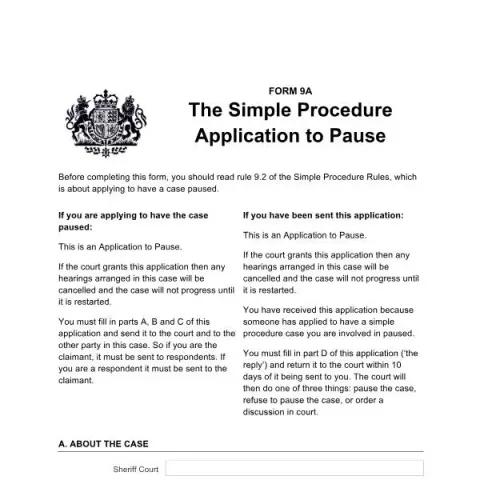
Understanding the Simple Procedure Application to Pause (Form 9A) by the Scottish Courts and Tribunals Service
The Scottish Courts and Tribunals Service provides a specific form, known as Form 9A, designed to facilitate the temporary suspension of a case under the Simple Procedure rules. This process allows parties involved in a case to request a pause, effectively halting all hearings and proceedings until the case is restarted. This article offers a detailed overview of the purpose, process, and key considerations for submitting this application.
The Objective of Form 9A
The primary aim of Form 9A is to enable a party to apply for a temporary suspension of a case within the scope of the Simple Procedure rules, specifically rule 9.2. It is used when a party believes that a pause is necessary, perhaps due to ongoing negotiations, the need to gather further evidence, or other circumstances that warrant delaying the case’s progression.
Once the court grants the application, all scheduled hearings are canceled, and the case remains inactive until a formal decision is made to restart it. This mechanism ensures that parties can manage their cases effectively without the risk of unnecessary hearings or procedural steps proceeding prematurely.
Preparing and Submitting the Application
Completing the Form
Form 9A is divided into several parts, each requiring specific information:
- Part A: About the Case – Details about the case, including the case reference number, the court involved, and the names of the claimant and respondent.
- Part B: About You – The applicant’s full name and their role in the case (claimant or respondent).
- Part C: The Application – The reasons why the case should be paused, along with the date the application was sent to the court.
- Part D: The Reply – To be filled out by the party receiving the application, indicating whether they agree or disagree with the pause.
It is essential to complete all relevant sections accurately and clearly, providing sufficient justification for the request to pause the case.
Submitting the Application
The application must be sent to the court handling the case and simultaneously to the other party involved. If you are the claimant, send it to the respondent; if you are the respondent, send it to the claimant. Submission can be made via postal services or electronic means, depending on the court’s procedures.
Once submitted, the court will review the application and decide whether to grant, refuse, or hold a hearing to discuss the matter further. The decision aims to balance the need for procedural efficiency with fairness to all parties involved.
Responding to a Pause Application
If you are the party receiving a Form 9A, you are required to complete Part D of the form within 10 days of receipt. Your response should clearly state whether you agree with the request to pause the case or oppose it, providing reasons for your position.
The court will consider your reply along with the application and make a decision based on the circumstances. If you oppose the pause, it’s advisable to provide detailed reasons to support your case.
Fill in your form directly online
No printing: type your details into the boxes of the official form, tick, then download the PDF ready to send.
- 1Type into the form boxes
- 2Tick in one click
- 3Save and download the PDF
Implications of Granting or Refusing the Pause
When the court grants the application, the case is effectively put on hold, and all scheduled hearings are canceled. This pause can be crucial for parties needing time to resolve issues outside formal proceedings or to prepare further evidence.
If the application is refused, the case proceeds as scheduled, and parties should continue with their preparations for upcoming hearings. In some instances, the court may hold a discussion or hearing to clarify the reasons for the pause request before making a final decision.
Key Considerations and Practical Tips
- Timeliness: Ensure your application is sent within the required timeframe to avoid delays or rejection.
- Clear Justification: Provide a comprehensive explanation for the need to pause, supported by relevant circumstances.
- Communication: Keep the other party informed and send copies of your application to all involved parties.
- Legal Advice: Consider consulting a legal professional if you are unsure about the implications or the best approach for your case.
In summary, Form 9A is a vital procedural tool under the Scottish Simple Procedure rules, allowing parties to request a temporary halt in proceedings. Proper preparation, timely submission, and clear communication are essential to ensure the application is considered effectively by the court.