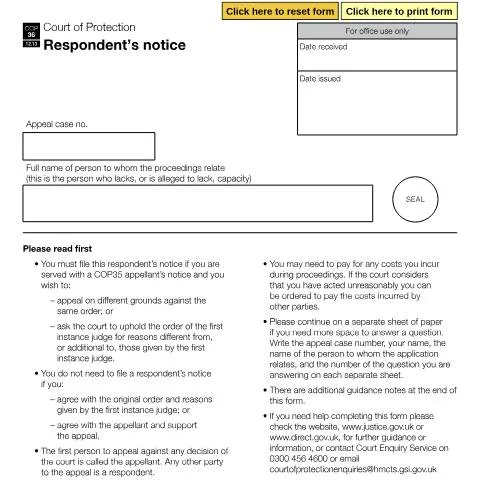
Understanding Form COP36: The Respondent's Notice
The Form COP36, known as the Respondent's Notice, is a crucial document utilized in the appeal process within the Court of Protection. This document allows a respondent—typically a party who disagrees with an appeal against a prior decision by the court—to formally present their position. Understanding how to effectively use this document can significantly impact the outcome of an appeal, particularly for those who seek to uphold the original decision or argue from different grounds.
Navigating the Appeal Landscape: Context and Importance of COP36
The Respondent's Notice comes into play after an appellant serves a COP35 Appellant's Notice. The appellant is the individual or party challenging the original court decision. On the other hand, the respondent is typically the party on the receiving end of that appeal. This relationship is essential to understand, as the dynamics of the appeal hinges on the roles of both parties.
It’s also important to recognize that the COP36 is not necessary if the respondent agrees with the appellant's position or the original ruling. This could simplify proceedings and result in a streamlined resolution. However, should the respondent disagree with either of these stances, filing a COP36 becomes imperative.
Key Sections of the COP36
- Case Details: This section captures vital information about the appeal case number and the individual affected by the proceedings.
- Respondent Information: Here, the respondent provides their personal details, including name, address, and contact information. It’s crucial for ensuring that all communications regarding the case reach the appropriate individuals.
- Application for Permission: If the respondent seeks to appeal on grounds that differ from the original judgement, they must request permission from the court in this section.
- Response to Appeal: This is where the respondent articulates their stance regarding the appeal, specifying any actions they are asking the appeal judge to take.
- Grounds for Response: The respondent must clearly outline the reasons for their opposition to the appeal, often in the form of a skeleton argument.
- Supporting Documents: This section details the documentation required to accompany the notice, reinforcing the respondent’s position and arguments.
Grounds for Filing: When is COP36 Necessary?
Understanding when to file the Respondent's Notice is crucial. The requirements are straightforward yet critical to the appeal process. You must file this notice if:
- You do not agree with the order being appealed and wish to uphold it for reasons distinct from those offered by the initial judge.
- You intend to appeal on different grounds against the same order.
Conversely, if you are in agreement with the original ruling or you support the appellant’s case, there is no need to submit COP36. This distinction is vital as it can save time and resources.
Timeframes: Navigating Deadlines
Filing the COP36 must adhere to specific deadlines, which can vary based on the initial judge's orders. If the judge has set a timeline, it must be respected. If no timeline has been established, the respondent typically has 21 days from the date they were served with the appellant's notice or the notification of granted permission to appeal.
Important Note: Missing the deadline can significantly jeopardize your ability to present your arguments, so meticulous attention to these timeframes is necessary.
Interplay with Other Legal Documents
Form COP36 operates within a broader legal context where multiple documents may be relevant. Here are a few that are frequently associated with the COP36:
- COP35 Appellant's Notice: The initiating document of the appeal process that outlines the appellant's concerns.
- COP37 Skeleton Argument: The structured argument that supports the respondent's grounds for appeal, potentially filed alongside the COP36.
- Supporting Evidence: Any evidence submitted to bolster the respondent's case, such as witness statements or previous court orders.
Understanding how these documents interact can provide a strategic advantage in legal proceedings. Each plays a specific role and contributes to the overall narrative of the case.
Respondent's Notice: Scope and Limitations
Form COP36 provides a platform for the respondent to express their counterarguments but does come with certain limitations. The Notice is specifically tailored to address the immediate appeal regarding the original verdict; thus, it does not serve to challenge unrelated issues or decisions outside the scope of the appeal.
Additionally, the respondent must ensure their arguments are substantiated with evidence and articulate their grounds for appeal clearly. Failure to do so could result in the dismissal of their case or an unfavorable ruling.
Potential Challenges and Misunderstandings
There are common pitfalls that respondents might encounter while navigating this process.
- Filing Late: As previously mentioned, missing the deadline can foreclose the opportunity to present your arguments.
- Incomplete Documentation: Not providing sufficient or necessary supporting documents can weaken the case.
- Misunderstanding the Grounds: Confusing the grounds for appeal can lead to presenting a weak or irrelevant argument.
Each of these issues underscores the importance of careful preparation and understanding of the legal framework surrounding the Respondent’s Notice.
Who Should File COP36?
Form COP36 is primarily intended for individuals or parties involved in a case where they are responding to an appeal within the Court of Protection. This includes:
- Individuals contesting an appeal made by a party seeking to overturn the original court decision.
- Legal representatives acting on behalf of a person with capacity issues, ensuring their rights and interests are adequately defended.
It is critical that those filing the COP36 have a comprehensive understanding of the case at hand, as well as the implications of the appeal process on the individual’s circumstances.
Practical Steps: Filing and Supporting Your Response
To effectively utilize Form COP36, one should consider a methodical approach:
- Gather Information: Compile all relevant details about the appeal, including the COP35 Appellant's Notice and any previous court orders.
- Clearly Define Grounds: Outline the reasons for your response, ensuring they are logical and well-supported by evidence.
- File in a Timely Manner: Ensure all necessary paperwork is submitted within the stipulated deadlines.
- Seek Legal Assistance: If uncertain, it may be wise to consult legal professionals who can offer guidance specific to your case.
Conclusion: Standing Your Ground in Appeals
The Respondent's Notice Form COP36 is a critical tool for any party looking to defend their position in the Court of Protection's appeal process. It not only facilitates the articulation of the respondent's stance but also serves as a structured approach to countering appeals effectively. By understanding the nuances of this document and the broader appeal process, respondents can better navigate their legal challenges and bolster their chances of a favorable outcome.
Understanding the Role of the Respondent's Notice in Legal Proceedings
The Respondent's Notice, specifically Form COP36, plays a fundamental role in legal proceedings within the jurisdiction of the UK, particularly in the context of the Court of Protection. This form is predominantly used by individuals who are responding to an application made by another party regarding the welfare or affairs of someone lacking capacity. It is imperative for respondents to understand the implications of submitting this notice, as it outlines their position, concerns, and any objections to the application.
Fill in your form directly online
No printing: type your details into the boxes of the official form, tick, then download the PDF ready to send.
- 1Type into the form boxes
- 2Tick in one click
- 3Save and download the PDF
When filling out Form COP36, respondents should consider various factors that may affect their situation. The Notice requires clear articulation of the respondent's stance—whether they oppose or support the application. Furthermore, respondents must detail any relevant facts, evidence, or documentation that bolster their case. This is where legal advice can be invaluable, helping to ensure that the submissions made are as robust as possible.
Additionally, it is essential to address the timeline involved in submitting the Respondent's Notice. Typically, a respondent has a specific period to submit their notice after being notified of the application. This timeframe is critical, as failing to submit within the stipulated period could adversely affect the respondent's ability to present their case effectively. It’s advisable to keep abreast of any updates or changes in the legal requirements that may impact these timelines.
The Implications of Failing to Submit Form COP36
Failing to submit Form COP36 can have serious ramifications for respondents in legal cases filed under the Court of Protection. When a respondent does not provide their notice in a timely manner, they may inadvertently forfeit their right to participate actively in the proceedings. This can lead to the court making decisions that significantly affect the welfare and affairs of the individual in question without input from the respondent.
Moreover, if the respondent is seeking to contest an application, failing to file the COP36 can lead to a lack of representation in court. The Court of Protection prioritizes safeguarding the interests of individuals who lack capacity; however, it also relies on the parties involved to present their views. Therefore, participating in the process by submitting Form COP36 is crucial for ensuring that the respondent's perspective is heard and considered.
Respondents should also be aware that they can face costs if they choose to contest the application without formally submitting their notice. In some cases, the court may order the respondent to pay the costs of the applicant if they are deemed to have acted unreasonably by not engaging with the process through the proper channels. Understanding the possible financial implications can motivate respondents to adhere to protocols and submit their notice promptly.
Guidance on Completing Form COP36: Tips for Respondents
Completing Form COP36 effectively requires careful attention to detail. Respondents should follow these tips to ensure that their submissions are thorough and clear:
- Be Clear and Concise: When stating your position, make sure your language is straightforward. Avoid jargon and overly complex sentences that could obscure your meaning.
- Provide Supporting Evidence: If you are contesting the application, it is beneficial to include any supporting documents or evidence that lend credibility to your argument. This could include medical reports, expert opinions, or relevant correspondence.
- Consult Legal Help: Consider seeking advice from a solicitor who specializes in Court of Protection matters. They can provide invaluable guidance on how to navigate the form and enhance your application.
- Check the Deadlines: Familiarize yourself with and adhere to all relevant deadlines. Mark these dates in your calendar and ensure that your submissions are sent well in advance of the due date.
- Review Your Notice: Before submitting Form COP36, take the time to review your responses for accuracy and completeness. A well-prepared notice can significantly influence the outcome of the proceedings.
Ultimately, the effective completion and submission of Form COP36 is not merely a procedural step but an essential component of ensuring that the interests of all parties, particularly the vulnerable individual at the centre of the application, are adequately represented and protected in the Court of Protection.