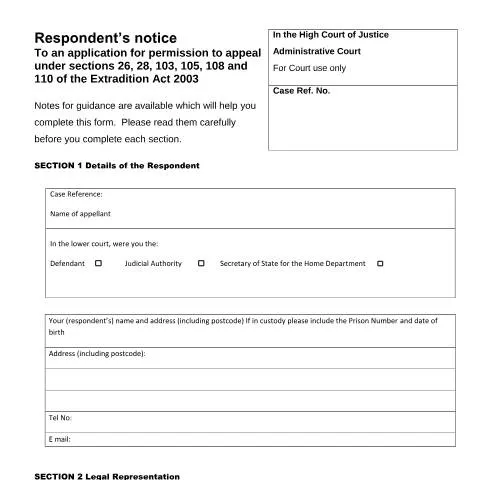
Understanding the Respondent’s Notice under the Extradition Act 2003
The Respondent’s Notice is a formal document used within the UK legal system, specifically in proceedings related to extradition under the Extradition Act 2003. Managed by the Criminal Procedure Rule Committee and the Ministry of Justice, this notice plays a crucial role for defendants or respondents who wish to oppose an application for permission to appeal against an extradition decision. It ensures that all relevant facts and legal grounds are properly communicated to the court, facilitating a fair and transparent process.
Purpose and Scope of the Respondent’s Notice
The primary purpose of the Respondent’s Notice is to enable the respondent—often the Secretary of State for the Home Department or the individual accused—to formally oppose an appeal. When an appellant seeks permission to challenge a decision related to extradition, the respondent can submit this notice to outline their grounds of opposition, provide relevant legal and factual information, and support the court’s decision-making process.
This document is used specifically in proceedings initiated under sections 26, 28, 103, 105, 108, and 110 of the Extradition Act 2003. These sections cover various aspects of extradition requests, appeals, and related judicial review processes. The Respondent’s Notice ensures that the court considers the full scope of relevant facts and legal arguments before granting or denying permission to appeal.
Who Should Prepare a Respondent’s Notice?
The notice is typically prepared by the respondent involved in the extradition case, which could be the Secretary of State for the Home Department or an individual facing extradition. Legal representation is often advisable, especially given the complexity of extradition law and the strict procedural deadlines involved.
It is essential that the notice is submitted within the specified timeframe—generally within five business days of being served with the application for permission to appeal. Failure to comply with this deadline can affect the respondent’s ability to participate effectively in the appeal process.
Key Components of the Respondent’s Notice
Case and Personal Details
- Case reference number
- Name of the appellant
- Details of the respondent, including name, address, contact details, and prison number if in custody
Legal Representation
- Indication of whether the respondent is legally represented
- Details of the solicitor or legal representative, including contact information
Grounds of Opposition and Supporting Evidence
- Identification of the grounds on which the respondent opposes the appeal, linked to specific legal provisions or factual issues
- Relevant authorities or legal precedents relied upon in opposition
- Any additional documents or reports that support the opposition
- Details of any applications related to custody, bail, or procedural directions, if applicable
Service and Confirmation
The notice must include details of how and when it was served on the appellant(s), such as by fax, email, or personal delivery. The respondent confirms that all relevant facts are disclosed and signs the document to attest its accuracy.
Legal and Procedural Considerations
The Respondent’s Notice is governed by the Criminal Procedure Rules, notably Crim PR 50.21(4), which stipulate the procedural requirements for lodging and serving the document. It is vital that respondents adhere to these rules to ensure their opposition is considered valid and timely.
In cases where additional time is needed for service, respondents must justify the delay and provide reasons for the extension, demonstrating efforts to serve the notice promptly.
Fill in your form directly online
No printing: type your details into the boxes of the official form, tick, then download the PDF ready to send.
- 1Type into the form boxes
- 2Tick in one click
- 3Save and download the PDF
References and Official Guidance
The form used for submitting the Respondent’s Notice is designated as EXN162. Detailed guidance is available to assist respondents in completing the form accurately, ensuring compliance with legal standards and procedural rules. The official documents and notes for guidance can be accessed through the UK Ministry of Justice and the Criminal Procedure Rule Committee.
In summary, the Respondent’s Notice is a vital procedural tool within UK extradition law, providing respondents with a structured opportunity to challenge appeals and ensure their legal rights are protected throughout the judicial process.