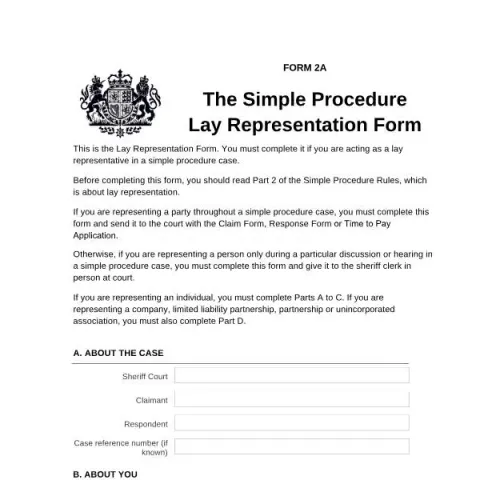
Understanding the Scottish Courts and Tribunals Service Lay Representation Form (Form 2A)
The Scottish Courts and Tribunals Service (SCTS) provides a specific form, known as the Lay Representation Form (Form 2A), which is essential for individuals acting as lay representatives in simple procedure cases within Scottish civil courts. This article offers a comprehensive overview of the purpose, completion process, and submission modalities of this official document, designed to assist both legal lay representatives and parties involved in such proceedings.
Purpose and Scope of the Form
The primary objective of the Lay Representation Form (Form 2A) is to formally authorise a person to act as a lay representative in a simple procedure case before the Scottish courts. A simple procedure case involves straightforward civil disputes, where the parties often manage their cases without extensive legal representation. The form ensures that the court recognises the individual acting on behalf of a party, whether it be a claimant, respondent, or a non-natural person such as a company or partnership.
Specifically, the form captures essential information about the representative, the party they are representing, and their authority to act. It distinguishes between cases where the representative is involved throughout the proceedings or only during specific hearings or discussions, impacting how and when the form must be submitted.
Preparing Your Submission
Gathering Necessary Information
Before completing the form, the representative should read Part 2 of the Simple Procedure Rules, which details the rules surrounding lay representation. Accurate completion requires details such as:
- The case reference number (if known)
- Full name of the representative
- Details of any advice or advocacy organisation involved
- Identification of whether the representative is acting for a natural person or a non-natural entity (such as a company or partnership)
Completing the Form
The form is divided into several parts, each addressing different aspects of the representation:
- Part A: About the Case – includes the court, claimant, respondent, and case reference number.
- Part B: About You – collects personal details, organisational affiliation, and whether representing a non-natural person.
- Part C: Declarations – requires the representative to affirm their authority, confidentiality commitments, and declare any vexatious litigant status or financial interests.
- Part D: Additional Declarations for Non-Natural Persons – applicable if representing a company or partnership, detailing the representative's role and responsibilities.
Submission Modalities and Timing
How and When to Submit
The method of submission depends on the context of representation:
- If representing a party throughout the case, the completed Form 2A must be sent along with the Claim Form, Response Form, or Time to Pay Application to the court.
- If acting only during specific discussions or hearings, the form must be completed and handed in in person at the court to the sheriff clerk.
It is crucial that the form is submitted promptly to ensure the court recognises the representative's authority at the appropriate stages of the proceedings. Failure to submit the form as required may result in the representative not being permitted to act on behalf of the party during hearings or discussions.
Follow-up and Court Processing
Once submitted, the court reviews the form to verify the representative's eligibility and authority. The process is typically straightforward, provided the form is correctly completed and all declarations are affirmed. The court may request additional information if necessary, especially in cases involving non-natural persons.
Fill in your form directly online
No printing: type your details into the boxes of the official form, tick, then download the PDF ready to send.
- 1Type into the form boxes
- 2Tick in one click
- 3Save and download the PDF
Contact and Support
Parties and representatives seeking assistance with completing the Lay Representation Form should contact the relevant sheriff court or consult the official guidance provided by the Scottish Courts and Tribunals Service. It is advisable to review Part 2 of the Simple Procedure Rules for comprehensive understanding of lay representation rights and obligations.
In conclusion, the Scottish Courts and Tribunals Service Lay Representation Form (Form 2A) plays a vital role in facilitating accessible justice by allowing individuals and organisations to be properly recognised as representatives in simple procedure cases. Proper completion and timely submission ensure that parties can effectively participate in court proceedings with appropriate authority and confidentiality.