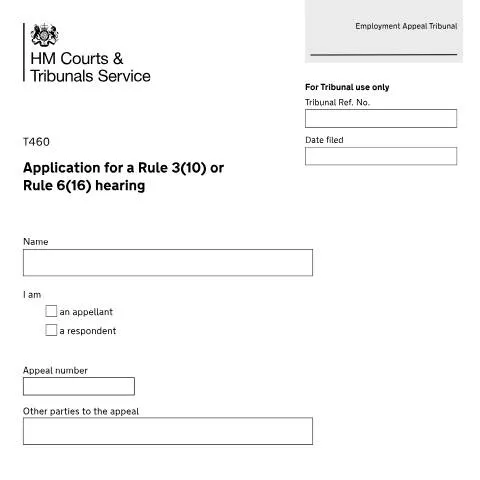
Navigating the T460 Form: A Pathway to Rule 3(10) or Rule 6(16) Hearings
When individuals find themselves involved in an appeal to the Employment Appeal Tribunal (EAT), they may face significant hurdles in presenting their case. The T460 form serves as a crucial tool for those seeking a hearing under Rule 3(10) or Rule 6(16) of the Employment Appeal Tribunal Rules. Such hearings are pivotal in determining the viability of an appeal, especially when a judge has rendered a decision that a claim is not reasonably arguable. Completing and submitting this form is not merely procedural; it is an opportunity to clarify misunderstandings and assert your position in a legal framework.
Understanding the Legal Framework Surrounding the T460 Form
The T460 form is governed by a rich tapestry of regulations and practices outlined in the EAT Practice Direction. The rules underpinning this application stem from the overarching need to ensure that all parties involved in tribunal proceedings have a fair chance to present their case. Rule 3(10) and Rule 6(16) address specific circumstances where a hearing may be warranted, challenging decisions made previously by judges. The legal scaffolding includes:
- Employment Appeal Tribunal Rules 1993: Establish the procedural conduct of appeal hearings.
- Relevant Practice Directions: Provide specific guidelines that applicants must adhere to, particularly regarding procedural fairness.
- Judicial Interpretation: Judges’ comments on the grounds for appeal play an essential role in shaping how applications are viewed.
Understanding this regulatory framework is crucial for effectively utilising the T460 form, as it informs applicants about their rights and responsibilities while navigating the appeal process.
Key Components of the T460 Form: A Detailed Breakdown
The T460 form consists of several key sections that applicants need to navigate carefully. Each section serves a distinct purpose and requires thoughtful consideration to avoid common pitfalls. Here’s a closer look:
Section 1: Agreement with Judge’s Reasons
This section asks you to affirm your agreement with certain paragraphs of the judge’s reasons for their decision. Providing clear, specific references to these paragraphs is essential. Here are some tips to remember:
- Be precise: Include the exact paragraph numbers.
- Clarify your stance: State why you concur with these opinions, which can strengthen your application.
Section 2: Disagreement with Judge’s Reasons
In this part, you have the opportunity to challenge the judge’s conclusions. Here’s how to approach this:
- Identify the paragraphs you disagree with.
- Briefly outline your counterarguments, focusing on how they align with existing legal standards or precedents.
Crafting a persuasive argument in this section can significantly influence your case's outcome.
Section 3: Compliance with EAT Practice Direction
This section is critical as it ensures that your grounds for appeal are compliant. You have two pathways:
- Confirm adherence to Sections 3.8, detailing your grounds of appeal.
- Attach a draft of amended grounds if your initial submission did not comply with the Practice Direction.
Failure to meet these requirements can result in dismissal of your application, so thorough attention is warranted here.
Special Considerations for Diverse Applicants
Circumstances surrounding each case can vary greatly. Certain groups may encounter unique challenges when filling out the T460 form:
Foreign Nationals
For applicants who are not UK citizens, additional layers of complexity may arise, particularly concerning jurisdictional issues and legal representation. It is advisable to seek guidance from specialists familiar with immigration law to ensure that your application is not only complete but also contextualised appropriately.
Minors or Individuals Lacking Capacity
In instances where the applicant is a minor or lacks the capacity to represent themselves, it is critical to appoint a guardian or representative. The appointed individual must be well-versed in the legal framework and the specifics of the case to effectively complete the T460 form.
Following Up on Your Application: What Happens Next?
Once the T460 form is submitted, understanding the procedural timeline becomes vital. The EAT will review the form before scheduling a hearing. This process typically involves:
- Initial Review: The tribunal will assess whether the grounds for appeal are sufficiently robust.
- Notification: Both parties will receive notification of the decision regarding the hearing.
- Hearing Scheduling: If the application is accepted, a date for the hearing will be set.
Monitoring the progress of your application through the tribunal’s case management system can provide updates and necessary information.
Timeline Considerations: From Submission to Hearing
The timeline for processing a T460 application can vary significantly. Here’s what applicants should generally expect:
| Action | Typical Duration |
|---|---|
| Submission of T460 Form | Day 0 |
| Initial Review by EAT | 1-2 weeks |
| Notification of Hearing Decision | 2-3 weeks post-review |
| Scheduling of Hearing | 4-8 weeks |
It is essential to understand that delays can occur, particularly during peak periods. Therefore, staying proactive and informed is crucial.
The Role of the T460 Form in the Broader Tribunal Process
Ultimately, the T460 form is more than just a document; it represents a critical juncture within the appeal process. Its successful completion can pave the way for a hearing that may overturn a lower tribunal's decision, thus changing the course of one's legal journey. The stakes are high, and clarity within this document can translate into favourable outcomes.
Final Thoughts on Mastering the T460 Application Process
Successfully navigating the T460 application for Rule 3(10) or Rule 6(16) hearings requires diligence, strategy, and an understanding of the legal landscape. Given the complexities involved, consider consulting legal expertise to refine your submission and enhance your chances of success. Emphasise clarity, precision, and compliance with EAT regulations to ensure your application does not fall short of its objectives.
Understanding the Procedural Context of Form T460 Hearings
Before diving into the specifics of Form T460, it is crucial to comprehend the procedural framework surrounding it. Applications for a Rule 3 (10) or Rule 6 (16) hearing typically arise under the Civil Procedure Rules (CPR) governing the conduct of civil litigation in England and Wales. Rule 3 (10) addresses the power of the court to strike out a claim or a defence if it appears to be an abuse of the court's process or is otherwise likely to fail; Rule 6 (16) deals with particular requirements for service of documents in certain circumstances.
The application process is often influenced by the particulars of the case at hand. For a Rule 3 (10) hearing, parties must present a robust argument that the claim has no reasonable prospect of success, potentially relying on case law to support their position. In contrast, a Rule 6 (16) hearing may focus on procedural compliance and whether the defendant has been adequately notified of the proceedings. It is essential to have a clear understanding of these rules, as they guide both the application process and the judge's considerations during the hearing.
Preparing for Your T460 Hearing: Key Considerations
Preparation for a Rule 3 (10) or Rule 6 (16) hearing requires meticulous attention to detail and a strategic approach. Firstly, it is advisable to engage in thorough legal research to ensure your arguments are grounded in sound legal principles and precedents. Understanding previous rulings in similar cases can offer valuable insights into how judges may view your application.
Furthermore, consider the following steps in your preparation:
- Document Compilation: Collect all relevant documents that substantiate your case, including witness statements, expert reports, and any correspondence that highlights procedural failures or the merits of your claim.
- Drafting Your Application: Ensure your Form T460 application is comprehensive and well-articulated. Clearly state the grounds for your application, referencing the applicable rules and any pertinent case law. A well-drafted application can significantly enhance your chance of success.
- Legal Representation: Depending on the complexity of your case, you may wish to consider legal representation. A solicitor or barrister experienced in procedural matters can provide invaluable guidance, particularly if your case involves nuanced legal arguments or if you are unfamiliar with court procedures.
Lastly, keep in mind that clear communication is key during the hearing itself. Practice delivering your arguments succinctly and with confidence, anticipating potential questions from the judge.
Post-Hearing Outcomes and Next Steps
The outcome of a T460 hearing can significantly influence the trajectory of your case, whether it results in a dismissal of the claim under Rule 3 (10) or a determination regarding service issues under Rule 6 (16). Understanding the implications of the judge’s decision is essential for proceeding effectively.
If your application is successful, the judge may strike out the claim, leading to either a dismissal of the case or a direction for the claimant to take further steps before the case can proceed. On the other hand, if the application fails, you may need to prepare for the next stages of litigation, which could include further hearings or a trial.
In cases where the ruling is not favorable, an appeal might be an option worth exploring. However, it’s important to consult the CPR to understand the specific grounds for appeal and to adhere to the strict time limits involved in submitting an appeal to the appropriate court.
Additionally, regardless of the outcome, maintaining clear and organized records of all proceedings and correspondence is crucial. This documentation can serve as an important reference for any future legal strategies or actions you may wish to pursue.