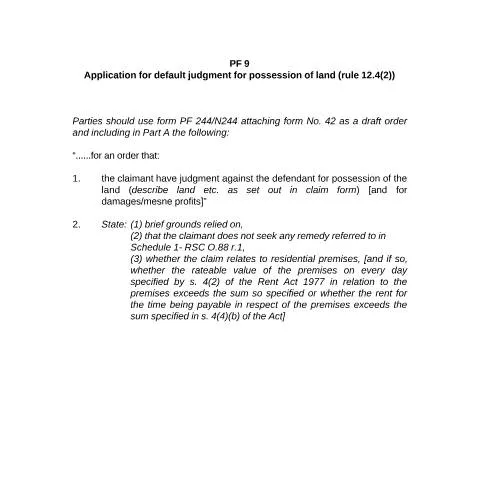
Navigating the Complexity of Form PF9: A Practical Guide
Engaging with the HM Courts & Tribunals Service can often feel daunting, especially when faced with crucial legal processes involving land possession. Form PF9 is pivotal for landlords seeking to reclaim their property through a court order, making it essential to understand its purpose, requirements, and procedural intricacies.
The Role of Form PF9 in Land Possession Proceedings
The use of Form PF9 emerges within a specific legal context, often when a landlord has already issued a claim for possession but has not received the expected response from the tenant. This form is utilized under rule 12.4(2) of the Civil Procedure Rules, allowing landlords to apply for a default judgment when the tenant fails to respond or defend their position within the set timeframe.
Legal Context and Implications
Form PF9 is not merely a procedural formality; it has profound implications for both landlords and tenants. The essence of this document lies in its ability to expedite the legal process where the tenant's non-response could otherwise prolong the possession issue. Therefore, understanding its interplay with the broader legal framework is crucial for effective navigation.
Completing Form PF9: Key Areas of Focus
When filling out Form PF9, precision is paramount. Each section requires careful attention to detail to ensure that the application is valid and stands up in court.
Section Breakdown: What Each Part Requires
- Claimant Information: Provide accurate details about the claimant, including name, address, and contact information.
- Defendant Information: Clearly outline the defendant's information. Be exact, as any discrepancies may lead to delays.
- Details of the Land: This section demands a comprehensive description of the property in question. Include the address and any relevant identifiers.
- Grounds for Possession: This is crucial. State succinctly the grounds upon which the possession claim is made. This might include non-payment of rent, breach of tenancy terms, or other legitimate reasons.
Common Pitfalls to Avoid
While filling out the form, many users fall into common traps:
- Incomplete Information: Ensure every section is filled accurately. Leaving out any details may result in rejection.
- Failure to State Grounds Clearly: Ambiguity can lead to complications. Be concise but comprehensive in your explanations.
- Not Following Up: After submission, keep track of your application status. Proactive engagement can avoid unnecessary delays.
Accompanying Documentation: What You Need to Include
Alongside Form PF9, you may need to submit additional documents to support your application. This may include:
Essential Supporting Documents
- Claim Form: Ensure your initial claim form is included, as it provides context for your application.
- Proof of Tenancy: This could be a copy of the tenancy agreement or any correspondence demonstrating the tenant's liabilities.
- Evidence of Non-Payment: Receipts, bank statements, or any documentation highlighting the financial aspect of the claim.
Submission Process: From Application to Judgment
Once Form PF9 is completed, it must be submitted correctly to initiate the process of obtaining a possession order. Here's a structured approach to ensure it's done right:
Steps to Submit Form PF9
- Review: Double-check all information for accuracy.
- Attach Supporting Documents: Ensure all necessary documents are included.
- File with the Appropriate Court: Submit the form to the court that has jurisdiction over your area of property.
- Pay the Required Fee: Be prepared to pay any court fees associated with your application.
Post-Submission: What Happens Next?
After submission, there are several potential outcomes:
- Acknowledgment from the Court: You should receive confirmation of your application.
- Potential Hearing: If the tenant responds, a hearing will be scheduled to address the possession claim.
- Issuance of Judgment: If the court finds in favor of the claimant, a possession order will be issued.
Handling Errors and Missing Information
In the event of errors or missing information in your application, it's essential to act swiftly. Here's how to manage such situations:
Steps to Rectify Issues
- Contact the Court: Reach out to the court where the application was filed for guidance on next steps.
- Submit Corrections Promptly: If corrections are needed, submit them as soon as possible to avoid delays.
- Retain Documentation: Keep records of all communications and submissions related to your application.
Understanding the Timeline: Key Dates to Keep in Mind
Awareness of important deadlines is crucial for the successful navigation of the possession process.
Critical Dates in the Process
| Action | Deadline |
|---|---|
| Submission of Form PF9 | As soon as the tenant has not responded within the stipulated timeframe. |
| Response from the Court | Usually within a few weeks of submission, depending on court workload. |
| Hearing Date (if applicable) | Varies, typically scheduled within a month of the court's acknowledgment. |
| Issuance of Possession Order | Within a few days post-hearing, if granted. |
Special Circumstances: Variations in Application
Certain cases may require special consideration when completing Form PF9. Here are some scenarios that could affect your application:
Unique Situations to Consider
- Foreign Tenants: Ensure compliance with international legal standards and verify if additional documentation is required.
- Tenants Underage: If minors are involved, seek legal advice as the process can differ significantly.
- Complex Situations: If the tenant has raised disputes or counterclaims, additional legal guidance may be necessary to navigate the complexities.
- Urgent Cases: If there’s a risk of significant damage or loss, immediate action may be warranted, possibly involving urgent application procedures.
The Path Forward: After Receiving the Judgment
Once a judgment is issued in favor of the claimant, understanding the next steps is crucial to effectively regain possession of the property.
Next Steps Post-Judgment
- Enforcement of the Possession Order: Should the tenant refuse to vacate, further action may be required to enforce the judgment.
- Consideration of Damages: If applicable, pursue any claims for damages or compensation as outlined in your application.
- Future Tenancy Considerations: Once possession is regained, consider your future approach to tenancies to avoid similar situations.
In navigating the complexities surrounding Form PF9 and the subsequent application for a judgment, it is vital to approach the process with diligence and clarity. Ensuring that every detail is attended to can significantly affect the outcome and efficiency of the proceedings, safeguarding your rights and interests as a landlord in the UK judicial landscape.
Understanding the Legal Context of Form PF9
Form PF9 is an essential document used in the context of possession claims in England and Wales. It is crucial to understand that this form operates under specific rules laid out within the Civil Procedure Rules (CPR), particularly rule 12.4(2), which outlines the procedures for obtaining a judgment for possession of land. The form can be utilized in various situations, such as residential property disputes, commercial leasing issues, and land recovery cases.
When a landlord or a mortgage lender seeks to regain possession of a property, they may start by serving a notice of possession, followed by the initiation of court proceedings if the tenant or borrower does not vacate. Understanding the grounds on which possession is being sought is vital; these can include rent arrears, breach of tenancy obligations, or expiry of a lease. Form PF9 specifically requests the court to grant a judgment for possession under these grounds, thereby allowing the claimant to proceed with possession action.
It's important to note that the process surrounding Form PF9 is not just about filling out paperwork; it involves a comprehensive assessment of the circumstances surrounding the tenancy or lease. The court will require evidence supporting the claim, hence the necessity for proper documentation and legal advice when preparing the application. Missteps in this process can lead to delays or rejections, which can be costly for both claimants and defendants.
Criteria for Completing Form PF9 Successfully
Completing Form PF9 accurately is paramount for a successful application. Before you even begin to fill out the form, it's critical to gather all relevant documentation and understand the specific grounds for possession. Here are some key criteria to consider:
- Clear Identification of Parties: Make sure to include full names and addresses of both the claimant and the defendant(s). Any inaccuracies here can lead to significant delays or complications.
- Grounds for Possession: Clearly state the reasons for seeking possession. This might include rent arrears, damage to property, or other breaches of tenancy. Providing evidence or references to relevant laws strengthens your case.
- Supporting Documents: Attach all necessary documents that support your claim. This includes tenancy agreements, correspondence with the tenant, and any notices served. The completeness of your application can influence the court's decision.
- Filing Fees: Be aware of any court fees associated with submitting Form PF9. The fees can vary depending on the type of claim, and understanding these costs upfront can help avoid unexpected financial burdens.
- Deadline Compliance: Ensure that your application is submitted within the appropriate time frames dictated by the CPR and any prior court orders. Late submissions can lead to automatic rejections.
Additionally, the document must be signed and dated appropriately. If you are the claimant, you must sign the form to assert that the information provided is accurate and truthful. Any discrepancies or falsifications can lead to legal repercussions, including contempt of court.
Post-Submission Actions and Possible Outcomes
Once you have submitted Form PF9 and the court has processed your application, several potential outcomes may arise. Understanding these can help you prepare for the next steps in the possession proceedings.
1. Granting of Possession: If the court finds in favour of the claimant, it may issue a possession order. This order specifies the date by which the defendant must vacate the premises. Depending on the individual circumstances, the court may grant immediate possession or allow a grace period for the defendant to leave.
2. Refusal of Possession: If the court does not find sufficient grounds for the claim, it may refuse the application. In such cases, the claimant may have the option to appeal the decision, but this process can be lengthy and complicated.
3. Directions for Further Action: Sometimes, the court may issue directions that require additional information or documentation before making a final judgment. This is often the case in complex disputes where both parties present significant evidence. It’s essential to follow these directions promptly to avoid unnecessary delays.
4. Possession with Conditions: In certain scenarios, the court may allow possession but impose conditions that must be satisfied before the order is enforced. This could include terms regarding the payment of arrears or necessary repairs to the property.
5. Negotiation Opportunities: After the submission of Form PF9, there might be opportunities for negotiation between the parties. Many disputes are resolved through mediation, and landlords and tenants may find mutually agreeable solutions without continuing through the court process.
It's advisable to remain in close contact with legal representation during this phase, as they can offer valuable guidance on how to navigate the next steps based on the court's outcome. Each response from the court must be considered carefully to ensure that your interests are protected, and appropriate actions are taken.