Navigating Form D50C: A Crucial Step in Family Financial Disputes
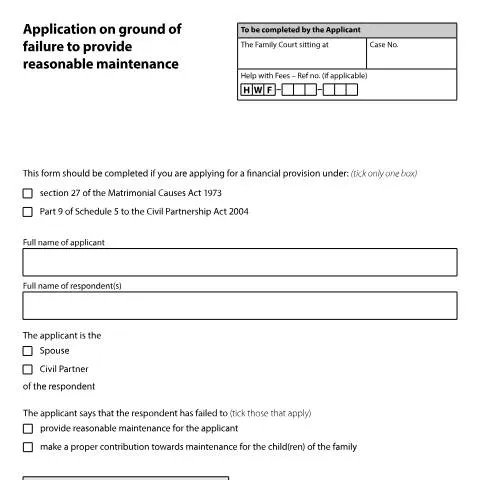
The world of family law can often seem like a labyrinth, particularly when it comes to financial disputes following separation or divorce. Form D50C plays a pivotal role in asserting one party's rights to reasonable maintenance or financial provisions. This application, lodged under the Matrimonial Causes Act 1973 or the Civil Partnership Act 2004, allows the applicant to seek necessary financial support when the other party fails to provide it. Understanding the nuances of this form can significantly impact its outcome, hence why addressing its details is vital.
Understanding the Context: When to Use Form D50C
Form D50C is specifically designed for situations where one party seeks financial assistance from another due to a failure to provide reasonable maintenance. Here are key scenarios in which this form becomes applicable:
- When an individual is facing financial hardship due to a lack of support from their spouse or civil partner.
- In circumstances where children are not receiving sufficient maintenance, and an application is required to secure financial support.
To successfully utilize this form, the applicant must detail their circumstances, clearly outlining their claims for financial support. This requires a comprehensive presentation of the financial situation and any agreements or previous arrangements concerning maintenance.
Breaking Down the Form: Key Sections Explained
Completing Form D50C effectively requires navigating various sections, each designed to extract specific information relevant to the application. Here’s a closer look at the critical components:
Applicant and Respondent Details
At the onset, provide full names of both the applicant and the respondent. These details are crucial as they establish the parties involved in the application. Ensure accuracy to prevent any delays.
Grounds for Application
This section emphasizes what the applicant alleges regarding maintenance failure. It's essential to select correctly between:
- Failure to provide reasonable maintenance for the applicant.
- Inadequate contributions towards maintenance for the children.
Each option carries different legal implications, so choose based on your specific situation.
Financial Details and Jurisdiction
Applicants need to confirm their habitual residence in England and Wales for the past 12 months. This residency is a prerequisite for the court’s jurisdiction. If this condition isn't met, the application may be rejected, so verify this information meticulously.
Child Maintenance Considerations
For applications related to child maintenance, additional specifics are required. Indicate if there's a written agreement regarding maintenance and if the Child Support Agency has issued any calculations. Clarity in this section can greatly influence the court’s perception of the financial landscape.
Submitting Form D50C: Channels and Protocols
Once the form is completed, understanding the submission process is crucial. There are several avenues available:
Electronic Submission
In today's digital age, many applicants prefer online submissions, which can enhance efficiency and speed. However, ensure that the portal used is legitimate and secure, typically provided by HM Courts & Tribunals Service.
Papier Submission
Should you choose to submit the form via post, ensure that all pages are signed and that you've retained copies for your records. Use a reliable postal service to avoid any delays.
In-Person Submission
For those who prefer a more direct approach, visiting the local Family Court can also be an option. This method allows for immediate inquiries and clarifications, but be mindful of opening hours and potential waiting times.
Regardless of the submission method chosen, always check that the correct court is receiving your application to avoid unnecessary complications.
Post-Submission: What to Expect Next
After submitting Form D50C, it's crucial to understand the subsequent steps:
- Awaiting a Response: Depending on the court’s schedule, you may receive a hearing date or additional queries regarding your application.
- Potential Court Hearing: Be prepared to attend a hearing where both parties can present their cases. This is a critical stage where evidence supporting your claims should be presented.
- Outcomes: The court may issue an order regarding maintenance. If unsuccessful, further options, such as appeals, may be considered.
Handling Challenges: Addressing Refusals and Errors
In the event of a refusal or if errors are identified in your application, several pathways can be navigated:
Identifying Errors
Examine any correspondence from the court for outlined reasons for refusal. Common pitfalls include:
- Incomplete or inaccurate information.
- Failure to demonstrate grounds for the application.
- Jurisdictional issues, such as residency not being established.
Rectifying Issues
If errors are found, you can amend your application by providing additional information or correcting inaccuracies as instructed by the court. Ensure all revised submissions are accompanied by a cover letter explaining the changes and your reasons for rectification.
Preparing Supporting Documentation: A Critical Component
Submission of supporting documents can significantly bolster your application. Prepare these documents meticulously, as they provide the necessary evidence to substantiate your claims:
Types of Supporting Documents
- Financial Statements: Bank statements, payslips, and any other income sources should be collected to reflect your financial situation.
- Evidence of Previous Agreements: Any prior contracts or recorded arrangements regarding maintenance must be included.
- Child-Related Documentation: Birth certificates, school records, or any expense documentation linked to children can enhance your case regarding child maintenance.
Organizing Your Evidence
Organize documentation in a clear and logical manner. Use dividers for different sections and ensure each document is clearly labeled. This organization will facilitate smoother processing and help avoid unnecessary delays.
Exploring Outcomes: What Orders Can the Court Grant?
Form D50C can lead to a variety of orders that the court may grant depending on the circumstances and evidence presented:
| Order Type | Description |
|---|---|
| Interim Periodical Payments | Temporary financial support until a final decision is made. |
| Periodical Payments Order | Regular payments that the respondent must pay to the applicant or for the children. |
| Lump Sum Order | A one-time payment that addresses all or a portion of the financial claim. |
The nature of the order granted will often hinge on the details provided in the form, the evidence presented, and the circumstances surrounding the maintenance issue. Therefore, being thorough and precise is paramount.
Final Thoughts: The Importance of Thoroughness and Accuracy
Completing Form D50C goes beyond merely filling out a document. It requires a thorough understanding of one’s rights, obligations, and the specific details of the financial situation at hand. Each section is a step toward ensuring that rightful maintenance is either obtained or contested. As with any legal process, attention to detail and clarity of information can have a lasting impact on the outcome. Therefore, approach this task with diligence, seek professional guidance if necessary, and ensure that you are fully prepared for the journey ahead.
Understanding the Grounds for Filing Form D50C
When dealing with maintenance disputes in the UK, understanding the grounds for filing Form D50C is crucial. This form is specifically designed for cases where one party claims that the other has failed to provide reasonable maintenance. Reasonable maintenance can vary significantly depending on individual circumstances, including the financial situation, the needs of the claimant, and any additional responsibilities, such as caring for children or elderly relatives.
Fill in your form directly online
No printing: type your details into the boxes of the official form, tick, then download the PDF ready to send.
- 1Type into the form boxes
- 2Tick in one click
- 3Save and download the PDF
Before submitting Form D50C, ensure that your application clearly delineates the reasons for claiming inadequate maintenance. Supporting documentation such as bank statements, pay slips, and any correspondence regarding maintenance payments can substantiate your claim. It is also beneficial to outline any attempts made to resolve the issue amicably before resorting to legal action.
For example, if you have documented instances of non-payment or late payments, this evidence should be included in your application. Additionally, consider the timing of your application. If the maintenance issues have recently arisen, it may reflect poorly on your case if a significant delay occurs before filing Form D50C. Timeliness helps demonstrate the urgency of your situation and the need for intervention by the courts.
What Happens After Submitting Form D50C?
Once you have submitted Form D50C, several steps follow in the administrative process. Initially, the court will acknowledge receipt of your application and provide you with a case number, which is essential for tracking your application throughout the process.
Next, the court will assess whether your application meets the legal criteria for proceeding. This might involve a preliminary hearing where both parties can present basic information regarding their circumstances. The judge will examine the evidence and may offer mediation as a first step toward resolution. Mediation is encouraged in many cases to foster amicable solutions without the need for an extended court process.
If mediation fails, the case will then proceed to a full hearing. At this stage, both parties will have the opportunity to present detailed evidence, including witness statements and expert testimonies, if necessary. The court will consider all aspects of the case before making a determination regarding reasonable maintenance obligations. This decision can have significant implications on the financial responsibilities moving forward.
It's essential to be well-prepared for the hearing, as the judge will scrutinize all presented evidence. Having legal representation or consulting with an advisor experienced in family law can be invaluable in ensuring your application is robust and effectively presented.
The Role of Child Maintenance in Form D50C Applications
Child maintenance often plays a vital role in applications submitted via Form D50C, particularly when children are involved. In cases where one parent is not fulfilling their maintenance obligations, the other parent might face financial hardship, making it imperative to address the issue promptly and through the correct channels.
When filing Form D50C, specify any child maintenance arrangements that have failed to meet reasonable expectations. The Child Maintenance Service (CMS) can assist in calculating reasonable maintenance based on income and the needs of the child, and incorporating these calculations into your application may strengthen your case.
Consider detailing the impact of insufficient maintenance on the child's welfare, such as the inability to meet basic needs (food, clothing, education). The court prioritizes the best interests of the child, and presenting a clear narrative that illustrates how maintenance deficiencies adversely affect the child can significantly bolster your application.
If you previously had an informal agreement for maintenance that has not been followed, be prepared to present evidence of these discussions, as informal arrangements may lack the enforceability of legally binding agreements. It can be useful to consult the CMS for guidance on formalising arrangements and the implications of existing agreements versus current circumstances.
Lastly, understanding the guidelines set by the CMS regarding maintenance rates can also provide context to your application. Being well-informed about what constitutes reasonable maintenance under the law will facilitate a more persuasive application.