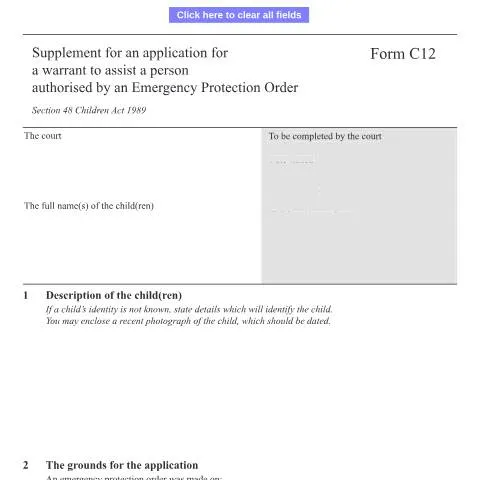
Navigating the Form C12: A Vital Component in Emergency Protection
When a child's safety is at stake, swift and decisive action is crucial. The Supplement for an Application for a Warrant to Assist a Person Authorised by an Emergency Protection Order, known as Form C12, plays a pivotal role in this process. Designed for use within the context of the Children Act 1989, this form is essential for those seeking judicial assistance in enforcing an emergency protection order. In this article, we will explore the intricate workings of Form C12, its importance, and the steps required to complete and submit it effectively.
Dissecting the Role of Form C12 in Child Protection
The necessity of Form C12 arises in situations where an emergency protection order (EPO) is issued by a court. This order allows specified individuals, typically social workers or law enforcement officers, to take immediate action to ensure a child's safety. However, complications can arise, such as individuals being denied access to the child or premises. This is where Form C12 becomes instrumental, allowing for the issuance of a warrant to facilitate access.
Understanding Emergency Protection Orders
An EPO is often a response to urgent circumstances, such as allegations of abuse or neglect. The use of Form C12 follows the issuance of an EPO, highlighting that:
- The child may be in immediate danger.
- A person may be obstructed from accessing the child or premises.
- Legal measures are necessary to uphold the EPO.
Getting Ready: Preparing Your Application
Before diving into the completion of Form C12, understanding the documentation required is essential. Here's a detailed look at the necessary preparations:
Required Documentation
Gathering the right materials can significantly streamline the application process. Key documents include:
- Copy of the Emergency Protection Order: This is crucial for reference and must accompany your application.
- Identification Details of the Child: This may include a recent photograph for verification purposes, especially if the child’s identity is uncertain.
- Supporting Reports: Any reports or evidence that support your application should be included. Make sure to note the author and date of these documents.
A Step-by-Step Guide to Completing Form C12
Completing Form C12 requires careful attention to detail. Each section of the form has specific requirements that must be met. Let's break down this process.
Section Breakdown
| Section | Details Required | Common Pitfalls |
|---|---|---|
| 1. Description of the Child | Full name(s) and any identifying details. | Omitting key identifiers may lead to delays. |
| 2. Grounds for Application | The date and time of the EPO, along with the circumstances preventing access. | Failure to attach the order copy may result in the application being rejected. |
| 3. Directions Sought | Specify preferences for accompanying persons during warrant execution. | Vagueness in instructions could complicate enforcement. |
| 4. Reasons for Application | Documentary evidence supporting the need for a warrant. | Neglecting to include reference documents weakens your case. |
Filing Your Application: Channels and Procedures
Once Form C12 is completed, understanding the various channels for submission is vital. The filing process can differ based on the urgency and specifics of the case.
Submission Channels
You can file your application through the following methods:
- In Person: Visit your local court that handles family law matters. This allows for immediate feedback from court staff.
- By Post: Mail your completed Form C12 and supporting documents. Ensure you send it to the correct court address to avoid delays.
- Online Submission: Certain courts may allow online filing. Check with HM Courts & Tribunals Service for availability.
Chronology of Events: From Application to Decision
Understanding the timeline involved with Form C12 is critical for managing expectations and ensuring timely action.
The Timeline
- Submission: Ensure you submit Form C12 as soon as possible after an EPO is issued.
- Review Period: Expect a review by court officials, which can vary based on case load.
- Issuance of Warrant: If approved, a warrant is issued, allowing for the specified actions to be taken.
- Execution: The warrant must be executed by law enforcement, which may involve taking the child into protective custody.
Special Considerations: Handling Complex Situations
Certain unique circumstances can complicate the use of Form C12. Understanding these can help you navigate potential hurdles.
Complexities in Case Types
- International Cases: If the child is abroad, additional legal frameworks may come into play, requiring international cooperation.
- Children with Disabilities: Extra care and consideration must be given to the specific needs of disabled children under EPO.
- Minor Applicants: In cases where the applicant is a minor, legal representation may be required to complete Form C12.
Post-Submission: Understanding the Next Steps
After the submission of Form C12, it is crucial to be aware of the outcomes and further actions that may be required:
After the Application
Following the granting of a warrant, several scenarios may arise:
- The child is successfully retrieved and placed in a safe environment.
- Additional hearings may be scheduled to review the ongoing situation and ensure the child’s safety.
- Continuous communication with social services and legal representatives is essential to navigate the next steps effectively.
Final Thoughts: Ensuring Effectiveness in Urgent Situations
The importance of Form C12 cannot be overstated. It serves as a vital tool in the judicial process for protecting children in emergency situations. By understanding its role, preparing the necessary documentation, and following appropriate submission channels, applicants can significantly enhance their chances of a favorable outcome. Each step, from the initial application to the execution of the warrant, carries weight in ensuring the safety and well-being of vulnerable children. Being thoroughly prepared and informed not only aids in navigating the legal landscape but also reinforces the overarching objective: the protection of children at risk.