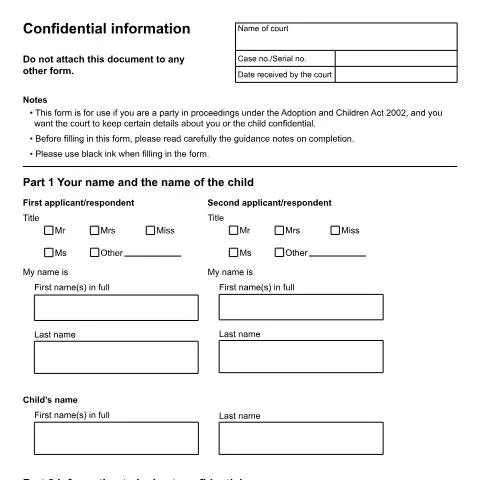
Understanding the Significance of Form A65: Confidential Information
In the landscape of family law proceedings in the UK, navigating the complexities of confidentiality during cases under the Adoption and Children Act 2002 is crucial. Form A65 serves as a pivotal tool for individuals seeking to protect sensitive information within the court context. This article delves into the specifics of Form A65, shedding light on its importance, the process of submission, and the nuanced handling of confidential information throughout the legal journey.
Who Needs Form A65 and When to Use It?
Form A65 is primarily utilized by parties involved in legal proceedings concerning adoption and child welfare. Its role becomes essential when there is a need to shield personal details from public access. Individuals who find themselves in specific situations, especially those involving sensitive family matters, should be familiar with the context in which Form A65 is necessary.
Key Situations Requiring Form A65
- Adoption Proceedings: If you are a party in an adoption case, protecting your address and contact details is crucial to ensure privacy.
- Child Welfare Cases: When involved in cases concerning child safety and well-being, the confidentiality of your information can be pivotal.
- Change of Surname Applications: If you are applying to change the surname of a child, confidentiality for the proposed name may be sought.
In each of these contexts, the importance of maintaining confidentiality cannot be overstated. It serves not just to protect your identity but also to create a safe environment for the child involved.
A Comprehensive Guide to Completing Form A65
Filling out Form A65 correctly is essential for ensuring that your request for confidentiality is considered. The form requires specific information to be disclosed while allowing for sensitive details to be kept hidden.
Essential Section Breakdown
- Part 1: Your Identification
- Provide your full name along with the child's name. This includes first names and surnames, ensuring clarity in identification.
- Part 2: Information to Keep Confidential
- List your address and phone number with an option to keep this information confidential.
- Include the child’s address and the name of the person the child lives with, if applicable.
- If requesting a change to the child’s surname, this information should also be noted and marked for confidentiality.
Submitting Form A65: The Process Unpacked
Once completed, the submission of Form A65 requires careful attention to detail to ensure that your request is processed without delay. It is crucial to know the proper channels for submission to maintain confidentiality effectively.
Steps for Submission
Do Not Attach to Other Forms: Form A65 must be submitted independently and should not be amalgamated with other forms.
Submission Timing: If you are initiating a court application, include Form A65 at the point of application. If you are responding to a court notice, submit it alongside your acknowledgment of the notice.
Court Designation: Ensure that you send the form to the correct court handling your case, as indicated in your notices or legal correspondence.
Await Confirmation: After submission, monitor the case's progress through the court system. Keep an eye on any communication from HM Courts & Tribunals Service, which may require additional information or confirmation of confidentiality.
The Role of HM Courts & Tribunals Service in Handling Confidential Information
Understanding how HM Courts & Tribunals Service treats confidential information submitted via Form A65 is essential for the parties involved. The court maintains strict protocols to protect the integrity of confidential details.
Confidentiality Protocols
- Information Security: Details shared in Form A65 will not be disclosed to third parties unless ordered by the court.
- Monitoring and Tracking: Parties can track the progress of their submissions and receive notifications regarding any decisions or necessary follow-ups.
- Legal Protection: The court aims to safeguard the confidentiality of all sensitive information, providing peace of mind to those involved in sensitive cases.
This ensures that sensitive details remain protected during and after legal proceedings.
Understanding Your Rights and Obligations When Using Form A65
Awareness of your rights and obligations is paramount when engaging with Form A65. It is essential for applicants and respondents alike to know what to expect throughout the process.
Key Rights and Responsibilities
Rights:
- You have the right to request that specific details remain confidential.
- You can expect the court to handle your request with due diligence and respect for privacy.
Obligations:
- Accuracy is vital; providing false information on Form A65 can lead to contempt of court proceedings.
- Timely submission is necessary to ensure that your confidentiality request is considered in relation to the case's timeline.
Understanding these rights and obligations helps navigate the complexities of family law and ensures that your interests are adequately protected throughout the legal process.
Dealing with Specific Circumstances and Complex Cases
Certain situations may complicate the use of Form A65, revealing the necessity of tailored approaches for various profiles of users. These nuances can affect the overall outcome of confidentiality requests.
Special Considerations
International Parties: If you are a non-UK resident seeking adoption or involvement in child welfare cases, specific provisions might be necessary to ensure your confidentiality is maintained across international jurisdictions.
Minors and Guardianship Issues: When minors are involved, obtaining appropriate consent and ensuring that their information is safeguarded is crucial. The legal framework around consent must be navigated carefully, especially in cases where the minor's welfare is at stake.
Emergency Situations: In urgent cases, the court may take immediate action to protect confidentiality. Understanding the triggers for expedited handling can aid parties in seeking timely resolutions.
Tracking Your Submission: Monitoring Form A65 Status
Once Form A65 has been submitted, it is critical to have a method for tracking its status within the court system. Here’s how you can effectively monitor your submission.
Monitoring Steps
Receive Acknowledgment: Ensure that you receive a confirmation of your submission, either through a letter or electronic notification.
Utilize Court Resources: Check with HM Courts & Tribunals Service for updates on your case. They may have online portals or helplines that provide real-time information.
Follow Up: If you have not received updates within a reasonable timeframe, do not hesitate to contact the court directly for clarification on your form’s status.
By actively monitoring your submission, you can ensure that your request for confidentiality is being considered as part of the broader legal proceedings.
What Lies Ahead After Submitting Form A65
Understanding the implications of submitting Form A65 is crucial for all parties involved. The outcomes can shape the trajectory of your case significantly.
Possible Outcomes and Next Steps
- Granted Confidentiality: If your request is successful, your personal information will be kept confidential, positively impacting the proceedings.
- Further Information Required: The court may request additional information or clarifications, necessitating prompt responses to avoid delays.
- Legal Implications: If the court denies your request for confidentiality, you may need to prepare for the disclosure of your details in public hearings or documentation.
Being aware of these potential outcomes allows parties to remain proactive and prepared for the various scenarios that may unfold after submission.
Fill in your form directly online
No printing: type your details into the boxes of the official form, tick, then download the PDF ready to send.
- 1Type into the form boxes
- 2Tick in one click
- 3Save and download the PDF
Final Thoughts on Form A65: Navigating Confidentiality in Legal Proceedings
Engaging with Form A65 is a critical step for anyone involved in proceedings under the Adoption and Children Act 2002 seeking to maintain confidentiality. By understanding the nuances of the form, the submission process, and the implications of confidentiality within legal proceedings, individuals can better navigate this complex terrain.
Throughout the journey, it’s important to remain informed, proactive, and engaged with the legal process to ensure that your rights and the child’s rights are upheld, fostering a safe environment for all parties involved.
Understanding Confidential Information Under Form A65
The Form A65 is a crucial tool utilized by various governmental departments, particularly in contexts where sensitive personal data must be disclosed or requested. This form is not just a procedural requirement; it embodies the principles laid out in the Data Protection Act 2018 and the UK GDPR, which govern how personal information is processed and safeguarded. The essence of the A65 is to ensure transparency while protecting individuals’ rights. It is important to understand what constitutes confidential information within this framework, as it dictates what can be disclosed and under what circumstances.
Confidential information typically refers to any data that is not public knowledge and is considered sensitive by individuals or organizations. This includes, but is not limited to, identification details, financial records, and medical histories. When filling out Form A65, it is essential to identify and mark these types of information clearly. This helps the authorized entities know what information is to be treated with a higher level of confidentiality. An understanding of what is considered confidential is essential to avoid unintentional breaches of data protection laws.
The form also includes specific sections that address how the disclosed information will be used. This is crucial not only for compliance with the legal framework but also for building trust with individuals whose data is being processed. Applicants must ensure that their consent is informed, meaning they must be aware of how their information will be utilized, who will have access to it, and the measures taken to secure it. Failure to adhere to these guidelines can lead to legal repercussions, including fines and penalties from the Information Commissioner’s Office (ICO).
Filling Out Form A65: Tips and Best Practices
Completing Form A65 requires attention to detail and an understanding of the specific requirements outlined by the relevant authorities. Here are some best practices to follow when filling out this form to ensure that it meets all legal and procedural requirements:
- Provide Clear and Accurate Information: All details on Form A65 must be accurate. Any discrepancies can lead to delays in processing, or worse, rejection of the application. Double-check all information, including your National Insurance number, as errors can complicate matters.
- Be Specific About Confidential Information: When disclosing confidential information, be explicit about what data is sensitive. Use annotations or highlight sections where necessary. Clarity helps in processing and ensures that only the required information is shared.
- Adhere to Deadlines: Timeliness is critical. Depending on the context of your application, you may have to adhere to specific deadlines. For example, if this form is part of a tax return, ensure you submit it well before the 31 January deadline to avoid penalties.
- Keep Copies of Your Submission: Always retain a copy of the completed form for your records. This not only assists in future references but also can serve as proof if any disputes arise regarding the submitted information.
- Seek Professional Advice if Necessary: If you are unsure about any aspect of the form, especially regarding the confidentiality of certain information, seek guidance from a legal professional or a data protection officer. Taking proactive steps can save you from potential pitfalls.
By following these suggestions, individuals can ensure their Form A65 is accurately filled out and compliant with the necessary legal frameworks, which helps protect their rights and information.
What Happens After Submitting Form A65?
Once Form A65 is submitted, the processing of the information can vary depending on the context in which the form is used. Understanding what comes next is essential for applicants, as it provides clarity on the timeline, potential outcomes, and the importance of follow-up actions.
The processing time can differ significantly based on the department handling your application. For instance, if it relates to a tax return context, you might expect to see an acknowledgment from HMRC confirming receipt of the form, typically within a few weeks. However, if the form is part of a more complex application, such as a legal proceeding under HM Courts & Tribunals Service, it may take considerably longer due to the detailed examination of the submitted data.
After submission, applicants may be contacted for additional information or clarification. It is crucial to respond promptly to any such requests to avoid delays. Keeping a line of communication open with the office handling your form is advisable, as it allows you to stay informed regarding the status of your application.
Moreover, it is essential to be aware of how the disclosed confidential information will be treated post-submission. Under the Data Protection Act 2018, organizations are required to implement appropriate security measures to protect personal data from unauthorized access, loss, or damage. Applicants have the right to inquire about the measures in place to ensure their data's confidentiality and security.
Finally, once the processing is complete, individuals should receive a formal response regarding their application. This might include additional requests, approvals, or denials, along with explanations where necessary. It is crucial to review this response carefully and ensure that any instructions provided are followed correctly, especially if further steps are required to rectify or advance the application.