Understanding the C8 Confidential Contact Details Form in UK Family Court Proceedings
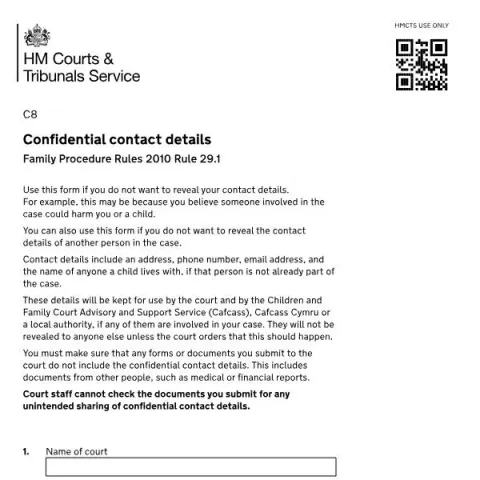
The C8 form is an official document issued by the HM Courts and Tribunals Service, specifically designed for use within family law proceedings under the Family Procedure Rules 2010. Its primary purpose is to enable individuals involved in a case to request that certain contact details be kept confidential from other parties, in order to protect their safety or the safety of a child. This article provides an in-depth overview of the form’s purpose, eligibility criteria, how to complete it, and the procedures following submission.
Purpose and Scope of the C8 Form
The C8 form is used when a party to a family case believes that revealing their contact details could pose a risk of harm or harassment. Examples include situations where an individual is residing in a refuge or has concerns about their safety if their address, phone number, email, or details of a child’s residence are disclosed to other parties involved in the case. The form allows the applicant to request that these details remain confidential, thus preventing their disclosure in court documents and to other involved parties, unless the court orders otherwise.
It is important to note that the confidentiality request applies solely to the contact details listed on the form. The court and related agencies, such as Cafcass, will retain these details for case management purposes but will not share them publicly or with other parties without a court order.
Who Can Use the C8 Form and Eligibility Conditions
The form is intended for individuals involved in family proceedings where there is a concern for safety or privacy. Typical applicants include parents, guardians, or other parties to proceedings involving children. Eligibility is generally based on the applicant’s belief that revealing contact details could cause harm or distress.
Specifically, the form can be used if:
- The applicant fears harm or harassment if their contact details are disclosed.
- The person whose details are to be kept confidential is currently residing in a refuge or similar safe accommodation.
- The applicant wishes to protect the privacy of a child or another person involved in the case.
Each person whose details are to be kept confidential must have a separate form submitted on their behalf.
Step-by-Step Guide to Completing the C8 Form
1. Filling in Court and Case Details
Start by providing the name of the court handling the case and the case number. These details are essential for the court to identify the proceedings accurately.
2. Listing the Child(ren) and the Person Whose Details Are to Be Kept Confidential
Include the full names of any children involved in the case, and specify the full name of the individual whose contact details you wish to keep confidential.
3. Providing Confidential Contact Details
Only include contact information that you believe the other parties do not already know. This may include addresses, phone numbers, email addresses, or details of where a child resides if they are not already known to other involved parties.
If you wish to keep the details of another person confidential, you must complete a separate form for each individual.
4. Indicating Refuge Residency
Answer whether the person is currently residing in a refuge. This information supports the confidentiality request and provides context for the court’s decision.
Fill in your form directly online
No printing: type your details into the boxes of the official form, tick, then download the PDF ready to send.
- 1Type into the form boxes
- 2Tick in one click
- 3Save and download the PDF
5. Signing the Statement of Truth
The form requires a statement affirming that the information provided is true. Both the applicant or their legal representative and the respondent can sign this statement, acknowledging the legal implications of providing false information, including potential contempt of court proceedings.
Post-Submission Procedures and Considerations
Once the form is submitted, the court will review the confidentiality request. If granted, the court will issue directions to ensure that the confidential contact details are not included in any publicly available documents or disclosed to other parties unless explicitly ordered.
It is crucial that any documents submitted to the court, such as medical or financial reports, do not contain the confidential contact details listed on the form. Court staff are not responsible for checking these documents for inadvertent disclosures, so applicants should be diligent in redacting sensitive information.
Important Reminders
- Completing the C8 form does not automatically guarantee confidentiality; the court must approve the request.
- Applicants should keep copies of the submitted form and any correspondence with the court.
- Legal advice may be beneficial, especially if the case involves complex safety concerns or multiple parties.
In summary, the C8 form provides a vital safeguard for individuals involved in family law cases who need to protect their privacy and safety. Proper completion and understanding of this form are essential to ensure that confidentiality is maintained effectively throughout the legal proceedings.