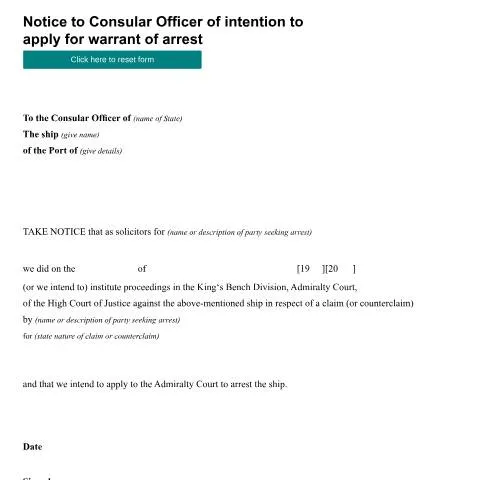
Navigating the Legal Waters: Understanding Form ADM6
When engaging with maritime law, particularly in the context of admiralty proceedings, the Notice to Consular Officer of Intention to Apply for Warrant of Arrest (Form ADM6) serves a critical function. This document embodies the formal notification required when a party intends to apply for a warrant to arrest a vessel. The document is an essential part of the legal framework that allows claimants to secure their rights and interests in a ship that may otherwise seek to evade jurisdiction.
The Context of Form ADM6: A Legal Necessity
The ADM6 notice arises from the King’s Bench Division of the High Court of Justice in England and Wales. It is particularly relevant in cases where a party has a claim against a ship, which can include a variety of disputes ranging from unpaid debts to damages due to breaches of contract. Utilizing this document appropriately is paramount in ensuring that legal proceedings can commence effectively.
- Identifying the Claimant: The form must clearly delineate who is seeking the arrest, thus establishing the legal standing of the party involved.
- Details of the Ship: Accurate information regarding the vessel, including its name and port of registry, is crucial for the correct issuance of the warrant.
- Nature of the Claim: A brief description of the claim or counterclaim provides context for the application, ensuring that the consular officer grasps the legal basis for the request.
Step-by-Step: Executing the Notice Process
Implementing the ADM6 notice involves several steps that vary based on the specific maritime situation, but generally follows this pathway:
- Preparation of Documentation: Gather all necessary documents that support the claim, including contracts, invoices, and any previous correspondence related to the dispute.
- Filling in the ADM6 Form: Ensure all sections of the notice are filled out accurately, detailing the claimant, the ship, and the nature of the claim.
- Submission to the Consular Officer: The completed Form ADM6 must be presented to the relevant consular officer in the state where the ship is registered.
- Awaiting Confirmation: After submission, monitor for the issuance of the warrant which authorizes the arrest of the ship.
Understanding the Legal Basis: Jurisdiction and Procedure
Admiralty law in the UK is steeped in a rich tapestry of historical precedents and statutory provisions. The ADM6 form is grounded in the following legal principles:
- Jurisdiction of the Admiralty Court: The court possesses jurisdiction over matters relating to maritime commerce, which encompasses the arrest of vessels.
- International Maritime Law: The notice aligns with international conventions that govern maritime claims and the arrest of ships, including the Convention on the Arrest of Ships.
- Protection of Rights: The process safeguards the rights of claimants, ensuring that ships cannot simply leave a jurisdiction without facing the claims against them.
Common Misinterpretations: Avoiding Pitfalls
While the usage of the ADM6 form is straightforward, several common misinterpretations pose risks to those unfamiliar with the legal intricacies:
Misunderstanding Claim Validity: Not every claim qualifies for arrest; claims must be maritime in nature. Personal claims or those unrelated to the vessel's operation will likely be dismissed.
Incorrect Vessel Information: Providing inaccurate details about the ship can lead to significant delays or outright rejections of the notice. Always double-check the vessel's name and registration information.
Who Benefits from Form ADM6?
This procedural tool is indispensable for various stakeholders in the maritime industry:
- Legal Practitioners: Solicitors representing clients in maritime disputes will utilize the ADM6 to initiate proceedings effectively.
- Shipowners: Understanding the implications of a warrant of arrest is crucial for shipowners who may find their vessels detained due to claims.
- Insurance Companies: Insurers involved in maritime risks must be aware of the processes to potentially mitigate losses following an arrest.
Integration with Other Legal Documents
The ADM6 notice does not function in isolation; it is closely linked with several other legal documents and processes:
| Document | Purpose |
|---|---|
| Claim Form | Initiates the lawsuit and outlines the particulars of the claim against the defendant. |
| Warrant of Arrest | Issued upon successful application of the ADM6, allowing the vessel to be detained. |
| Response to Claim | The defendant's document outlining their defense against the claim. |
This interconnectedness underscores the importance of meticulousness when preparing the ADM6, as errors can lead to a domino effect in the associated legal proceedings.
Practical Scenarios: When Is Form ADM6 Indispensable?
There are numerous practical scenarios where the ADM6 notice becomes vital:
- Unpaid Freight Claims: A shipping company may find itself seeking to arrest a vessel for unpaid freight charges, necessitating the use of the ADM6.
- Damage to Cargo: If a cargo is damaged during transit, the claimant may wish to leverage the ADM6 to secure the vessel until claims are resolved.
- Compensation for Breach of Contract: Disputes arising from breaches of charter agreements often lead to claims that require the arrest of the vessel involved.
Each scenario emphasizes the strategic role of the ADM6 in safeguarding the rights of claimants, allowing for initial leverage in the maritime legal landscape.
Essential Considerations Post-Submission
After the Form ADM6 has been submitted, several considerations must be kept in mind:
- Follow-up Actions: After submitting the notice, claimants should ensure that they remain informed of any developments regarding the issuance of the arrest warrant.
- Engaging with Legal Counsel: Ongoing communication with solicitors who specialize in admiralty law is crucial to navigate subsequent stages of the legal process.
- Preparedness for Potential Defenses: Be ready to counter any defenses that may be raised by the shipowner, including challenges to jurisdiction or the validity of the claim.
This proactive approach can significantly impact the resolution timeline of maritime disputes and the effectiveness of the legal strategy employed.
Understanding the ADM6 Form and Its Importance
The ADM6 form is an essential document in the context of international law enforcement, specifically dealing with the issuance of a warrant for arrest. This form serves as a notice to the relevant consular officer that a formal application for an arrest warrant is forthcoming. Understanding its nuances is vital for those involved in this process, particularly legal professionals and individuals facing such legal circumstances.
One of the primary reasons that the ADM6 form exists is to ensure that due process is followed. When a warrant of arrest is issued, it must comply with international treaties and laws that govern cross-border legal matters. The form effectively communicates to the consular officer that the applicant intends to pursue legal action, thereby enabling the appropriate actions to be taken from a diplomatic perspective.
Fill in your form directly online
No printing: type your details into the boxes of the official form, tick, then download the PDF ready to send.
- 1Type into the form boxes
- 2Tick in one click
- 3Save and download the PDF
Furthermore, completion of the ADM6 form requires attention to detail and accuracy. Any discrepancies or errors may not only delay the process but may also result in legal consequences for the applicant. Therefore, it is crucial that the form includes all relevant information, such as the nature of the alleged crime, the identity of the accused, and details about the intended jurisdiction for the warrant.
Step-by-Step Guide to Completing the ADM6 Form
Completing the ADM6 form can be daunting, especially for those unfamiliar with legal terminologies and procedures. Here’s a detailed step-by-step guide to help applicants navigate this process more smoothly.
- Gather Required Information: Before filling out the form, ensure you have all necessary details at hand. This includes the full name, date of birth, and nationality of the person for whom the warrant is being requested, as well as any known aliases.
- Detail the Allegations: Clearly outline the reasons for pursuing the arrest warrant. Include specifics about the alleged offence, including dates, locations, and any evidence that supports the claims. This information is crucial for the consular officer to assess the validity of the request.
- Identify the Jurisdiction: Specify which legal jurisdiction the warrant should fall under. This is particularly important if the individual in question is located in a foreign country, as different jurisdictions may have varying legal frameworks.
- Consult Legal Experts: If necessary, seek guidance from solicitors or legal advisors who specialise in international law. They can provide insights into how best to present your case and ensure compliance with legal requirements.
- Review and Submit: Before submitting the ADM6 form, review all the information for accuracy and completeness. Submission usually involves not only sending the form but may also require attaching supporting documents, such as proof of identity and evidence of the alleged offence.
Potential Outcomes After Submitting the ADM6 Form
Once the ADM6 form has been submitted, applicants may wonder what the subsequent steps are and what outcomes to expect. The process can vary significantly, depending on various factors including the nature of the case, the location of the individual in question, and the response from the consular officer.
Upon receiving the form, the consular officer will conduct an initial review. If the information provided is satisfactory, they may proceed with the issuance of the arrest warrant. However, there can be complications. For instance, if the consular officer deems the request insufficient or lacking evidence, they may reach out for further clarification or documentation.
Another possible outcome is the need for diplomatic discussions. In cases where the warrant involves extradition, the consular officer may engage in talks with the authorities in the country where the individual is located. This negotiation process can influence the speed at which the warrant is executed, as different countries have their own legal protocols regarding extradition.
Additionally, if an arrest is made, the individual may have the right to contest the warrant, leading to a potential legal battle that could extend the timeline significantly. It is important for applicants to be prepared for these various scenarios and understand that while submitting the ADM6 form initiates a process, the outcome can be unpredictable and may require ongoing legal support.