Navigating the N211(CHFL) Claim Form: Essential Insights
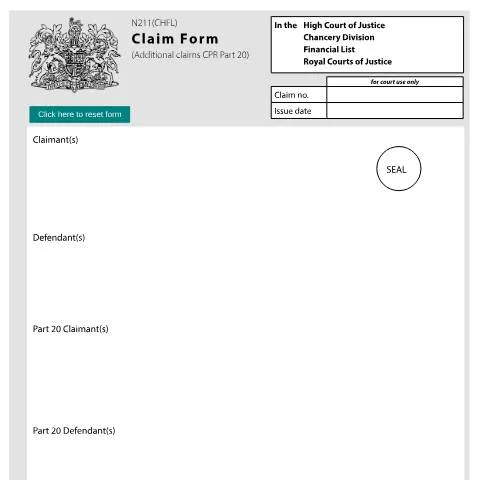
The N211(CHFL), or Claim Form Part 20 for the Chancery Division Financial List, plays a pivotal role when pursuing additional claims in the High Court of Justice. This document serves as a formal notice for escalating claims alongside existing litigation, particularly within the financial sector. Understanding this form is crucial for claimants and defendants alike, as it can significantly impact the outcome of financial disputes. This article dives deep into the intricacies of the N211(CHFL), offering practical insights on its importance, completion, submission, and the subsequent processes involved.
Understanding the Context: When and Why the N211(CHFL) is Used
The N211(CHFL) form is utilized in situations where a party wishes to make an additional claim against an existing defendant or add a new party to ongoing proceedings. Typically, this may happen in cases involving complex financial issues such as partnerships, trust disputes, or contractual disagreements where multiple parties are involved. The need for clarity in these claims cannot be overstated, given the potential ramifications on the rights of all parties involved.
- Initial Conditions: A valid existing claim must be in progress.
- Time Sensitivity: Additional claims need to be filed promptly to avoid delays in the litigation process.
- Complex Situations: Cases with multiple claimants or defendants often necessitate the use of this form.
Legal Framework and Guidelines
This form operates under the Civil Procedure Rules (CPR), specifically Part 20. It provides a structured approach for making additional claims, ensuring that all parties receive adequate notice of the claims against them. The guidelines set forth in the CPR dictate the timelines and requirements for filing, which must be meticulously adhered to in order to avoid dismissal of the claim.
Step-by-Step Guide to Completing the N211(CHFL)
Completing the N211(CHFL) requires attention to detail. Each section of the form must be filled out accurately to reflect the specifics of the claim being made. Here’s a detailed breakdown of the form’s sections:
Claim Details
At the top of the form, you'll need to provide the claim number and the date of issue. This information is vital as it links your additional claim to the ongoing case. Ensure that you use the same claim number referenced in the original proceedings to avoid confusion.
Claimant(s) and Defendant(s)
- Claimant(s): List all the parties making the claim. This includes both the original claimant and any new parties involved in the additional claim.
- Defendant(s): Similarly, note all individuals or entities being claimed against. This might differ from the original set of defendants, hence accuracy is crucial.
Financial Breakdown
The financial aspect of the claim must be clearly outlined. This includes:
- Amount Claimed: Detail the total amount being claimed.
- Court Fee: Include the fees associated with filing the claim.
- Legal Costs: If represented, outline the anticipated legal costs.
Be mindful that inaccuracies here could lead to delays or complications in processing your claim.
Submitting the N211(CHFL): Channels and Procedures
Submission of the N211(CHFL) can be done in several ways, each with its own implications. Understanding these can help streamline the process:
Online Submission vs. Paper Filing
While the HM Courts & Tribunals Service allows for electronic submission, it’s essential to determine if your case qualifies for this. Many litigants opt for online filing due to its speed and efficiency. However, should you choose to file on paper, ensure that all copies are legible and complete.
- Online Submission: Generally faster and provides an immediate confirmation of receipt.
- Paper Submission: Must be mailed or delivered in person to the Chancery Registry. Keep copies of all documents submitted.
In-Person Filing
For those who prefer direct interaction, the Chancery Registry at the Rolls Building allows for in-person submissions. This also provides an opportunity to ask any immediate questions about the process.
After Submission: Tracking Your Claim and Administrative Processes
Once submitted, it is crucial to stay informed about the status of your claim. The court will process the N211(CHFL) as part of the existing proceedings. Here’s what to expect:
What Happens Next?
- Notification: The court will notify all parties involved regarding the new claims.
- Response Time: Defendants typically have a limited time frame (often 14 or 28 days) to respond to the additional claim.
Following Up
If you do not receive confirmation of your claim being registered or if there is a delay in the response from the defendants, it’s wise to follow up with the court. You can contact the Court Manager’s office at the Chancery Registry using the claim number as a reference to facilitate quicker service.
Specific Scenarios: Navigating Unique Circumstances
Various situations can arise that may necessitate additional considerations when filling out the N211(CHFL). These include:
Foreign Claimants
Individuals or entities based outside the UK must ensure compliance with the relevant international laws and may require legal consultation to navigate potential complexity in jurisdictional issues.
Minors or Individuals with Limited Capacity
Claims involving minors or individuals deemed incapable of managing their legal affairs may require the appointment of a litigation friend. This representative can help navigate the claims process, ensuring that the rights of the minor or incapacitated person are protected.
Urgency in Claims
In situations where immediate action is necessary, consider requesting an expedited hearing. Clear justification for the urgency must be provided, and it's essential to act swiftly given the deadlines set forth by the court.
Understanding the Consequences of Non-compliance
Failure to adhere to the requirements of the N211(CHFL) can have serious repercussions. Here are some potential consequences:
- Dismissal of the Claim: Incorrectly completing the form or missing the submission deadline could lead to outright dismissal.
- Delay in Proceedings: Administrative errors can prolong the resolution of financial disputes, impacting all parties involved.
- Legal Costs: Bear in mind that delays or errors may lead to increased legal expenses.
Final Thoughts: The Importance of Accurate and Timely Submission
The successful submission of the N211(CHFL) is integral to navigating complex financial disputes within the Chancery Division. By understanding the specific requirements, processes, and potential pitfalls associated with this form, claimants and defendants can effectively advocate for their interests. Whether dealing with additional claims or managing multiple parties, the clarity and precision of the N211(CHFL) can significantly influence the trajectory of the legal proceedings. Remember, staying informed and proactive will always serve you well in the realm of commercial litigation.
Understanding the Chancery Division Financial List
The Chancery Division of the High Court in England and Wales deals primarily with issues related to equity, trusts, and property disputes. Within this division exists a specific framework known as the Financial List, which was established to deal with complex financial disputes, including those involving high-value claims and intricate financial instruments. The Financial List aims to streamline the handling of these cases, ensuring they are allocated to judges with the relevant expertise. This specialised procedure will typically be used in cases where the claim exceeds £50,000 or where there is a significant point of law or complexity that necessitates involvement at this level.
Fill in your form directly online
No printing: type your details into the boxes of the official form, tick, then download the PDF ready to send.
- 1Type into the form boxes
- 2Tick in one click
- 3Save and download the PDF
Practitioners and parties looking to engage with the Financial List must navigate specific procedural rules. Claims under the Financial List often require a clear articulation of the financial issues at hand and must adhere to the Civil Procedure Rules (CPR) that govern all claims in the High Court. Understanding the purpose of the Financial List is key; it is designed to offer a more efficient route for financial disputes, thereby alleviating the burden on other divisions of the court. For those preparing to file a claim, it’s essential to review the relevant case law and precedents that may influence the outcome of similar disputes.
Filing Requirements and Key Considerations
When submitting a Claim Form Part 20 (Form N211(CHFL)), there are several important filing requirements that claimants must adhere to in order to ensure their claim is processed without unnecessary delays. First and foremost, you must ensure that the claim is properly drafted according to the CPR guidelines. The claim form should clearly state the basis of the claim, the parties involved, and the specific relief sought. It is also important to include any necessary supporting documentation that substantiates the financial aspects of the claim, such as contracts, financial statements, or expert reports.
Another crucial aspect of filing is the payment of the court fees associated with the submission of the claim form. The fee structure can be complex and varies depending on the value of the claim; it is advisable to consult the latest fees outlined by HM Courts & Tribunals Service (HMCTS) to ensure that you are aware of the current rates. Additionally, the claimant must also ensure compliance with the Data Protection Act 2018 when submitting personal data as part of the claim. This includes ensuring that any sensitive financial information is handled in accordance with UK GDPR mandates.
Moreover, if your claim is related to a financial product or investment, it may be pertinent to consider whether any regulatory frameworks, such as the Financial Services and Markets Act 2000, apply to your case. Understanding the intersection between court processes and regulatory requirements is vital for successful claims, especially in intricate financial disputes where misrepresentation or breach of fiduciary duty could be at stake.
Preparation for Hearings and Evidence Submission
Preparation for hearings in the Chancery Division Financial List is a critical phase of the claim process and demands meticulous planning. Once the claim has been filed and served, both parties are required to exchange evidence and witness statements ahead of the hearing. This is in line with CPR's rules on disclosure and the need for parties to present a clear and comprehensive case to the court.
When preparing your evidence, you should consider not only the documents that substantiate your claim but also the types of evidence that can be compelling in a financial dispute. Expert evidence, such as financial analysis or forensic accounting reports, may be necessary to clarify complex aspects of your claim. Engaging an expert early in the process can provide insights that shape not only your evidence but also your strategy moving forward.
It’s also important to be mindful of the court’s expectations regarding the management of hearings. The court typically favours a structured approach, which includes adhering to deadlines for submissions and ensuring that all documentation is submitted in an organised manner. Familiarity with the court’s timetable and the practice directions relevant to the Financial List will help in structuring your submissions effectively. Additionally, parties should prepare for the possibility of mediation or settlement discussions, as the courts encourage parties to seek resolutions outside of formal hearings where appropriate.
Attending the hearing itself requires preparation not just in terms of your case but also in how to present it. Understanding courtroom etiquette, being able to respond to questions from the judge effectively, and maintaining a professional demeanor can significantly impact the perception of your case. Each of these elements plays a role in the overall presentation and reception of your claim within the Financial List.