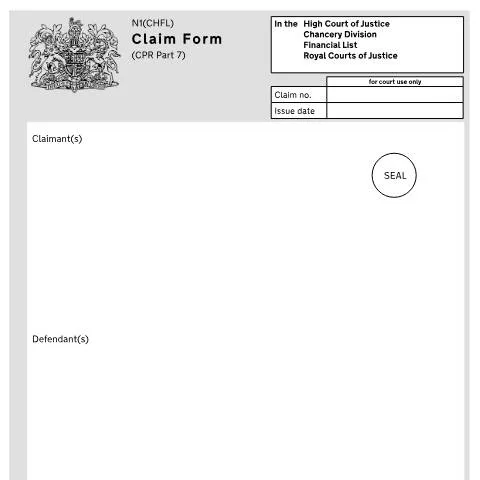
The Significance of Form N1(CHFL) in Financial Claims
Filing a financial claim in the High Court can be a daunting process, particularly when navigating the complexities of legal documentation. Among the critical documents required is the N1(CHFL) Claim Form, specifically tailored for cases within the Chancery Division Financial List. This form serves as the legal foundation for initiating a claim regarding financial disputes that require court intervention. Its accurate completion is essential for the claim's legitimacy and subsequent processing.
Understanding the Chancery Division Financial List
The Chancery Division of the High Court primarily deals with cases involving business matters, property disputes, and financial issues. The Financial List within this division is designed for claims where the amount in dispute exceeds £50,000. Introduced to manage complex financial claims more efficiently, it includes cases such as corporate disputes, insolvency matters, and financial remedies in family law.
Historical Context and Legal Framework
Form N1(CHFL) operates under the Civil Procedure Rules (CPR), which were established to streamline and simplify judicial processes in England and Wales. The rules surrounding the use of this form have evolved, reflecting changes in legal practice and the need for efficient dispute resolution. The CPR Part 7 governs the initiation of claims, emphasizing the importance of clear and concise documentation.
Components of Form N1(CHFL)
Completing the N1(CHFL) requires attention to detail as it comprises several key sections:
- Claimant and Defendant Information: Full name and address details for both parties.
- Details of the Claim: A brief description outlining the nature of the financial claim.
- Amount Claimed: The total amount being sought must be clearly stated.
- Statement of Truth: A declaration asserting the accuracy of the information provided, which holds legal significance.
Step-by-Step Guide to Completing Form N1(CHFL)
Filing a claim using Form N1(CHFL) involves several deliberate steps. Here’s how to successfully navigate the process:
- Gather Information: Collect all necessary details regarding the claim, ensuring you have the correct names and addresses for both the claimant and defendant.
- Complete the Form: Fill in each section of the N1(CHFL) accurately, especially the particulars of the claim, which might require additional documentation.
- Review for Accuracy: Double-check all entries to avoid delays caused by mistakes or omissions.
- Attach Supporting Documents: Any relevant evidence that supports your claim should be attached to the form.
- File the Form: Submit the completed N1(CHFL) at the Chancery Registry. Ensure you pay the appropriate court fee, which varies depending on the amount claimed.
Important Considerations During Filing
Several factors can impact the filing process:
- Timing: The claim must be issued within the limitation period relevant to the type of financial claim being filed.
- Legal Representation: Consider whether you need a legal representative to assist with the filing and subsequent court proceedings.
- Potential Costs: Be aware of court fees and any legal costs that may arise throughout the process, as these can accumulate quickly.
The Court’s Response to the N1(CHFL) Submission
Once the N1(CHFL) is filed, the court will process the claim. This typically involves:
- Issuance of Claim Number: Upon acceptance, the court will issue a unique claim number, which must be referenced in all future correspondence.
- Service of Claim Form: The claim form must be served on the defendant, alongside any additional particulars of claim.
- Defendant's Response: The defendant is required to respond within a specified period, usually 14 days from receipt of the claim form.
Implications of the Defendant’s Response
The defendant can either admit or dispute the claim. If they admit, the court may enter judgment in favour of the claimant. Conversely, if the defendant disputes the claim, they must file an acknowledgment of service, indicating their intention to defend the claim, which may lead to a further exchange of particulars. This phase is critical, as it sets the stage for whether a trial will occur or if the matter can be resolved through alternative dispute resolution methods.
Consequences of Inaccuracies or Omissions
Failing to correctly complete the N1(CHFL) or neglecting to follow procedural rules can result in significant setbacks:
- Rejection of Claim: The court may refuse to accept your claim due to incomplete or inaccurate information.
- Delays: Errors can lead to further administrative processes, prolonging the resolution of your claim.
- Increased Costs: Additional court fees may arise from resubmission or further correspondence needed to clarify issues.
Understanding Your Rights as a Claimant
As a claimant, submitting the N1(CHFL) entitles you to specific rights within the judicial system:
- Right to a Fair Hearing: Once your claim is accepted, you are entitled to present your case fairly in court.
- Access to Information: You have the right to request information related to your case from the court and other parties involved.
- Right to Appeal: If a decision is made that you disagree with, there are avenues available to appeal, subject to conditions.
Next Steps Following a Successful Claim
If the court rules in your favour, several crucial steps follow:
- Enforcement of Judgment: You may need to take additional actions to enforce the court’s decision, particularly if the defendant does not comply voluntarily.
- Potential Costs Recovery: You may recover certain legal costs, but this depends on the circumstances and the court’s ruling regarding costs.
- Consideration of Future Actions: Depending on the outcome, you may need to consider further legal actions or settlements, especially in ongoing disputes.
Complexities in Financial List Cases
The Financial List is designed to handle high-value claims, often involving complex financial arrangements. As such, legal representation is often advisable to navigate the intricacies:
- Expert Evidence: Cases may require expert witnesses to substantiate claims, particularly in financial matters.
- Case Management: The court may implement a tailored case management plan to ensure timely progression through the judicial system.
- Confidentiality Concerns: Certain financial claims may involve sensitive information that necessitates privacy measures.
Navigating Subsequent Appeals or Reviews
Should you find yourself needing to challenge the outcome of the claim or aspects of the ruling, understanding the process for appeals is essential. Generally, you will need to apply for permission to appeal and demonstrate that there are grounds for reconsideration, which can include:
- Errors in Law: Indicating that the judge made a legal mistake during the proceedings.
- New Evidence: Presenting new information that could significantly impact the case outcome.
- Procedural Irregularities: Highlighting any breaches of the rules that affected your ability to receive a fair trial.
Final Considerations for Claimants
Filing a claim using Form N1(CHFL) is just one part of a broader legal process involving substantial rights and obligations. A clear understanding of these aspects, as well as diligent attention to the particulars of your claim, can significantly influence the outcome. Engaging with legal professionals who specialize in this area is often advisable, ensuring that your interests are adequately represented throughout the process.
Fill in your form directly online
No printing: type your details into the boxes of the official form, tick, then download the PDF ready to send.
- 1Type into the form boxes
- 2Tick in one click
- 3Save and download the PDF
As you embark on filing your claim, remember that the effectiveness of your submission directly correlates to the clarity and accuracy of the information you provide. This can ultimately determine the speed and success with which your claim is handled in the High Court.
Understanding the Chancery Division Financial List
The Chancery Division of the High Court deals primarily with matters relating to equity and trusts, property, and commercial disputes. Within this division, the Financial List was established to handle claims of a financial nature with a view to providing a streamlined process for complex financial cases, particularly those involving significant sums or intricate financial arrangements. This list caters to disputes that require the expertise of judges who are well-versed in financial and commercial law, thus ensuring that claimants receive a high level of judicial scrutiny and expertise in their matters.
The Financial List is particularly relevant for cases involving issues such as insolvency, financial misrepresentation, and complex contractual disputes where the financial stakes are exceptionally high. This section will elaborate on the specific types of cases that can be included under the Financial List, the rationale behind its establishment, and how it benefits the parties involved in such legal proceedings.
Filing Your Claim: Key Considerations When Completing Form N1(CHFL)
When preparing to file a claim using Form N1(CHFL), it is essential to ensure that the form is completed meticulously. The quality and thoroughness of the information you provide can significantly impact the outcome of your claim. Here are some critical considerations to keep in mind:
- Detailing the Claim: Clearly articulate the basis of your financial claim. Include a robust statement of facts that outlines the chronological events leading to the dispute. Ensure that your claim clearly specifies the relief or remedy sought, which may include financial compensation, injunctions, or specific performance.
- Evidence Submission: Attach all relevant documentation that supports your claim. This may include contracts, financial statements, correspondence, or other pertinent records. The more comprehensive your evidence, the stronger your position will be during proceedings.
- Responding to Counterclaims: Be prepared for the possibility that the defendant may file a counterclaim. It is crucial to address this possibility by anticipating potential defenses and preparing your response accordingly.
- Jurisdictional Considerations: Verify that the Chancery Division has jurisdiction over your case. This includes ensuring that the matter falls within the specified financial thresholds and that appropriate procedural steps have been taken prior to submitting your claim.
- Compliance with Time Limits: Be aware of the time limits for filing your claim. Different types of financial claims may have different limitation periods, and failure to adhere to these can result in your claim being barred. It is advisable to consult legal guidance or the appropriate guidelines provided by HM Courts & Tribunals Service to ensure compliance.
By paying close attention to these considerations when completing Form N1(CHFL), claimants can significantly enhance the chances of a successful outcome in their financial claims under the Chancery Division.