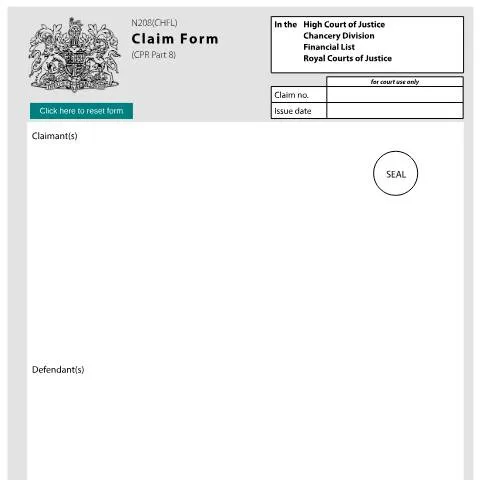
Navigating the Financial Maze: The Role of Form N208(CHFL) in Chancery Division Proceedings
In the labyrinth of legal processes and financial disputes, the Form N208(CHFL) stands as a pivotal document within the Chancery Division of the High Court of Justice. Individuals or businesses can find themselves in complex financial predicaments, necessitating the use of this form to initiate a legal claim. Understanding the nuances of this form is paramount for claimants seeking resolution through the courts. This article delves into the intricacies of the N208(CHFL), providing a detailed guide for claimants on how to effectively navigate their financial claims.
Understanding the Context: When is Form N208(CHFL) Necessary?
Form N208(CHFL) comes into play within the context of financial disputes that fall under the Chancery Division's jurisdiction. This could involve a range of issues from contractual disputes to issues surrounding company law and trusts. Recognising when to utilise this form can significantly impact the outcome of a case.
Key Triggers for Filing Form N208(CHFL)
- Financial Disputes: Any claim regarding money owed or financial obligations.
- Contractual Issues: Breach of contract claims often necessitate this form.
- Trusts and Estates: Claims related to the administration of trusts or disputes over estates.
Claimants must ascertain that their issue aligns with these categories before proceeding. The Chancery Division specifically deals with these areas, making the N208(CHFL) an essential tool for asserting one's legal rights.
Decoding the Filing Process: From Preparation to Submission
Completing and submitting Form N208(CHFL) requires meticulous attention to detail. Claimants should follow a systematic approach to ensure compliance with court requirements.
Preparation Steps
- Gather Necessary Information: Collect all relevant details such as the nature of the claim, the parties involved, and supporting documents.
- Complete the Form: Fill out the N208(CHFL) accurately, ensuring all required fields are complete.
- Calculate Fees: Understand the court fees associated with your claim, as this will need to be submitted alongside the form.
Each of these steps is crucial for a successful submission. Inaccuracies or omissions can lead to delays or rejections of your claim.
Detailed Insights: Filling out Form N208(CHFL)
The form consists of several sections, each serving a specific purpose in the claim process. Familiarity with these sections can aid claimants in presenting their case effectively.
Breakdown of the Form Sections
| Section | Description |
|---|---|
| Claimant(s) | Details of the individual or entity making the claim. |
| Defendant(s) | Information about the party being claimed against. |
| Details of Claim | A comprehensive statement outlining the nature of the claim. |
| Statement of Truth | A declaration affirming the truthfulness of the claim. |
Attention to detail in each section is imperative. The Statement of Truth, in particular, carries legal weight, signifying that the claimant believes in the veracity of their statements.
A Critical Timeline: Key Dates and Next Steps
Timeliness is a cornerstone of legal proceedings. Understanding the crucial dates associated with Form N208(CHFL) ensures that claimants remain compliant with court expectations.
Filing Timeline
- Initial Filing: Form N208(CHFL) must be filed as soon as the claimant is ready to commence legal proceedings.
- Response Time: Once the claim is filed, the defendant typically has 14 days to respond.
- Follow-up Actions: Depending on the defendant's response, further steps may include mediation or court hearings.
Missing these critical timelines can jeopardise the claimant's case, underscoring the importance of adhering to the stipulated deadlines.
Implications of Filing: Rights and Responsibilities
By submitting Form N208(CHFL), claimants embark on a legal journey that confers specific rights and imposes certain obligations.
Rights Granted by Filing
- Legal Recognition: Filing the form officially registers the claim with the court.
- Access to Court Resources: Claimants gain access to court facilities and legal advice.
- Potential for Resolution: The court may facilitate negotiations or hearings to resolve the dispute.
Responsibilities Associated with Filing
- Payment of Fees: Claimants are responsible for any associated court fees.
- Providing Accurate Information: Any inaccuracies can lead to legal consequences.
- Engagement with Proceedings: Claimants must participate in court hearings or mediation sessions as required.
Understanding these rights and responsibilities helps claimants better prepare for the implications of their actions within the legal framework.
Form N208(CHFL) in the Larger Context of Legal Proceedings
The N208(CHFL) does not exist in isolation; it is part of a broader legal process that facilitates financial claims within the Chancery Division. This interconnectivity can have significant implications for claimants.
Related Proceedings and Forms
- Form N1: Standard claim form for general civil claims.
- Form N207: Used for proceedings that fall under Part 7 of the Civil Procedure Rules.
- Pre-Action Protocols: Necessary steps that must be followed before filing, which may involve various forms and correspondence.
By recognising how Form N208(CHFL) fits into this larger framework, claimants can better navigate their legal journey and understand the potential pathways their case may take.
Anticipating Outcomes: What Happens After Filing?
Once Form N208(CHFL) is submitted and acknowledged by the court, the next steps will largely depend on the defendant's response and subsequent court decisions.
Potential Scenarios Following Submission
- Defendant Responds: If the defendant responds within the stipulated time frame, the case will proceed to the next phase, which may involve mediation or court hearings.
- No Response: If the defendant fails to respond, the claimant may apply for a default judgment.
- Settlement Negotiations: At any stage, parties may engage in negotiations to settle the dispute outside court.
Each scenario necessitates different strategies and may influence the outcome of the claim. The claimant's readiness to adapt to changing circumstances is crucial for a successful resolution.
Final Thoughts: Preparing for the Legal Journey Ahead
Form N208(CHFL) serves as more than just a document; it represents a claimant's first step in the legal process to resolve financial disputes. Proper understanding and preparation for filing this form can significantly affect the journey ahead.
Claimants should invest time in familiarising themselves with the requirements, timelines, and potential outcomes associated with Form N208(CHFL). By doing so, they empower themselves to navigate the complexities of the legal system with confidence and clarity.
Understanding the Chancery Division Financial List
The Chancery Division Financial List plays a crucial role in the UK judicial system, particularly for cases involving complex financial disputes. This division is designed to deal with claims that have a financial element, often arising from issues such as partnerships, shareholder disputes, or financial mismanagement. The court is known for its expertise in handling intricate financial matters, and as such, the use of Form N208(CHFL) is particularly relevant for applicants looking to initiate proceedings.
Fill in your form directly online
No printing: type your details into the boxes of the official form, tick, then download the PDF ready to send.
- 1Type into the form boxes
- 2Tick in one click
- 3Save and download the PDF
One of the key features of the Chancery Division Financial List is its focus on expediency and efficiency. Cases are often heard sooner compared to other divisions, providing a timely resolution for parties involved. The procedural rules are structured to allow for flexible case management, meaning that the court can adapt its procedures based on the complexity and specific circumstances of each case. This includes the ability to schedule hearings at short notice and to allow for interim measures to protect assets during the litigation process.
Filling Out Form N208(CHFL) Accurately: Common Pitfalls
While completing Form N208(CHFL) may seem straightforward, there are several common pitfalls that applicants should be aware of to avoid delays or complications in the application process. One major issue is failing to provide adequate supporting documentation. Applicants must ensure that all relevant documents are included, such as copies of contracts, financial statements, and any correspondence related to the dispute. Failure to provide this information can lead to the court declining to accept the application, or worse, it may jeopardize the applicant's case.
Another common mistake is incorrect information regarding the parties involved. The form requires clear identification of all parties, including their addresses and any relevant legal representatives. Inaccuracies or omissions in this section can lead to significant delays, as the court may need to seek clarifications or resubmit notices to involved parties. It is also essential to be precise with details regarding the claim amount, the nature of the financial dispute, and any relief sought. Misrepresenting these details, whether intentional or accidental, could result in serious legal consequences.
To mitigate these risks, it is advisable to read the form thoroughly and, if necessary, consult with a legal professional familiar with the Chancery Division. They can provide insights into the specific requirements and help ensure that the application is comprehensive and accurate, thereby increasing the likelihood of a successful outcome.
The Role of Legal Representation in Chancery Division Cases
While individuals can represent themselves in court, navigating the complexities of the Chancery Division Financial List often necessitates legal representation. Engaging a solicitor with experience in financial disputes can enhance the efficiency of the proceedings and improve the chances of a favorable outcome. Legal professionals can help articulate the case clearly and provide valuable insights into potential strengths and weaknesses in the argument.
Additionally, solicitors are adept at managing procedural requirements, ensuring that all necessary documents are filed correctly and on time. They can also represent clients during hearings, where their knowledge of court etiquette and legal protocols can be invaluable. This is particularly important in the Chancery Division, where legal arguments can become intricate and require sophisticated understanding and articulation.
Moreover, having legal representation can also facilitate negotiations. Many cases in the Chancery Division may settle before reaching a full hearing, and having a solicitor can help in discussions with the opposing party or their representatives. They can help negotiate terms that might otherwise be difficult for an unrepresented individual to secure.
Ultimately, while self-representation is an option, the benefits of expert legal counsel cannot be overstated, particularly in financial disputes where the stakes are high and the legal landscape can be daunting.