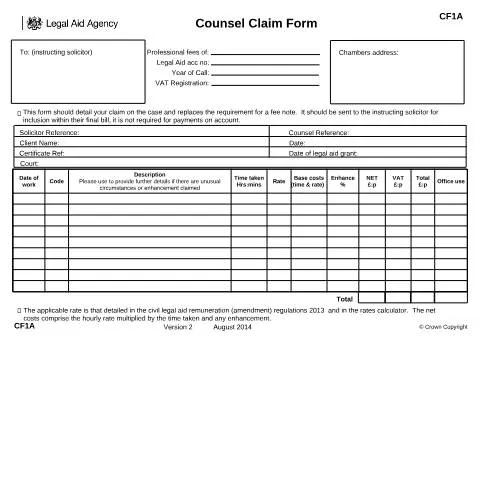
Navigating the CF1A: The Counsel Claim Form for Legal Aid
When it comes to securing legal representation under the UK’s legal aid system, the CF1A (Counsel Claim Form) plays a crucial role in ensuring that solicitors and counsel are compensated for their professional services. This document is not just another piece of paperwork; it serves as a detailed declaration of the work completed by legal counsel, allowing proper reimbursement from the Legal Aid Agency.
Who Should File the CF1A and Why?
The CF1A is primarily filled out by barristers or advocates who are representing clients under the legal aid scheme. It is essential for a variety of professionals, including:
- Barristers: Those who provide legal advice and representation, particularly in court.
- Advocates: Legal professionals representing clients in hearings or other legal proceedings.
- Solicitors: Although they do not fill out the CF1A directly, they are responsible for forwarding it to the Legal Aid Agency as part of the overall legal aid billing process.
Understanding the circumstances under which the CF1A must be completed is vital. The form is required to accompany the solicitor's final bill but is not necessary for payments on account. This distinction is essential to avoid confusion and ensure timely payments.
Decoding the CF1A: Key Sections and Common Pitfalls
Filling out the CF1A correctly is paramount. Missteps can lead to delays or even rejection of claims. Here, we break down the key sections of the form and highlight common pitfalls:
Essential Information: The Basics
The initial part of the CF1A requires crucial identifiers:
- Legal Aid Account Number: This unique identifier is critical for processing the claim.
- Client Name: Accurate spelling and details ensure the claim is linked to the correct case.
- Certificate Reference: This number ties the claim to the specific legal aid certificate.
Inaccuracies in these sections can lead to significant delays in payment. Always double-check name spellings and reference numbers.
Work Descriptions: Detailing Services Provided
Each service claimed must be detailed in the work description section. Counsel must specify:
- Total Hours Worked: This should be recorded in hours and minutes.
- Hourly Rate: Each service has a predefined rate according to the Civil Legal Aid Remuneration Regulations of 2013.
- Enhancements: If any work required special circumstances or urgency, counsel may claim a percentage enhancement of the hourly rate, which must be justified.
Common pitfalls here include vague descriptions. Always provide specific details about what was done, especially if unusual circumstances are claimed. For instance, instead of simply stating "attendance," specify if it was for advising on merits or negotiations.
Completing the CF1A: A Step-by-Step Guide
Understanding how to complete the CF1A effectively can be the difference between a smooth submission and a frustrating delay. Here’s a chronological breakdown:
- Initial Assessment: Begin by determining if the work completed falls under legal aid provisions.
- Fill Out Client Information: Include the client's details, legal aid account number, and reference numbers.
- Document Services Rendered: In detail, indicate the nature of the work, total hours, and applicable rates.
- Claim Enhancements: If applicable, provide a detailed justification for any enhancement claims.
- Review and Submit: Double-check for accuracy before submitting the CF1A to the instructing solicitor.
By following this structured approach, advocates can ensure a complete and accurate claim submission.
The Importance of Supporting Documents: Justifying Your Claim
Although the CF1A is a self-contained document, it may require additional supporting materials depending on the circumstances surrounding the case. Counsel should consider preparing the following:
- Detailed Fee Notes: While the CF1A replaces the need for separate fee notes, having a comprehensive account of hours worked can bolster the claims made.
- Client Instructions: Documentation showing the brief received from the solicitor can validate the type of work performed.
- Correspondence Records: Emails or letters that outline advice provided or negotiations conducted can add weight to claims, particularly for enhancements.
The preparation of these documents should be aligned with the work detailed in the CF1A to avoid inconsistencies during the review process.
Common Scenarios: When to Use the CF1A
The CF1A might be used in various legal contexts. Understanding these can provide clarity on when it's necessary:
- Family Law Cases: In cases involving custody disputes or divorce proceedings where legal aid is applicable.
- Criminal Defence: If legal aid has been granted for criminal defence, the CF1A can be used for claims related to court appearances.
- Housing and Welfare Issues: Legal aid may also cover assistance in disputes related to housing or welfare benefits.
Each scenario may have its nuances, so legal professionals should tailor their approach accordingly when completing the CF1A.
Keeping Track: Following Up on Your Submission
After submitting the CF1A, it’s critical to follow up to ensure that the claim is processed promptly. Here’s how:
- Request Confirmation: Always ask for confirmation of receipt from the instructing solicitor.
- Monitor Payment Timelines: Familiarize yourself with typical processing times for legal aid claims. This can vary depending on the complexity of the case and the workload of the Legal Aid Agency.
- Proactive Communication: If there are delays beyond the usual timeframe, do not hesitate to contact the solicitor or the Legal Aid Agency for updates.
Being proactive can often expedite the process and mitigate any issues that arise.
Understanding the CF1A in Context: Differentiating from Other Forms
While the CF1A is crucial, it is essential to distinguish it from other similar forms within the legal aid framework:
| Form | Purpose | Use Case | Required by |
|---|---|---|---|
| CF1A | Claim for fees incurred by counsel | Legal representation under legal aid | Barristers & Counsel |
| CF1 | Previous version of the counsel claim form | No longer in use | N/A |
| Client’s Legal Aid Application Form | Application for legal aid | Initial request for funding | Clients |
This table clarifies the specific role of the CF1A as the primary document for barristers seeking compensation for their legal services under the legal aid scheme. Knowing how each form fits into the overall process can save time and prevent confusion.
Final Thoughts: The Role of the CF1A in Legal Representation
In conclusion, the CF1A serves as a vital instrument for legal professionals navigating the complexities of legal aid claims in the UK. By ensuring that all sections are completed accurately and providing appropriate justifications and documentation, barristers and advocates can help facilitate the reimbursement process while ensuring that clients receive the legal support they deserve.
Adopting a meticulous approach to the CF1A not only aids in individual claims but also strengthens the efficacy of the legal aid system as a whole, ensuring that justice remains accessible to those who need it most.
Understanding the CF1A: A Comprehensive Overview
The CF1A form, which serves as a new structure for making counsel claims under the Legal Aid Agency in the UK, replaces the older CF1 form. It is essential for legal representatives to grasp the nuances and requirements of the CF1A to ensure compliance and efficient processing of claims. This form is pivotal for solicitors and barristers seeking reimbursement for counsel fees related to legal aid cases.
When completing the CF1A, several sections must be meticulously filled out, including details about the case, the client, and the specific services rendered. One of the critical sections is the expense claim details, where the counsel must provide a breakdown of the fees charged, including hourly rates and any disbursements incurred. Legal practitioners should be cautious to ensure that their claims align with the prescribed rates set by the Legal Aid Agency, as discrepancies can lead to delays or refusals in payment.
It’s also imperative to understand the eligibility criteria for submitting a CF1A claim. The client must be in receipt of legal aid, as the form is designed to reimburse costs incurred on their behalf. Additionally, there are specific timeframes within which claims must be submitted, typically within three months of the work being completed. Any failure to adhere to these timelines can result in the rejection of the claim.
Moreover, the CF1A includes sections dedicated to outlining the nature of the legal work performed. Legal representatives should provide detailed descriptions of the activities undertaken, whether it be attending court, preparing legal documents, or providing legal advice. This transparency is crucial as it allows the Legal Aid Agency to assess the necessity and appropriateness of the counsel's work in relation to the case.
Common Mistakes to Avoid When Submitting CF1A Claims
Submitting the CF1A form can be a straightforward process if the legal representative is diligent and adheres to the required guidelines. However, there are several common pitfalls that practitioners should be aware of to avoid unnecessary complications or rejections of their claims.
One prevalent mistake is failing to provide adequate supporting documentation. The Legal Aid Agency requires all claims to be backed by evidence, such as invoices, court attendance records, and correspondence related to the case. Inadequate documentation can lead to claims being delayed or denied. Legal representatives should ensure that all necessary documents are attached and clearly labelled when submitting the CF1A.
Another common error is the miscalculation of fees. Counsel must pay close attention to the billing rates applicable to their services and ensure that the hours worked are accurately recorded. Overstating claims or submitting fees that exceed the permissible limits can raise red flags and lead to investigations. It’s advisable for counsel to maintain detailed time logs and calculate their fees carefully before finalising the CF1A submission.
Legal representatives must also be cautious about missing the submission deadlines. Claims submitted after the three-month window can be rejected outright. To mitigate this risk, practitioners should establish a reminder system for submission dates and regularly review their caseloads to ensure timely filing of claims.
Lastly, another frequent oversight is the lack of clarity in descriptions of the legal services provided. Ambiguity can hinder the understanding of the nature of the work done and may lead to queries from the Legal Aid Agency. Counsel should aim to be as specific and detailed as possible in their descriptions, outlining the rationale behind the work performed and its relevance to the case.
Best Practices for Completing the CF1A Form
Completing the CF1A form with accuracy and precision is essential for ensuring that counsel claims are processed smoothly and efficiently. Here are some best practices that legal representatives can adopt when filling out this form:
Thorough Preparation: Before filling out the CF1A, gather all necessary documentation and information related to the case. This includes client details, case numbers, and records of work performed. Having all relevant materials at hand can streamline the process and reduce the likelihood of errors.
Clear Communication: When filling out the form, use clear and concise language. Avoid jargon or overly complex terms that may confuse the reviewers at the Legal Aid Agency. Ensuring that the information is accessible can facilitate a quicker assessment of the claim.
Attention to Detail: Double-check all entries on the CF1A form for accuracy. This includes verifying client information, fee calculations, and case references. Minor errors can lead to significant delays, so meticulous attention to detail is crucial.
Utilise Checklists: Creating a checklist of required documents and sections to complete can aid in ensuring that no part of the CF1A is overlooked. This can be particularly useful when working with multiple claims or cases to maintain organisation and consistency.
Seek Peer Review: If possible, have a colleague review your completed CF1A before submission. A fresh set of eyes can catch errors you might have missed and provide constructive feedback on clarity and completeness.
Stay Informed: Regularly review any updates or changes to the guidelines provided by the Legal Aid Agency regarding the CF1A process. Keeping abreast of any regulatory changes can enhance compliance and reduce the risk of claim rejections.
By following these best practices, legal representatives can enhance the clarity, accuracy, and overall quality of their CF1A submissions, ultimately leading to more successful claims and timely reimbursement for their services.