Navigating the Complexities of the Warrant of Arrest: Form ADM9
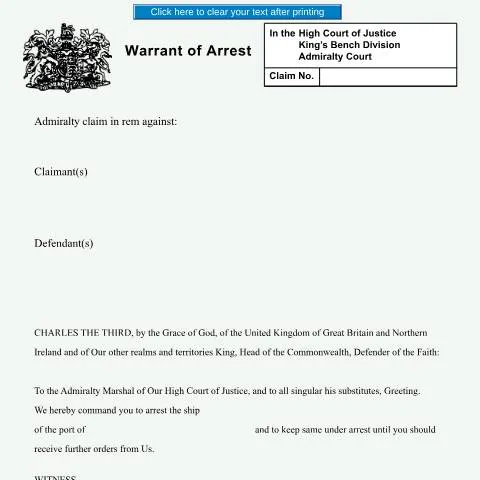
The legal landscape of the United Kingdom operates on a multitude of documents, each serving a unique purpose. Among these, the Warrant of Arrest: Form ADM9 stands out as a critical instrument within the jurisdiction of the High Court of Justice, specifically in the King’s Bench Division and the Admiralty Court. This document is not merely a procedural formality; rather, it embodies the balance of justice and the enforcement of maritime law. Understanding its nuances is vital for both claimants and legal representatives alike.
Who May Initiate a Warrant of Arrest?
In maritime disputes, the Warrant of Arrest: Form ADM9 can be requested by claimants involved in an admiralty claim in rem, which refers to claims against a vessel rather than the owner. This process is often initiated due to issues such as unpaid debts, damages arising from maritime incidents, or breaches of maritime contracts. Here’s a closer look at the profiles of individuals and entities that may find themselves seeking this warrant:
- Shipowners: Individuals or companies owning vessels may pursue a warrant if another party fails to meet contractual obligations.
- Charterers: Those who have leased a ship for specific operations may seek to arrest the vessel for non-payment or breach of conditions.
- Maritime Lenders: Financial institutions that have provided loans secured against a vessel can use this warrant as a means to enforce payment.
Each scenario has its own intricacies, with legal representatives needing to carefully assess the context of the claim and the implications of seeking such a warrant.
The Legal Framework Surrounding Form ADM9
The Warrant of Arrest: Form ADM9 operates within the framework of the UK legal system, particularly under the jurisdiction of admiralty law. This area of law is governed by several statutes and conventions aimed at resolving maritime disputes. Here are a few key components of the legal backdrop:
- Merchant Shipping Act 1995: This act provides the basic legal structure for maritime claims in the United Kingdom.
- Admiralty Jurisdiction Act 1973: Establishes the jurisdiction of the courts with respect to maritime matters, allowing for the arrest of ships in certain circumstances.
- UK Supreme Court Decisions: Precedents set by the Supreme Court shape how lower courts interpret and enforce maritime laws, reinforcing the principles embodied in Form ADM9.
These legal frameworks serve to protect the rights of claimants while ensuring that the process is subject to oversight and judicial scrutiny. The complexities involved necessitate knowledgeable legal counsel to navigate potential pitfalls.
Completing the Warrant of Arrest: A Step-by-Step Guide
Filling out Form ADM9 requires attention to detail and precision. Each section of the form is designed to elicit specific information necessary for the court to process the warrant effectively. Below is a breakdown of the essential elements that need to be completed:
Claim Information
At the outset, claimants need to provide details regarding the Claim No., which serves as a unique identifier for the case. This number is crucial for tracking the progress of the warrant.
Details of the Admiralty Claim
This section requires a succinct summary of the nature of the claim against the vessel. It is imperative that the claimant articulates the reasons for the arrest clearly, as this is the foundation upon which the warrant is issued. Failure to provide a compelling justification could lead to delays or even failure to secure the warrant.
Information about the Vessel
Claimants must specify the name and port of the ship in question. Additional details, such as the vessel’s registration number and its current location, are also required. The accuracy of this information is critical since any discrepancies can undermine the effectiveness of the warrant.
Service Certification
A section of the form is dedicated to certifying the service of the warrant. This includes information about when and where the vessel will be arrested, as well as the specific part of the vessel where the warrant will be served. The legal process mandates that the warrant must be served formally on the ship, and this certification serves as proof of that action.
Signature and Date
Finally, the form must be signed and dated by the claimant or their legal representative. It is essential to ensure that the signature matches the details provided in the claim, as inconsistency can lead to questions about the validity of the warrant. Furthermore, the date of signing is significant, particularly as it relates to the timing of the arrest and subsequent judicial processes.
When to Submit the Warrant of Arrest
Understanding the timeline for submitting the Warrant of Arrest: Form ADM9 is crucial for claimants. The timing of the submission can significantly impact the outcome of the case. Take note of the following critical phases:
- Pre-Application Preparation: Before submitting the warrant, claimants should gather all necessary documentation supporting their claims, including contracts, invoices, and correspondence. This preparation is essential to avoid delays.
- Submission Timeline: The warrant must be submitted promptly after lodging the admiralty claim. Ideally, this should be done within the same week to maintain the momentum of legal proceedings.
- Post-Submission Actions: Following submission, the claimant should monitor the court’s response and be prepared to provide additional information or clarification as required.
Delay in submission can result in missed opportunities for enforcement, particularly if the vessel is at risk of leaving the jurisdiction.
Consequences of Not Using Form ADM9 Appropriately
Failing to utilise the Warrant of Arrest: Form ADM9 correctly can lead to serious legal and financial repercussions. Here are some potential consequences:
Fill in your form directly online
No printing: type your details into the boxes of the official form, tick, then download the PDF ready to send.
- 1Type into the form boxes
- 2Tick in one click
- 3Save and download the PDF
- Delayed Justice: Improper completion or failure to submit the warrant promptly can result in significant delays in legal proceedings.
- Financial Loss: Claimants may incur additional legal costs if they have to reapply or face challenges to the warrant.
- Loss of Jurisdiction: If a vessel is allowed to leave the jurisdiction while the warrant is pending, it may be impossible to enforce the claim.
Therefore, meticulous attention to detail and adherence to timelines is essential for anyone engaging in this process.
Post-Arrest Procedures and Next Steps
Once the warrant has been executed, claimants must be prepared to navigate the subsequent legal environment. The arrest of a vessel initiates a series of actions that must be managed appropriately:
- Notification of Parties: Following the vessel's arrest, all relevant parties must be notified, including the defendant, shipowners, and any other stakeholders.
- Judicial Proceedings: An admiralty court hearing will usually be scheduled to determine the validity of the claim and the next steps regarding the vessel’s release or continued detention.
- Potential Counterclaims: Defendants may file counterclaims against the claimant, arguing for the release of the vessel or disputing the validity of the original claim.
Effective legal representation is crucial during this phase to ensure that claimants can respond appropriately to any challenges that arise.
The Importance of Legal Representation in Maritime Claims
Given the complexity of maritime law and the specifics of the Warrant of Arrest: Form ADM9, engaging a solicitor experienced in admiralty law is strongly recommended. Legal professionals can offer invaluable guidance on:
- Drafting Strong Claims: They assist in articulating the claim’s merits, ensuring all relevant information is presented compellingly to the court.
- Navigating Court Procedures: Solicitors possess the knowledge necessary to steer through the often confusing procedural aspects of the Admiralty Court.
- Strategic Advice: They can provide insight on the potential outcomes and advise on the best course of action based on case specifics.
Ultimately, the implications of mishandling the arrest warrant process can be profound, and professional legal assistance can be a decisive factor in the success of maritime claims.