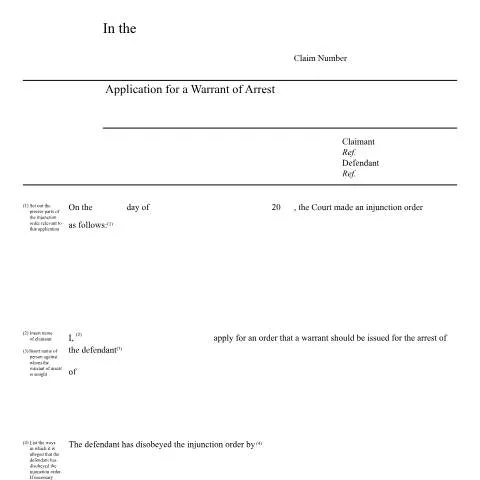
Understanding the N139: Navigating the Warrant of Arrest Application
When the boundaries of lawful conduct are crossed, and an injunction is disobeyed, the path to rectify this situation can be intricate. The N139 form, officially known as the Application for a Warrant of Arrest, is a pivotal document in the arsenal of claimants seeking to uphold a court injunction. Understanding how to effectively use this form is crucial for individuals who find themselves in such legal predicaments.
The Trigger: When to Use the N139 Form
The necessity to complete the N139 arises when a defendant has failed to adhere to the conditions set out in an injunction order. Examples of disobedience may include:
- Failure to cease certain activities as mandated by the injunction.
- Ignoring specific prohibitions outlined in the order.
- Repeated actions that directly contravene the court's directives.
Before you consider filling out the N139, ensure that you have exhausted all other reasonable avenues to resolve the matter amicably. It is essential to document how the defendant has disobeyed the injunction in detail, as this will form part of your application.
Documentation and Evidence
Before submitting your N139 application, gather any relevant evidence that supports your claim. This may include:
- Previous communications with the defendant concerning the injunction.
- Witness statements that can corroborate claims of disobedience.
- Documented instances of non-compliance, such as photographs or recordings.
Having robust documentation can strengthen your case and may influence the court’s decision regarding the issuance of a warrant.
Completing the N139 Form: Step-by-Step Guide
Filling out the N139 requires precision and clarity. Here is a breakdown of critical sections to complete:
- Claim Number: Ensure you input the correct claim number associated with the original injunction.
- Claimant Details: Clearly state your name and contact information.
- Defendant Details: Provide the full name of the individual against whom the warrant is being sought.
- Injunction Order Details: Specify the precise parts of the injunction order that the defendant has violated. Be as detailed as possible.
- Allegations of Disobedience: List all instances in which the defendant has failed to comply with the order.
- Police Notification: Indicate whether you have informed the police about the violation. This is an important consideration for the court.
Consider using separate sheets for extensive explanations, as clarity will aid the court in making a timely decision.
The Submission Process: From Application to Court
Once the N139 form is completed, the next step is submission. Here’s how the process unfolds:
- File the Form: Submit the N139 either in person at the court where the original injunction was granted or through the court's designated electronic filing system.
- Pay the Necessary Fees: Be prepared to pay any applicable court fees. These can vary, so consult the latest fee schedule on the HM Courts & Tribunals Service website.
- Court Review: The court will review your application. Depending on the circumstances, a judge may decide to issue the warrant immediately or schedule a hearing to discuss the matter further.
The timeline for processing your application can vary. However, it’s vital to monitor any correspondence from the court to ensure you remain informed about the status of your submission.
What Happens Next?
If the court decides to issue a warrant, the implications are significant:
- The police are authorized to arrest the defendant.
- The defendant will be brought before the court to answer for their non-compliance.
This process not only enforces the court’s order but may also lead to further legal consequences for the defendant, including potential fines or additional penalties.
Handling Refusals: Your Rights and Next Steps
In the event that your application for a warrant is denied, it is essential to remain informed about your options:
- Request for Reconsideration: If you believe that the court's decision was unfounded, you may be able to request a reconsideration, providing additional evidence or clarification regarding the defendant's disobedience.
- Seek Legal Advice: Engaging a solicitor who specializes in civil litigation can provide invaluable guidance on how to navigate your case following a refusal.
Understanding the reasons for the court’s decision can also help refine your approach in any future applications.
Fill in your form directly online
No printing: type your details into the boxes of the official form, tick, then download the PDF ready to send.
- 1Type into the form boxes
- 2Tick in one click
- 3Save and download the PDF
The Ripple Effect: Consequences of Ignoring the N139
Failing to act responsibly and promptly regarding an injunction breach can have adverse consequences. Consider the following:
- Legal Repercussions: If the defendant continues to disobey the injunction, this could lead to further court actions, including contempt of court charges.
- Impact on Future Claims: A history of non-compliance by the defendant may affect your credibility in future legal proceedings.
Moreover, as a claimant, neglecting to pursue enforcement of the injunction could undermine your position and diminish the court's respect for your claims in subsequent instances.
Time Considerations: A Calendar of Events
Timing is a vital aspect of submitting an N139 application. Here’s a brief timeline to keep in mind:
| Event | Timing |
|---|---|
| Injunction Order Issued | Specific date of issuance |
| Defendant’s Breach Occurs | Date of the alleged disobedience |
| Application for N139 Submission | As soon as a breach is confirmed |
| Court Review Period | Variable, often within several weeks |
| Warrant Issued | Following court approval |
Maintain a record of these timelines to ensure you are vigilant about follow-up actions, including any communications with the court or legal representatives.
Final Thoughts on the N139 Form
Completing the N139 form is a significant step in ensuring that a court's injunction is adhered to. The intricacies of legal proceedings can be daunting, but with attention to detail and an understanding of the process, you can navigate this challenging terrain effectively. Remain proactive, gather your evidence, and ensure that your application is meticulously prepared. Remember, the enforcement of court orders is key to upholding the law and protecting your rights.