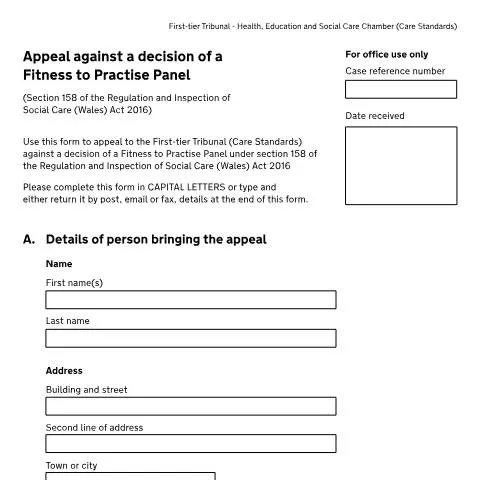
Understanding the Appeal Process Against a Fitness to Practise Decision in the UK
The HM Courts & Tribunals Service provides a structured avenue for individuals who wish to challenge decisions made by a Fitness to Practise Panel under the regulation of social care professionals. This process is essential to ensure fairness and transparency in disciplinary procedures within social care sectors, including social workers, care workers, and other regulated professionals.
Scope and Purpose of the Appeal
This guide explains the purpose of the Form CSW4, which is used to initiate an appeal to the First-tier Tribunal (Care Standards). The appeal process is applicable when a decision has been made by a Fitness to Practise Panel that affects a professional’s registration or employment status, such as:
- Finding that the individual’s fitness to practise is impaired
- Issuance of warnings or conditions on registration
- Suspension or removal from the register
- Decisions following reviews of previous sanctions or orders
The purpose of appealing is to seek a review of the decision if the individual believes it was incorrect or unjust. The appeal provides an opportunity to contest findings or sanctions imposed by the panel and to request a reconsideration of the case.
Legal Framework and Relevant Authorities
The appeal process is governed by the Regulation and Inspection of Social Care (Wales) Act 2016. Although specific to Wales, similar procedures exist across the UK for social care professionals regulated by different authorities. The HM Courts & Tribunals Service administers the tribunal, which functions independently of the original decision-making panel.
Key legal considerations include:
- The right to appeal within 28 days of the decision date
- The requirement to provide full reasons for the appeal
- The possibility of requesting an extension if the appeal is late, subject to tribunal approval
Step-by-Step Overview of the Appeal Process
1. Completing the Appeal Form
The appellant must fill out Form CSW4 in CAPITAL LETTERS or typed, providing details such as:
- Personal information, including name and address
- Details of any representative or legal adviser
- Respondent details, including the organisation involved
- Date of the original panel decision
- Reasons for the appeal and what outcome is sought
2. Submitting the Appeal
The completed form, along with a copy of the decision notice, must be sent to the tribunal via email, post, or fax. The contact details are specified on the form and include:
- By email: [email protected]
- By post: HM Courts & Tribunals Service, Care Standards, 1st Floor, Darlington Magistrates’ Court, Parkgate, Darlington DL1 1RU
- By fax: 01264 785013
Important Considerations for Appellants
Timeliness of the Appeal
An appeal must be lodged within 28 days of the decision date. If the appeal is late, the appellant can request an extension, providing reasons for the delay. The tribunal has the discretion to accept late appeals if satisfied that there is a valid reason.
Fill in your form directly online
No printing: type your details into the boxes of the official form, tick, then download the PDF ready to send.
- 1Type into the form boxes
- 2Tick in one click
- 3Save and download the PDF
Providing Reasons and Supporting Evidence
Applicants should clearly state why they believe the decision was incorrect and include any supporting evidence or documentation. A detailed explanation enhances the chances of a successful review.
Implications for Professionals and the Regulatory Process
Challenging a fitness to practise decision can significantly impact a professional’s career, reputation, and registration status. Therefore, it is crucial to understand the grounds for appeal and to ensure all procedural requirements are met.
Ultimately, the appeal process offers a formal opportunity to seek justice and potentially overturn or modify disciplinary actions taken by social care regulators. It reinforces the fairness of the regulatory framework and supports professionals in defending their rights.