Understanding the Appeal Process Against Decisions of the Registration Appeals Panel in the Care Standards Sector
The First-tier Tribunal (Care Standards) provides a formal avenue for individuals or organizations to challenge decisions made by the registration appeals panel under the Regulation and Inspection of Social Care (Wales) Act 2016. This process is essential for safeguarding fairness and transparency in social care regulation, ensuring that decisions affecting registration and fitness to practice are subject to independent review.
The Purpose and Scope of Form CSW5
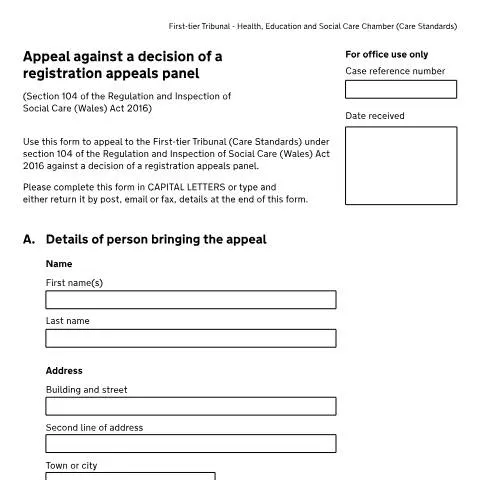
Form CSW5 is the official document used to initiate an appeal against a decision of the registration appeals panel. Such decisions may include refusals to restore a registration entry, directions preventing further applications for restoration, or determinations relating to fitness to practice. This form is designed to facilitate a clear and structured submission, allowing appellants to present their case effectively to the tribunal.
Who Can Use Form CSW5?
This form is intended for:
- Individuals whose registration has been refused or restricted following a decision by the registration appeals panel.
- Organizations or practitioners seeking to challenge determinations related to their fitness to practice.
- Parties wishing to appeal decisions made under specific sections of the Act, such as sections 98, 99, 100, or 103.
Key Elements of the Appeal Process
Timing and Submission
An appeal must generally be lodged within 28 days of receiving the decision notice. If an appellant believes that they cannot meet this deadline, they may request an extension by explaining the reasons for the delay. The tribunal considers whether there is a valid reason to permit late submission, emphasizing fairness and procedural justice.
Completing the Form
Applicants should complete CSW5 in CAPITAL LETTERS or type their responses. The form requires detailed information, including:
- Personal details of the appellant and any representative.
- Details of the respondent organization and contact person.
- The date of the original decision.
- The specific grounds for the appeal, including why the decision is believed to be incorrect.
- The outcome the appellant seeks from the tribunal.
Supporting Documentation
It is recommended to attach a copy of the original decision notice to support the appeal. Additional evidence or information that strengthens the case should also be included to facilitate a comprehensive review by the tribunal.
Submitting the Appeal
Once completed, the appeal form and supporting documents can be submitted via:
- Email: [email protected]
- Post: HM Courts & Tribunals Service, Care Standards, 1st Floor, Darlington Magistrates’ Court, Parkgate, Darlington DL1 1RU
- Fax: 01264 785013
What Happens After Submission?
Following receipt, the tribunal reviews the appeal to determine whether it is valid and whether the grounds for appeal are sufficiently substantiated. The appellant may be invited to attend a hearing, where they can present their case in person or through representation. The tribunal’s decision will be based on the evidence provided and the legal criteria applicable under the Act.
Fill in your form directly online
No printing: type your details into the boxes of the official form, tick, then download the PDF ready to send.
- 1Type into the form boxes
- 2Tick in one click
- 3Save and download the PDF
Implications for the Appellant
Successfully appealing a registration decision can lead to the overturning of a previous ruling, potentially restoring registration status or lifting restrictions. Conversely, the tribunal may uphold the original decision if it finds the appeal without merit. In either case, the process ensures that decisions are subject to independent scrutiny, reinforcing the integrity of social care regulation.
Conclusion
The appeal process under the Regulation and Inspection of Social Care (Wales) Act 2016 exemplifies the UK’s commitment to fair administrative procedures. By understanding the purpose and proper use of Form CSW5, appellants can ensure their concerns are formally considered, contributing to a transparent and just regulatory environment in social care services.