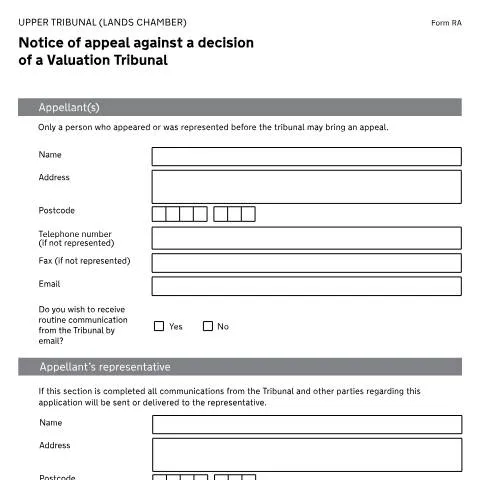
Understanding the Official Notice of Appeal Against a Valuation Tribunal Decision (Form T385)
If you have recently been involved in a case before a Valuation Tribunal and wish to challenge its decision, the HM Courts & Tribunals Service provides a formal process for lodging an appeal using the Notice of Appeal (Form T385). This guide aims to clarify the purpose, eligibility, and procedural aspects of submitting this notice, ensuring that appellants understand their rights and responsibilities within the UK legal framework.
Purpose and Scope of the Notice of Appeal (Form T385)
The Form T385 serves as the official document through which an individual or entity can formally contest a decision made by a Valuation Tribunal, which typically relates to property valuation disputes, business rates, or similar matters. It is designed to provide a structured way for parties to present their grounds for appeal, identify relevant evidence, and specify procedural preferences.
This form is exclusively applicable to cases where the appellant has already appeared or been represented before the Valuation Tribunal. It is not intended for new or unrelated disputes but specifically for appeals against an existing tribunal decision.
Who Can Submit a Notice of Appeal?
Only a person who was involved in the original tribunal hearing—either by appearing in person or through a legal or professional representative—may initiate an appeal using the Form T385. This ensures that the appellant has direct knowledge of the case details and the grounds for contesting the decision.
If you are acting through a representative, such as a solicitor, surveyor, or other qualified professional, all correspondence and documents related to the appeal will be sent to that representative unless specified otherwise. It is important that the representative has the authority to act on your behalf, which should be confirmed via an authority to act document if not already provided.
Key Elements of the Appeal Process
Filing the Notice
The notice must be submitted within 28 days of the date of the Valuation Tribunal’s decision. If the deadline is missed, the appellant must seek permission for an extension by providing valid reasons and paying an additional fee, which is detailed in the official guidance.
Details to Include
- Appellant’s details: Name, address, contact information, and whether they wish to receive communication via email.
- Respondent’s details: Usually the local authority or the party that made the original decision, including their solicitor or representative.
- Valuation Tribunal information: Name of the tribunal, date of decision, and the case’s unique appeal number.
- Hereditament description: The property or subject matter involved, with address and relevant details.
- Grounds of appeal: A detailed, typed statement explaining the reasons for contesting the decision, supported by valuation particulars, computations, and relevant comparables.
Procedural Options and Additional Evidence
Parties can choose different procedures for the appeal, such as standard, simplified, or written representations, depending on the complexity of the case and the issues involved. The form also allows for the calling of expert witnesses if necessary.
Submitting the Appeal and Supporting Documents
Once completed, the Form T385 and all enclosures—such as the statement of case, tribunal decision, and authority to act—must be sent to the appropriate address or via the designated electronic filing system. Payment of the appeal fee, which is specified in the official fee table, is required for the process to proceed.
Fill in your form directly online
No printing: type your details into the boxes of the official form, tick, then download the PDF ready to send.
- 1Type into the form boxes
- 2Tick in one click
- 3Save and download the PDF
For digital submissions, parties are encouraged to use the E-Filing service available through the official government website. If submitting by post, documents should be sent to the HM Courts & Tribunals Service, specifically the Upper Tribunal (Lands Chamber), located at the Rolls Building in London.
Important Considerations and Legal Framework
This appeal process is governed by the statutory rules set out in the relevant legislation, including the Tribunal Procedure Rules and the Data Protection Act 2018, which ensure the confidentiality and proper handling of personal data. Appellants should ensure that all submissions are accurate, complete, and submitted within the prescribed deadlines to avoid delays or dismissal.
Conclusion
The Notice of Appeal (Form T385) is a vital procedural step for individuals or entities wishing to challenge a valuation tribunal decision in the UK. Understanding the eligibility criteria, necessary documentation, and procedural options helps ensure that appeals are properly lodged and considered in accordance with the law. For detailed guidance, appellants should consult the official HM Courts & Tribunals Service resources or seek professional legal advice.