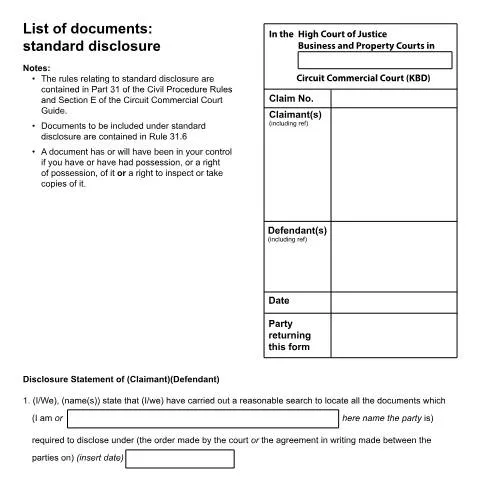
Understanding the N265 RCC Form: A Critical Component in Commercial Litigation
When navigating the complexities of the Regional Commercial Court, the need for clarity and accuracy cannot be overstated. The N265 RCC form, or the standard disclosure of documents, is pivotal in ensuring that all parties involved in litigation are adequately informed and that the court can make informed decisions based on comprehensive evidence. This document serves as an essential tool for parties to disclose relevant documents and maintain transparency throughout the legal process.
Key Timelines: From Filing to Final Decision
Understanding the timeline associated with the N265 RCC form is crucial for compliance and procedural success. The journey begins from the moment a claim is initiated, with several important deadlines to consider:
- Date of Initiation: The claim is officially registered with the court, triggering the obligation for both claimants and defendants to prepare for disclosure.
- Disclosure Deadline: Parties must file the N265 RCC form within the timeframe set by the court or, in absence of a specific order, within a typical period as dictated by the Civil Procedure Rules.
- Search Completion: Parties are expected to conduct a thorough search for relevant documents as defined in the standard disclosure rules. This search should be completed by the time of filing.
- Ongoing Disclosure Duty: Once the form is submitted, it is imperative to continue monitoring for any documents that may come into control and to disclose these promptly to the court.
Failure to adhere to these timelines can result in significant consequences, including potential sanctions from the court or a detrimental impact on the case's outcome.
The Nuts and Bolts of Document Disclosure: What to Include
One of the most challenging aspects of completing the N265 RCC form is determining which documents to disclose. The Civil Procedure Rules (CPR), particularly Part 31, outlines the requirements for standard disclosure. Understanding these guidelines is critical:
Types of Documents Required
Under CPR Rule 31.6, the categories of documents that must be included in the disclosure are as follows:
- Documents in Control: This includes any documents you have or had possession of, or the right to inspect or copy.
- Relevant Communications: Emails, letters, and other forms of correspondence that pertain to the matter at hand.
- Financial Records: Invoices, bank statements, and any other financial documents that could impact the case.
- Reports and Analyses: Any internal reports or analyses relevant to the dispute should be disclosed.
It is essential for parties to compile a comprehensive list of these documents. Failure to include relevant documents may not only affect the strength of a party’s position but also lead to sanctions or adverse inferences by the court.
The Legal Framework: Understanding the Rules Governing Disclosure
The legal underpinning of the N265 RCC form is built upon established rules and guidelines. The Civil Procedure Rules provide the framework for how standard disclosures should be conducted and are essential for ensuring procedural fairness in litigation. Key points of reference include:
- Part 31 of the CPR: This section outlines the rules governing disclosure and establishes the duty of parties to disclose documents that are relevant to the issues in dispute.
- Section E of the Circuit Commercial Court Guide: This section provides additional guidance specific to the Regional Commercial Court, elaborating on the nuances involved in commercial disputes.
- Rule 31.6: Specifies the criteria for determining what constitutes "documents in control," which is crucial for compliance during the disclosure process.
Strategic Preparation: How to Organise Your Documents
Preparing to fill out the N265 RCC form requires a strategic approach to document management. Here’s how to streamline the process:
Conducting a Document Audit
Before starting the form, conduct a thorough audit of all potentially relevant documents:
- Inventory Creation: List all documents that may be relevant to the case, categorising them by type and relevance.
- Document Review: Assess each document for relevance and necessity. Keep in mind the requirements of the CPR.
- Electronic vs. Physical: Consider both electronic and physical documents. Ensure that electronic searches are comprehensive, covering all relevant devices and storage solutions.
List and Organise
Once you have identified the documents, create a list to include in your N265 RCC submission:
| Document Number | Description | Objection to Inspection (Yes/No) | Reason for Objection |
|---|---|---|---|
| 1 | Invoice from Supplier A | No | N/A |
| 2 | Email correspondence with Client B | Yes | Confidentiality Agreement |
| 3 | Financial Report - Q1 2023 | No | N/A |
This structured approach not only facilitates compliance but also enhances the transparency and clarity of your submission.
What Happens Next? Navigating the Post-Submission Process
After submitting the N265 RCC form, parties must remain vigilant regarding the ensuing steps:
Review by the Court
The court will review the submitted disclosure to ensure compliance with the CPR. If discrepancies or concerns arise, the court may:
- Request Further Information: The court may demand additional documents or clarification on certain disclosures.
- Schedule a Directions Hearing: If there are significant issues with disclosure, a hearing may be set to address these matters.
- Impose Sanctions: Non-compliance or failure to disclose adequately can lead to sanctions, which may include fines or restrictions on the ability to present certain evidence.
Continuing Disclosure Obligations
Parties have an ongoing duty to inform the court and other parties of any new documents coming into their control. This duty persists until the conclusion of the case, and failing to disclose new evidence can have severe repercussions.
Resolving Issues: Handling Errors and Objections
Complications can arise during the disclosure process, whether through errors in the submitted form or objections to document inspection. Here’s how to navigate these challenges:
Addressing Errors in Submission
If you identify an error after submitting the N265 RCC form:
- Notify the Court Promptly: It’s essential to inform the court of any mistakes as soon as possible to mitigate potential issues.
- Submit a Corrected Form: If necessary, file a corrected form to rectify the discrepancies.
Responding to Objections
Should objections arise concerning document inspection:
- Clarifying Justifications: Clearly outline the basis of your objections in response to any requests for inspection.
- Negotiation: Engage in discussions with opposing parties to find a resolution that may allow for limited inspection or compromise.
By proactively addressing these issues, parties can maintain their compliance and protect their interests in the proceedings.
Conclusion: The Importance of Thoroughness and Transparency
In conclusion, the N265 RCC form represents more than just a procedural requirement; it is a vital instrument for ensuring transparency, fairness, and efficiency in commercial litigation. By understanding the timelines, obligations, and strategic approaches to document disclosure, parties can enhance their readiness and improve their standing within the court's processes. Staying informed and prepared is essential for achieving a successful outcome in the Regional Commercial Court.
Understanding the Standard Disclosure Process in Commercial Litigation
Standard disclosure is a vital procedure during the pre-trial phase of commercial litigation in the UK, particularly within the Regional Commercial Court. This process ensures that both parties have access to the evidence necessary to prepare and present their cases effectively. Understanding the intricacies of standard disclosure can significantly influence the outcome of a case.
The standard disclosure requirement is governed by the Civil Procedure Rules (CPR), specifically CPR Part 31. Under these rules, each party is obliged to disclose documents that are relevant to the issues in dispute. This includes not only documents that support one's case but also those that may undermine it. The aim is to prevent "trial by ambush," where one party surprises the other with undisclosed evidence during the trial.
When preparing a standard disclosure, parties must take care to ensure that their disclosure is both complete and accurate. The process begins with the identification of all documents that may potentially be relevant. This includes emails, contracts, financial records, and any other documents that fall within the scope of the litigation. It's crucial to maintain a systematic approach to this task to avoid overlooking any pertinent documents.
Once all relevant documents have been gathered, a party must prepare a disclosure statement, which includes a list of the documents disclosed and a separate list of those that have been withheld on grounds of legal privilege or confidentiality. This disclosure statement must be signed and dated, confirming that the party has complied with their disclosure obligations.
In the context of the Regional Commercial Court, parties can expect that the court will scrutinize the disclosure process closely, especially if there are concerns regarding compliance or transparency. Disputes over disclosure can arise, and if the court finds that a party has not complied with their disclosure obligations, it can impose sanctions, including costs penalties or even adverse inferences regarding the evidence presented at trial.
The Role of Technology in Document Disclosure
In recent years, the advent of technology has transformed the landscape of document disclosure in commercial litigation. The vast volume of electronic documents generated in the modern business environment makes manual disclosure processes increasingly impractical. As such, many legal practitioners are turning to advanced e-discovery tools to assist with document review and disclosure.
E-discovery software allows parties to manage large datasets more efficiently. These tools can help identify relevant documents through keyword searches, text analytics, and machine learning algorithms, significantly reducing the time and costs associated with traditional document review processes. Furthermore, these technologies can also enhance collaboration between legal teams, enabling them to share findings and insights seamlessly.
However, the use of technology in document disclosure does not come without challenges. Data protection regulations, particularly the Data Protection Act 2018 and UK GDPR, impose strict requirements on how personal data must be handled. Parties must ensure that their document disclosure processes comply with these regulations to avoid potential breaches, which could lead to hefty fines and reputational damage.
When using e-discovery tools, it is crucial that parties have a clear understanding of the scope of their data collection and disclosure obligations. They must also take appropriate measures to safeguard sensitive information during the disclosure process. Ultimately, while technology can streamline the disclosure process, it is essential that legal practitioners remain vigilant in adhering to their legal obligations.
Common Pitfalls and Best Practices in Preparing Standard Disclosure
While the standard disclosure process is designed to be straightforward, parties often encounter common pitfalls that can impede their compliance. Understanding these challenges and implementing best practices can help ensure a smoother disclosure process.
One of the most common errors is failing to identify all relevant documents. Parties must conduct a thorough and comprehensive review of their records, including emails, hard copies, and records stored on cloud-based systems. It is advisable to implement a structured approach to document management to facilitate this process. Keeping an updated index of documents can also aid in ensuring nothing is overlooked.
Another frequent issue is the improper handling of documents that are subject to legal privilege. Legal privilege is a fundamental right that protects certain communications between a lawyer and their client from disclosure. Missteps in this area can lead to inadvertent waiver of privilege, exposing sensitive information to opposing parties. Therefore, it is essential to consult with legal advisors when determining which documents fall under this category.
The timing of disclosures is also crucial. Parties must adhere to strict deadlines, particularly in the context of fast-paced commercial litigation. Late disclosures can lead to sanctions or adverse inferences in court. To mitigate this risk, parties should establish a timeline for their disclosure activities upon the initiation of litigation and monitor progress regularly.
Finally, clear communication between teams is vital. Legal practitioners should maintain open lines of communication with clients, colleagues, and opposing parties throughout the disclosure process. This transparency can help preempt potential disputes over disclosure and foster a more collaborative approach to the litigation process.
By being mindful of these common pitfalls and adopting best practices, parties can navigate the standard disclosure process more effectively, ultimately strengthening their positions in court.