Navigating the Complexities of the Rule 7.42 Statement of Affairs
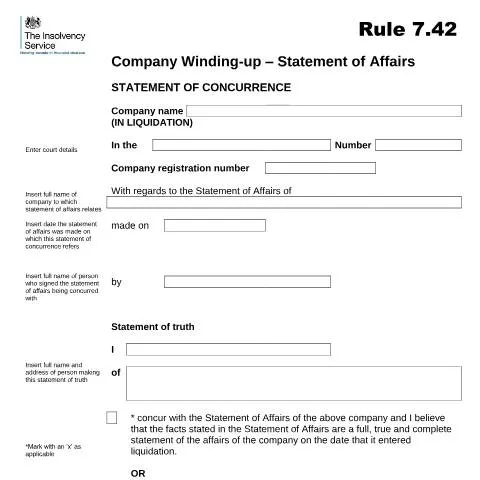
When a company enters liquidation, the Rule 7.42 Statement of Affairs plays a pivotal role in ensuring transparency and accountability. This document, known as the Statement of Concurrence, is not just a formality; it is a declaration of the veracity of the financial information provided during the winding-up process. Understanding the intricacies of this statement is essential for all stakeholders involved.
Who is Involved? Delving into the Profiles of Key Participants
At the heart of the Rule 7.42 process are several crucial roles. Each participant has specific responsibilities, which can impact the outcome of the liquidation process.
The Company and its Directors
The company undergoing liquidation is typically represented by its directors. They must ensure that the Statement of Affairs is accurate and reflects the company's financial situation at the time of liquidation. Any discrepancies can lead to severe legal consequences.
The Liquidator
The appointed liquidator oversees the winding-up process. They are responsible for collecting company assets, paying creditors, and ensuring compliance with legal obligations. The liquidator will review the Statement of Affairs and may require additional clarifications from the directors.
Creditors
Creditors are vital stakeholders in this process. They rely on the accuracy of the Statement of Affairs to assess their chances of recovering debts owed to them. If any inaccuracies are found, creditors can challenge the findings, further complicating the liquidation proceedings.
The Official Receiver
The Official Receiver acts as an officer of the court, handling the administrative aspects of the liquidation. They oversee the filing of the Statement of Concurrence and ensure that all procedures are followed correctly.
Understanding the Statement of Concurrence: Sections and Requirements
The Rule 7.42 Statement of Affairs is composed of several critical sections that require careful completion. Each section must be filled out accurately to avoid complications.
Court Details and Company Identification
- The first step involves entering the court details where the liquidation is being processed. Accurate identification is crucial.
- Next, the full name of the company and its registration number must be provided. Ensure this is consistent with official records.
Making the Statement of Truth
One of the most important sections is the Statement of Truth, where the individual making the statement must declare that the information provided is complete and accurate. This part requires careful consideration, as any false declarations can lead to penalties.
Concurrence with Qualifications
It’s possible for the reporter to concur with the Statement of Affairs while also listing qualifications. This is a critical aspect of the process, as it allows the individual to express concerns about specific entries while still aligning with the overall statement.
The Role of the Statement in Liquidation Procedures
The Statement of Concurrence acts as a formal acknowledgment by those involved in the liquidation process. It serves several essential functions:
- Verification of Information: It provides a mechanism for verifying that the financial statements prepared by the directors are accurate and comprehensive.
- Protecting Stakeholder Interests: By allowing stakeholders to express concerns, it helps protect their interests and facilitates a fair liquidation process.
- Legal Compliance: Failing to submit an accurate Statement of Affairs can lead to legal repercussions for directors and other parties involved.
Regulatory Framework: Historical Context and Recent Updates
The framework governing the Rule 7.42 Statement of Affairs has evolved over the years. Understanding its historical context can provide insight into its current form and function.
The Insolvency Act 1986
The insolvency landscape in the UK is primarily governed by the Insolvency Act 1986. This Act outlines the legal processes for dealing with insolvent companies, including the procedures for winding up and the responsibilities of directors and liquidators.
Amendments and Updates
Regular amendments to insolvency laws reflect the changing nature of business and economic conditions. Notably, recent adjustments have focused on increasing transparency and accountability, which is where the Rule 7.42 Statement plays a crucial role.
Timelines of Submission: From Liquidation to Delivery
The timeline for submitting the Rule 7.42 Statement of Affairs is critical. Timeliness can affect both the company’s liquidation process and the rights of creditors.
Start of the Process
The countdown begins on the date the company enters liquidation. This date is essential as it marks the beginning of various deadlines, including the submission of the Statement of Affairs.
Deadline for Submission
Once the Statement of Affairs is prepared, it must be delivered to the Official Receiver within five business days. However, this period may be extended if an agreement is made with the Official Receiver. It’s crucial to adhere strictly to this timeline to avoid penalties.
Post-Submission Procedures
After submission, the Official Receiver will review the Statement of Affairs. They may request further clarification or details from the liquidator or directors if needed. The review process is essential for ensuring compliance with legal requirements and for informing creditors about the next steps.
Consequences of Non-Compliance: Rights and Obligations
Failure to adhere to the requirements surrounding the Rule 7.42 Statement of Affairs can lead to serious consequences.
Implications for Directors
Directors may face significant legal ramifications for submitting inaccurate information or failing to submit the Statement of Affairs altogether. This could include disqualification from serving as a director in the future or even criminal charges in severe cases.
Impact on Creditors
Creditors rely heavily on the accuracy of the information provided. Misrepresentation can hinder their ability to reclaim debts and can result in prolonged legal disputes.
Formal Investigations
In cases where inaccuracies are severely noted, formal investigations may occur. The Insolvency Service has the authority to investigate potential misconduct, leading to further legal action against involved parties.
Essential Documentation: Preparing for Submission
Gathering the necessary documentation is a critical step in the process of completing the Rule 7.42 Statement of Affairs.
Financial Records
Accurate financial records are paramount. This includes:
- Balance sheets
- Cash flow statements
- Accounts payable and receivable
- Bank statements
These records should be prepared in advance to support the information entered in the Statement of Affairs.
Legal Documents
In addition to financial records, legal documents such as the company’s incorporation documents and any agreements with creditors must also be prepared. These documents can provide additional context and clarity to the Official Receiver.
Preparing for Potential Queries
Expect the Official Receiver to have questions regarding the entries in the Statement of Affairs, especially if there are discrepancies or qualifications listed. Clear explanations and supportive documentation can facilitate smoother discussions.
A Practical Approach: Checklist for Completion and Submission
To ensure a smooth process from completion to submission, a checklist can be invaluable:
- Gather all necessary financial and legal documents.
- Carefully complete each section of the Statement of Affairs, ensuring accuracy and consistency.
- Review the Statement of Affairs with a financial advisor or legal counsel to confirm its validity.
- Prepare the Statement of Concurrence, ensuring all names and details align with the Statement of Affairs.
- Submit both documents to the Official Receiver within the designated timeframe.
- Keep copies of all submitted documents for your records.
In summary, the Rule 7.42 Statement of Affairs is not merely a bureaucratic requirement but a vital component of the liquidation process. By understanding its implications, responsibilities, and necessary steps, all parties involved can navigate the complexities of company winding-up with greater confidence and compliance.
Understanding the Role of a Statement of Affairs in Company Winding-Up
The Statement of Affairs plays a crucial role in the winding-up process of companies in the UK. It is a detailed account prepared by the company’s directors, outlining the financial situation of the business, including its assets and liabilities. The document is a requirement under Rule 7.42 of the Insolvency Rules 2016 and must be submitted when a company is being wound up, either voluntarily or through a court order.
The primary purpose of the Statement of Affairs is to provide creditors with a clear and transparent overview of the company's financial standing at the time of winding up. It serves as a foundation for the liquidation process, allowing the appointed liquidator to assess the company’s solvency and determine how to best manage the distribution of assets among creditors.
In creating the Statement of Affairs, directors must ensure that all information is accurate and comprehensive. This includes current valuations of company assets, such as property, equipment, and stock, as well as detailing all outstanding debts, including those owed to suppliers, tax authorities like HMRC, and other creditors. The accuracy of this document is paramount; any misleading information could lead to allegations of wrongful trading or even potential legal repercussions for the directors.
Additionally, the Statement of Affairs should be accompanied by a Declaration of Concurrence where necessary. This declaration states that all parties involved, such as financial institutions and creditors, agree with the information presented, ensuring transparency and fostering trust in the winding-up process.
Implications of Non-Compliance with Rule 7.42
Non-compliance with Rule 7.42 can have serious implications for a company undergoing winding-up procedures. If the Statement of Affairs is not submitted, or if it lacks accuracy or completeness, the consequences can range from delays in the liquidation process to potential legal action against the directors.
One of the most significant risks associated with non-compliance is the chance of personal liability for the company’s directors. Under the Insolvency Act 1986, directors have a duty to act in the best interests of creditors when they suspect the company is insolvent. Failing to provide a truthful Statement of Affairs may be viewed as a breach of this duty, potentially leading to personal financial consequences.
Moreover, creditors may lose confidence in the proceedings, which could impact the eventual recovery of debts owed to them. This lack of trust could lead to more aggressive actions from creditors seeking their entitlements. In some cases, it could even lead to allegations of mismanagement or fraudulent trading, intensifying the scrutiny of the company’s operations prior to winding up.
It's essential for directors to engage with qualified insolvency practitioners who can guide them through the complexities of preparing the Statement of Affairs and adhering to the regulations set forth in Rule 7.42. Such professionals can help ensure that the document reflects an accurate picture of the company's financial health, thus mitigating potential risks associated with non-compliance.
The Importance of Accurate Valuation of Assets and Liabilities
One of the critical aspects of preparing a Statement of Affairs under Rule 7.42 is the accurate valuation of both assets and liabilities. The valuation process is not only about listing what the company owns and owes; it involves thorough assessments which can significantly affect the outcome of the liquidation process.
Assets need to be valued at their net realizable value, which is the amount expected to be received from the sale of those assets in an orderly transaction. This means considering market conditions, the state of the assets, and any costs associated with their sale. For example, if a company owns machinery, the valuation should account for depreciation and the current market demand for similar equipment. If misvalued, it can lead to significant discrepancies in the assets available for distribution to creditors.
On the liabilities side, all existing debts must be accurately recorded, including prioritizing secured creditors and identifying any contingent liabilities. A failure to list all liabilities can result in legal challenges later in the process, especially if a creditor feels they have been unfairly excluded from the distributions. Directors should be prepared to provide supporting documentation for each claim to validate the reported figures.
The importance of obtaining professional valuations cannot be overstated. Engaging with reputable valuation experts provides an additional layer of credibility to the Statement of Affairs and minimizes disputes during the liquidation process. Knowledgeable practitioners can provide insights into fair market values and enhance the overall transparency of the winding-up proceedings, which is paramount for maintaining good relationships with creditors and stakeholders.