Navigating the MR06 Form: Essential Steps for Trustees
When a company is appointed as a trustee, it must comply with specific legal requirements to ensure proper registration and transparency. The MR06 form, officially designated for registering a statement of a company acting as a trustee, is a critical part of this process. Understanding the intricacies of this form can help prevent delays and complications.
The MR06 Form: A Key Element in Company Compliance
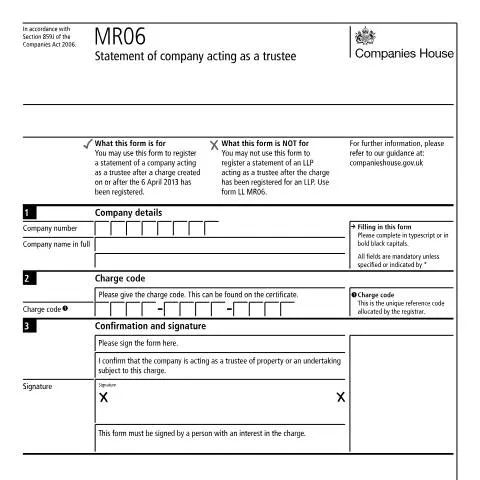
The MR06 form must be submitted following the creation of a charge on or after 6 April 2013. This requirement stems from the Companies Act 2006, which mandates that any company acting as a trustee must register its status. This form not only facilitates legal compliance but also serves to inform the public record, enhancing the transparency of corporate activities.
To further elaborate, the MR06 is not applicable for Limited Liability Partnerships (LLPs) acting as trustees. In such cases, companies must use form LL MR06 instead. Therefore, it’s crucial to assess the structure of your entity before proceeding with the registration process.
Understanding When to Use the MR06 Form
The MR06 form is essential under various circumstances. Here are some scenarios that might prompt its use:
- A company has been assigned as a trustee following the registration of a charge.
- The charge has been registered after 6 April 2013.
- There is a need to update the public records due to changes in the trustee status.
Failure to register this status may result in legal repercussions and complications in fulfilling the duties associated with being a trustee, including potential breaches of fiduciary duties. Thus, timely submission is paramount.
A Step-by-Step Guide to Completing the MR06 Form
Completing the MR06 form accurately is vital for successful registration. Below is a structured approach to filling it out:
1. Gather Required Information
Before starting to fill out the form, ensure you have the following information ready:
- Company Name and Number: This must match the details held on the public register.
- Charge Code: This is a unique reference allocated by the registrar, found on the certificate of the charge.
- Signature: The form requires a signature from someone with an interest in the charge, which is crucial for validation.
2. Fill Out the Form
The MR06 form should be completed in either typescript or bold black capitals to ensure clarity. Pay careful attention to each mandatory field, as missing information could lead to delays:
- Company Details: Clearly state the full name and company number.
- Charge Code: Enter the charge code accurately, as this links the company to its trustee obligations.
- Signature Confirmation: Ensure the signature is from the right authority within the company.
3. Checklist Before Submission
Before submitting the form, double-check the following:
- Have the company name and number been accurately filled out?
- Is the charge code provided and correct?
- Is the form signed by an authorized individual?
Submission Channels: Online vs. Paper
Once the MR06 form is completed, it can be submitted via different channels. The choice depends on your preference and urgency:
- Online Submission: Companies House allows for certain forms to be uploaded directly through their online portal. This method is often quicker and provides immediate confirmation of receipt.
- Paper Submission: If opting for traditional mail, ensure the form is sent to the correct address. Refer to the Companies House website for specific mailing addresses based on your location.
Regardless of the method chosen, it is recommended to keep a copy of the submitted form for your records.
Managing Your Application: Tracking and Follow-Up
After submission, tracking the status of the MR06 registration is crucial. Companies House processes these forms and updates the public register accordingly. You can monitor your application through the following ways:
- Online tracking tools provided by Companies House.
- Contacting their support via the provided email for any inquiries.
In the case of delays, it is advisable to follow up with Companies House, providing the submission date and form details to expedite the process.
What Happens If Your Submission is Incorrect?
In instances where the MR06 form is incorrectly completed or has missing information, Companies House might return the form or reject the application. This can lead to unnecessary delays, impacting the company’s operation as a trustee. Here’s how to approach such a situation:
- Review the Feedback: If Companies House provides reasons for rejection, take them seriously.
- Correct the Errors: Make the necessary amendments to the original form based on the feedback.
- Resubmit Promptly: Once corrections are made, resubmit the MR06. Ensure that all aspects of the form are accurate this time.
Historical Context: The Regulatory Framework Surrounding the MR06
The need for the MR06 form arises from the broader legal framework established by the Companies Act 2006. This legislation was designed to modernize company law in the UK, ensuring transparency and accountability among corporations, particularly those acting in fiduciary roles like trustees.
Since its introduction, the form has evolved alongside regulatory changes, reflecting the necessity of companies to maintain clear relationships with their stakeholders. Understanding this context enriches the significance of the MR06 form beyond mere paperwork; it is an essential tool for governance and corporate integrity.
Conclusion: Final Thoughts on the MR06 Registration Process
Although the MR06 form may seem like a simple administrative task, its significance in the broader context of corporate governance is profound. By ensuring proper completion and timely submission, companies acting as trustees can uphold their responsibilities and maintain compliance with the law. As you navigate through this process, remember that thoroughness and attention to detail are your best allies in achieving a smooth registration experience.
Understanding the Role of Trustees in Company Structure
In the UK, trustees play a vital role in managing and protecting assets on behalf of beneficiaries. When a company acts as a trustee, it assumes responsibilities that are distinct from its usual corporate obligations. Understanding these responsibilities is essential for compliance and successful management.
The trustee company must ensure that the trust is administered according to its terms, which may include managing investments, distributing income, and fulfilling any specific directives outlined in the trust deed. It's crucial to understand that the trustee has a fiduciary duty to act in the best interest of the beneficiaries, which often entails a high standard of care and diligence.
Moreover, the trustee must maintain clear records and provide reports on its activities. This transparency is not only important for the beneficiaries but also for regulatory compliance. Failure to adhere to these responsibilities could lead to legal repercussions and damage the trust's reputation.
When registering a statement of a company acting as a trustee using the MR06 form, it’s necessary to accurately reflect the company’s role, governance structure, and any relevant details about the trust itself. This ensures that all stakeholders, including the beneficiaries and regulators, have a clear understanding of the company’s functions and obligations.
Potential Challenges in Registering a Company as a Trustee
Registering a company as a trustee can present various challenges that require careful navigation. One of the primary issues revolves around understanding the legal implications of being a trustee. The law imposes a stringent set of duties on trustees, and companies must ensure they are equipped to meet these standards before taking on such a role.
Another challenge is ensuring compliance with both company law and trust law. Companies acting as trustees must adhere to the Companies Act 2006 and the Trustee Act 2000, among other legislation. This dual compliance can complicate the registration process, especially for companies that may not have prior experience in trust management.
Additionally, companies might face difficulties in gathering the required documentation to complete the MR06 form accurately. This includes obtaining details about the trust, identifying the beneficiaries, and securing the necessary consents from all parties involved. Each of these steps requires meticulous attention to detail and may require consultation with legal professionals.
Furthermore, the ongoing obligations of a trustee company involve continuous oversight and governance, which can strain resources, particularly for smaller companies. Companies need to assess whether they have the capacity and expertise to fulfil these obligations effectively, or if they should consider appointing external trustees or professional advisors.
Importance of Regular Updates and Amendments to the Statement
Once a company is registered as a trustee using the MR06 form, it is imperative to keep the statement updated. The responsibilities of a trustee company can evolve, and any changes in the structure of the trust or the beneficiaries’ status must be reflected in the registration. This not only ensures compliance but also enhances the trust's transparency and legitimacy.
The Data Protection Act 2018 and the UK GDPR mandate the careful handling of personal data, which is often a component of trust management. As such, any amendments related to the personal information of beneficiaries or trustees must be processed thoughtfully. Companies must establish protocols for regularly reviewing and updating their records to align with changing regulations and legal requirements.
Moreover, the circumstances of the trust itself can change due to various factors such as the death of a beneficiary, changes in their financial circumstances, or even alterations in the law. Companies should implement a proactive approach to monitor these conditions and ensure timely updates to their registered statement.
Engaging with beneficiaries and keeping them informed about such changes fosters trust and confidence in the trustee company. Regular updates demonstrate a commitment to transparency and accountability, which is crucial in maintaining the integrity of the trust and meeting the fiduciary responsibilities that come with the role.