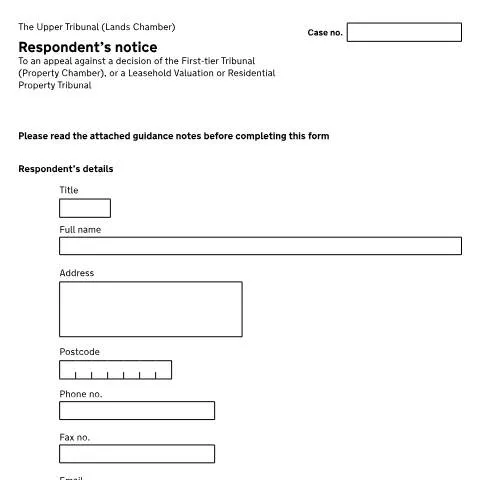
Understanding the Respondent’s Notice (Form T603) for Appeals in UK Property Tribunal Cases
The Respondent’s Notice (Form T603) is a vital document used within the UK’s tribunal system, specifically relating to appeals against decisions made by the First-tier Tribunal (Property Chamber) in England, or leasehold and residential property tribunals in Wales. This guide aims to explain the purpose, scope, and procedural aspects of this form, providing clarity for parties involved in property-related appeals.
Scope and Purpose of the Respondent’s Notice
The primary function of the Respondent’s Notice is to enable the respondent—typically the party who was subject to the original tribunal decision—to formally oppose the appellant’s challenge. When an appeal is lodged, the respondent must submit this form to outline their grounds for contesting the appeal and to provide relevant case information. This process ensures that the tribunal has a comprehensive understanding of the respondent’s position, facilitating a fair and transparent review of the case.
The form is applicable in cases where the appellant has received permission to appeal or where the Upper Tribunal has granted permission despite a refusal from the original tribunal. It is a procedural requirement that must be completed within specific timeframes to maintain the respondent’s involvement in the appeal process.
Who Should Use This Form?
- Parties involved in property appeals: The respondent, who was a party to the original tribunal proceedings, is responsible for completing the form.
- Legal representatives: Solicitors or other authorized representatives acting on behalf of respondents must also complete and submit the form, often attaching a statement of case detailing their grounds for opposition.
- Multiple respondents: If there are several parties responding jointly, all relevant parties’ details should be included, or a list attached if necessary.
Key Components of the Form
Respondent’s Details
This section captures essential information, including full name, address, contact details, and whether the respondent prefers to receive correspondence via email. Accurate contact details are crucial for effective communication throughout the appeal process.
Case Information
The form requires the case number assigned by the Upper Tribunal and details of any legal representative involved. This ensures proper identification and tracking of the case.
Grounds for Opposing the Appeal
The respondent must set out their reasons for contesting the appeal in a separate statement of case. This document should address the issues raised by the appellant and provide the legal and factual basis for opposition.
Procedure and Witnesses
The respondent can specify their preference for how the appeal should be heard—whether as a review or rehearing—and choose between the standard or written representations procedures. They may also indicate whether they plan to call expert witnesses, which can influence the hearing’s scope and preparation.
Procedural Timelines and Submission
The form must be lodged within one calendar month of receiving the appellant’s notice of appeal or statement of case, depending on the circumstances. It can be submitted electronically via the official E-Filing service or sent by post to the designated tribunal address. Timely submission is essential; failure to do so may result in the respondent losing their party status unless an extension is granted.
Fill in your form directly online
No printing: type your details into the boxes of the official form, tick, then download the PDF ready to send.
- 1Type into the form boxes
- 2Tick in one click
- 3Save and download the PDF
Additional Considerations
- Late submissions: If the respondent misses the deadline, they can apply for permission to lodge the notice late, providing reasons and paying the applicable fee.
- Legal representation: When a solicitor or agent is involved, all correspondence and submissions should be directed through their office, ensuring proper authority and communication channels.
- Confidentiality and Data Protection: All personal data provided must comply with the Data Protection Act 2018 and UK GDPR, ensuring confidentiality and proper handling of sensitive information.
References and Official Guidance
The official guidance notes accompanying the form provide detailed instructions on completing each section, deadlines, and procedural rules. It is advisable to review these notes thoroughly before submitting the Respondent’s Notice to ensure compliance with all requirements.
For further information, parties should consult the official resources provided by HM Courts & Tribunals Service or seek legal advice to navigate the appeal process effectively.