Understanding the Application Process for Permission to Appeal in UK Immigration Cases
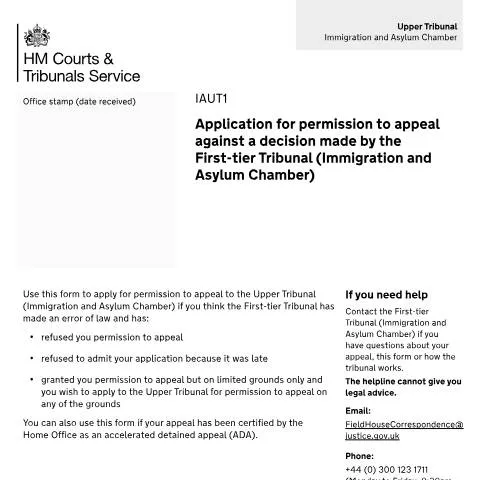
The UK legal system provides individuals involved in immigration and asylum cases with a structured process to challenge decisions made by the First-tier Tribunal (Immigration and Asylum Chamber). This process is governed by the rules set out by HM Courts & Tribunals Service, which oversees the application for permission to appeal to the Upper Tribunal. The official form used for this purpose is known as Form IAUT1.
Scope and Purpose of Form IAUT1
Form IAUT1 is designed for appellants who believe that the First-tier Tribunal has made an error of law in its decision. It allows applicants to seek permission to escalate their appeal to the Upper Tribunal when:
- The First-tier Tribunal has refused permission to appeal.
- The Tribunal has refused to admit a late application.
- The Tribunal has granted permission but on limited grounds, and the appellant wishes to challenge those restrictions.
Additionally, the form can be used if the Home Office has certified the appeal as an accelerated detained appeal, which involves specific procedural considerations.
Key Components of the Application Process
1. Identification of the Case
The applicant must provide details about the initial decision, including:
- The reference number assigned by the First-tier Tribunal.
- The Home Office reference number linked to the case.
- The date when the permission to appeal decision was sent by the First-tier Tribunal.
- The hearing centre where the original case was decided.
This information helps establish the context and track the case within the tribunal system.
2. Grounds for Appeal
The applicant must specify why they believe the decision of the First-tier Tribunal warrants reconsideration. The primary reason is usually an alleged error of law, such as misinterpretation of legal principles or procedural irregularities.
If the appeal was refused permission, or if the applicant is challenging the limited grounds granted, they must clearly state their reasons for seeking permission at this higher level.
3. Personal and Contact Details
The form requires comprehensive information about the appellant, including:
- Full name and date of birth.
- Nationality or nationalities.
- Address and contact details (phone, mobile, email).
If the appellant has a legal representative, their details must also be provided, including the organisation, address, and contact information. This ensures proper communication throughout the process.
Special Considerations: Anonymity and Accelerated Appeals
Applicants can request to keep their name private through an application for anonymity, which is particularly relevant in sensitive cases. The tribunal can grant anonymity, removing the appellant's name from publicly accessible documents, while still using it internally for case management.
Fill in your form directly online
No printing: type your details into the boxes of the official form, tick, then download the PDF ready to send.
- 1Type into the form boxes
- 2Tick in one click
- 3Save and download the PDF
For cases classified as accelerated detained appeals, the process has stricter deadlines. The appeal must be received by the Upper Tribunal within a specified number of working days after the initial notice, emphasizing the importance of timely submission.
Legal and Procedural Guidance
While HM Courts & Tribunals Service provides detailed instructions and notes on completing the form, applicants are advised to seek legal advice or assistance from qualified representatives if uncertain about the process. The tribunal's helpline offers support but does not provide legal counsel.
Implications for Appellants
Applying for permission to appeal is a critical step for individuals seeking to overturn or challenge immigration decisions. It offers an opportunity to have the case reviewed on legal grounds, potentially leading to a different outcome. Understanding the requirements and ensuring accurate, complete submission of Form IAUT1 increases the chances of success in this process.
Conclusion
The application process for permission to appeal through Form IAUT1 is a formal, legally structured pathway within the UK immigration tribunal system. It underscores the importance of precise documentation, timely submission, and clarity in presenting grounds for appeal. For those involved in immigration and asylum cases, familiarity with this process is essential to safeguarding their rights and ensuring access to justice.