Navigating the Complexities of the Application Notice in Family Appeals
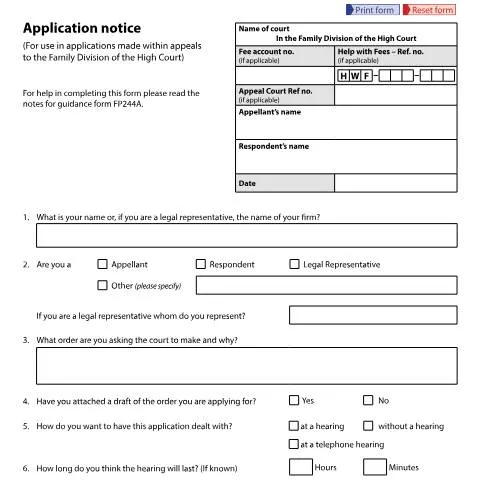
The Application Notice, designated as Form FP244, serves as a crucial instrument within the Family Division of the High Court, particularly when one party seeks to appeal a previous decision. Understanding its nuances is essential for appellants, respondents, and legal representatives who aim to effectively present their case. This document is not merely a procedural step; it embodies the framework through which justice can be sought in family law disputes.
Understanding the Scope and Purpose of Form FP244
Form FP244 is specifically designed for applications made within appeals in the Family Division. Its primary role is to facilitate communication of the applicant's requests to the court, including the nature of the order sought and the rationale behind it.
- Nature of the Order: The applicant must articulate the specific order they wish the court to issue, which could range from custody arrangements to financial provisions.
- Supporting Evidence: A requirement to attach a draft of the proposed order is critical. This draft not only provides clarity but sets the stage for what the applicant believes the court should consider.
- Hearing Preferences: The form offers options for how the application can be heard—whether by telephone, in person, or without a hearing—thereby allowing for flexibility based on the situation's urgency and complexity.
Common Misinterpretations of Form FP244
The intricacies of Form FP244 often lead to misunderstandings, especially among those unfamiliar with legal parlance. Here are some common points of confusion:
- Legal Representation Status: Applicants often misidentify their status—whether they are the appellant, respondent, or a legal representative. Accurate identification is pivotal for the court's understanding.
- Fixed Trial Dates: Many applicants overlook the importance of disclosing any fixed trial dates, which can significantly affect the timeline of the proceedings.
- Service Addresses: Providing the correct service address for all parties is essential. Failure to do so can lead to delays or procedural errors.
Key Considerations When Using Form FP244
Utilizing Form FP244 effectively requires an understanding of several key concepts:
1. Jurisdiction and Legal Basis
The Family Division of the High Court operates under specific jurisdictional guidelines. It is important to ensure that the appeal falls within the court's authority.
2. Relevant Case Law
Familiarity with precedents that relate to your case can bolster your application. Relevant judgments will enhance the credibility of your request.
3. Timeliness
Adhering to deadlines is crucial. Given that the appeal window can be tight, submitting the Application Notice promptly can influence the court's reception of your case.
Step-by-Step Process of Submitting an Application Notice
To successfully navigate the submission of an Application Notice, follow these structured steps:
- Gather Necessary Information: Compile all relevant details, including previous court decisions and personal information of all parties.
- Draft Your Application: Clearly articulate the order you wish to have made by the court. Ensure your reasoning is succinct yet comprehensive.
- Complete the Form: Fill out Form FP244 meticulously, paying special attention to sections requiring critical information.
- Attach Supporting Documents: Include any drafts of orders, witness statements, or evidence that supports your application.
- Submit the Application: Deliver the completed form and supporting documents to the Family Division Appeals Office. Ensure you keep copies for your records.
The Role of Supporting Documentation
Supporting documentation is integral to the strength of your application. The following items are often included:
- Witness Statements: These provide firsthand accounts that bolster the application’s claims.
- Evidence of Circumstances: This can include financial statements, medical records, or any documentation that supports your case.
- Draft Order: Your proposed order should be clearly articulated and reflect the terms you believe appropriate.
Interfacing with Related Documents and Procedures
Form FP244 does not exist in isolation. It interconnects with several other documents and procedures within the Family Division:
| Related Document | Purpose |
|---|---|
| Form FP244A | Guidance notes for completing the Application Notice. |
| Form C100 | Application for a child arrangements order. |
| Form FL401 | Application for financial remedies. |
Understanding how these documents relate to Form FP244 is essential for ensuring a cohesive approach to your appeal.
Practical Tips for a Successful Application
When preparing to submit your Application Notice, consider the following practical tips:
- Review Previous Decisions: Familiarizing yourself with the court's previous rulings in similar cases can inform your application.
- Be Concise: While detail is important, clarity and conciseness can enhance the chances of your application being favourably considered.
- Consult Legal Experts: If possible, seek advice from legal professionals to ensure that your application aligns with procedural expectations and legal standards.
In summary, while Form FP244 may seem like a straightforward document, its impact on the appeal process is profound. A careful, well-informed approach can significantly influence the outcome of family law disputes within the High Court.
Fill in your form directly online
No printing: type your details into the boxes of the official form, tick, then download the PDF ready to send.
- 1Type into the form boxes
- 2Tick in one click
- 3Save and download the PDF
Understanding the Application Notice Procedure in Family Division Appeals
The Application Notice, specifically Form FP244, is pivotal in navigating the appeal process within the Family Division of the High Court in the United Kingdom. This form enables parties to outline their requests succinctly and provides a structured approach for the court to consider these applications. When preparing an Application Notice, it's crucial to understand the procedural steps involved, ensuring that all required information is provided accurately and comprehensively.
First, applicants must determine the appropriate grounds for appeal. This typically involves demonstrating that there has been an error in the law, a misapplication of legal principles, or that the decision made by the lower court was contrary to the evidence presented. The appeal must relate to a specific aspect of the original ruling, and the Application Notice must make this clear.
Additionally, it is essential to adhere to the relevant deadlines stipulated by the court rules. The timelines for submitting Form FP244 can vary based on the nature of the appeal and the direction of the court during the initial proceedings. Applicants must ensure they file within the set time frame to avoid dismissal of their appeal on procedural grounds.
Once Form FP244 is submitted, the court may schedule a hearing to consider the application. During this hearing, the parties involved will have the opportunity to present their cases, and the judge may ask questions or seek clarification on specific points. The outcome of this hearing will determine whether the appeal can proceed.
Key Components of Form FP244: What You Need to Include
When completing Form FP244, there are several key components that must be meticulously addressed. Understanding these components will significantly enhance the likelihood of a successful application. Below are essential sections that applicants should consider:
- Applicant Details: This includes the full name, address, and contact information of the applicant. If the application is made by a representative on behalf of an individual, the representative’s details must also be provided, highlighting their authority to act in this capacity.
- Respondent Details: Similar to the applicant's information, the details of the respondent (the party against whom the appeal is made) must be clearly stated. This ensures that all parties are correctly identified within court records.
- Grounds for the Application: This is arguably the most critical part of Form FP244. Applicants must succinctly outline their reasons for the appeal, referencing any relevant legal precedents or statutes that support their claims. It's recommended to provide a concise yet comprehensive explanation, avoiding overly technical language that may obscure the central arguments.
- Supporting Documents: Alongside Form FP244, applicants must submit any supporting documentation that strengthens their case. This may include transcripts from previous hearings, witness statements, or expert reports. It’s crucial that these documents are well-organised and referenced accurately within the Application Notice.
- Request for Relief: Clearly state what specific relief or outcome the applicant is seeking from the court. This could range from a request to overturn a previous decision to a request for reconsideration of specific elements of a ruling.
Common Pitfalls in Submitting Form FP244
- Incomplete Information: One of the most frequent errors is failing to provide complete or accurate information on Form FP244. Omissions or inaccuracies can lead to delays or outright rejection of the application. It is advised to double-check all entries and ensure that they align with the supporting documents.
- Failure to Meet Deadlines: Timeliness is crucial in the appeals process. Missing deadlines can result in significant setbacks or the loss of the right to appeal altogether. Applicants should keep a detailed calendar of all relevant deadlines and ensure they have adequate time to prepare and submit their forms.
- Lack of Legal Basis: Submitting an application without a clear legal basis can lead to dismissal. It is essential to conduct thorough legal research and provide a robust argument demonstrating the grounds for appeal, supported by relevant laws and case law.
- Neglecting to Notify Other Parties: The Family Division requires that all relevant parties be notified of any applications made. Failure to serve the Application Notice to all interested parties can result in procedural complications and may affect the court's determination.
- Inadequate Preparation for the Hearing: Once the Application Notice is submitted, applicants must be prepared for a potential hearing. This preparation includes understanding the implications of each argument, anticipating counterarguments, and being able to respond to questions from the judge effectively. Inadequate preparation can severely undermine an applicant’s position.