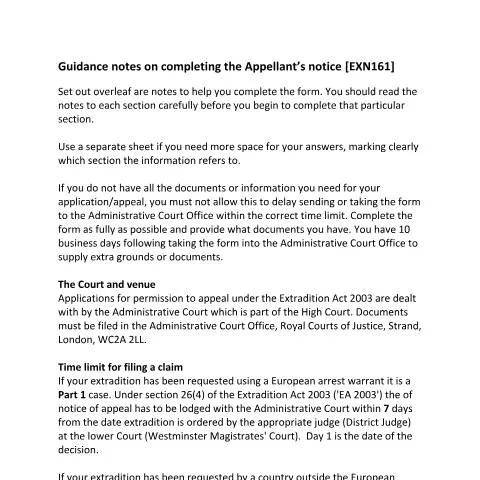
Understanding the Appellant's Notice under the Extradition Act 2003
The Appellant's Notice is a crucial document within the UK's extradition process, specifically related to appeals against extradition decisions made under the Extradition Act 2003. Managed by the Criminal Procedure Rule Committee and the Ministry of Justice, this notice facilitates the formal challenge by an individual (the appellant) seeking to prevent or delay extradition to another country. This guide aims to clarify the purpose, procedural requirements, and key considerations involved in submitting an Appellant's Notice.
Scope and Purpose of the Appellant's Notice
The primary objective of the Appellant's Notice is to formally notify the court of an individual's intention to appeal against an extradition order. It applies in cases where the extradition request has been made either under a European arrest warrant (Part 1 cases) or through a request from a non-EU country (Part 2 cases). The notice serves as the initial step in the legal process, enabling the appellant to challenge the decision within specified timeframes.
It is essential to understand that the notice must be completed accurately and comprehensively, providing all relevant details about the appellant, the decision being challenged, and the grounds for appeal. The process is designed to ensure that the appeal is considered fairly and efficiently by the Administrative Court, part of the High Court system.
Who Is Concerned and When to Act
The Appellant's Notice is relevant for individuals facing extradition proceedings in the UK, whether they are in custody or on bail. The notice must be lodged within strict time limits:
- Part 1 cases (European arrest warrants): The notice must be filed within 7 days of the extradition order by the District Judge at Westminster Magistrates' Court.
- Part 2 cases (non-EU requests): The notice must be lodged within 14 days of the Secretary of State's notification of the extradition order.
Failure to submit the notice within these periods can result in the loss of the right to appeal, although the court may consider late submissions under certain circumstances, provided reasons are given.
Key Elements of the Appellant's Notice
Parties' Details
The notice requires detailed information about both parties involved:
- Appellant: Full name, postal address, email, phone number, prison details (if applicable), and date of birth.
- Respondent: Details of the authority or country requesting extradition, including postal addresses, email, DX address, and phone numbers.
Details of the Decision
The notice must specify:
- The court and district judge involved in the original decision.
- The date when the extradition order was made.
Legal Representation and Timeliness
Applicants must declare whether they are represented by solicitors or acting independently. If represented, details of the solicitor and counsel should be provided. The notice also requires a statement confirming whether the appeal is lodged within the prescribed time limits, along with reasons if it is late.
Additional Evidence and Grounds for Appeal
In a separate document, the appellant must include:
Fill in your form directly online
No printing: type your details into the boxes of the official form, tick, then download the PDF ready to send.
- 1Type into the form boxes
- 2Tick in one click
- 3Save and download the PDF
- The date of arrest and details of custody or bail status.
- The specific grounds for appeal, such as procedural errors, legal misinterpretations, or violations of rights under the European Convention on Human Rights.
- Any new evidence or grounds not previously raised in the magistrates' court, with explanations for the delay in raising them.
Procedural Considerations and Support
Completing the Appellant's Notice can be complex, and applicants are encouraged to seek legal advice. Solicitors can assist in preparing the form and ensuring that all relevant grounds and documents are properly submitted. Citizens Advice Bureaux also provide guidance for individuals navigating the extradition process.
Official Venue and Submission
The completed notice must be filed at the Administrative Court Office, located within the Royal Courts of Justice, Strand, London. The court processes these appeals efficiently, but adherence to deadlines is vital for preserving the right to challenge extradition decisions.
References and Further Information
For more detailed guidance, applicants can consult the official notes on completing the Appellant’s Notice [EXN161] or visit the UK Government website regarding extradition processes and review procedures. Ensuring compliance with the legal requirements helps safeguard the appellant’s rights and facilitates a fair review of the extradition decision.