When Your Home is Under Threat: Understanding Mortgage Possession Proceedings
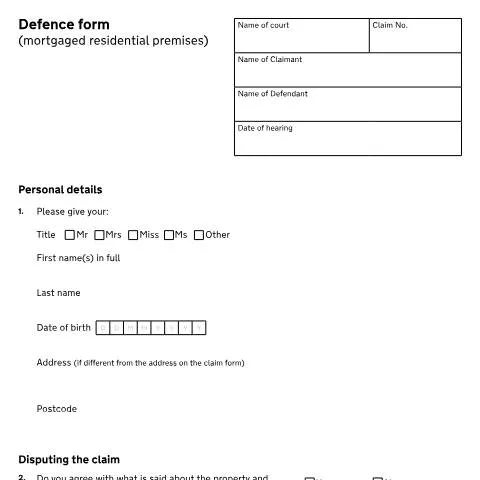
The stark reality of mortgage arrears can transform from missed payments into a legal battle for your home within months. When a mortgage lender initiates possession proceedings through the courts, homeowners receive a claim form demanding they surrender their property. Form N11M represents your formal opportunity to respond, challenge the lender's case, and potentially retain possession of your home through the court system.
This defence form serves as more than just paperwork—it's your voice in a legal process that could result in eviction. The HM Courts & Tribunals Service designed Form N11M specifically for mortgaged residential premises, distinguishing it from other possession proceedings. Every section you complete provides the court with essential information to assess whether immediate possession is justified or whether alternative arrangements might preserve your tenancy.
The gravity of this situation cannot be understated. Failing to submit Form N11M within the prescribed timeframe typically results in a default judgment, granting your lender possession without considering your circumstances. Understanding how to navigate this form effectively could mean the difference between losing your home immediately and securing additional time or modified payment arrangements.
Decoding the Legal Framework Behind Mortgage Possession
Mortgage possession proceedings operate under specific legal provisions that balance lender rights with borrower protections. The Administration of Justice Act 1970 grants courts discretionary powers to suspend possession orders when borrowers can demonstrate realistic prospects of clearing arrears within a reasonable period. This legislation underpins the court's approach to evaluating Form N11M submissions.
The process begins when lenders satisfy pre-action protocol requirements, including demonstrating attempts to resolve arrears through direct negotiation. The Mortgage Pre-Action Protocol mandates that lenders must explore alternatives before court proceedings, but once these steps are exhausted, possession claims can proceed rapidly through the county court system.
Form N11M operates within this framework as your statutory right to defend the claim. The court must consider your response alongside the lender's evidence, weighing factors such as your payment history, current financial circumstances, and prospects for resolving the debt. The Civil Procedure Rules require courts to consider proportionality, meaning immediate possession may be inappropriate if alternative measures could protect both parties' interests.
Regulatory Consumer Credit Considerations
Mortgages secured after April 2014 may fall under Consumer Credit Act 1974 provisions if the loan amount remains below £25,000. This classification triggers additional protections, including the court's power to examine whether loan terms are unfair or to issue time orders modifying payment schedules. Section 5 of Form N11M specifically addresses these regulated agreements, allowing you to request judicial review of your original loan terms.
Strategic Completion: Maximising Your Defence Through Detailed Responses
The effectiveness of Form N11M hinges on providing comprehensive, accurate information that supports your position. Each section serves a specific evidential purpose, and incomplete responses can undermine otherwise valid defences. Your approach to completing this form should reflect both legal requirements and practical considerations that influence judicial decision-making.
Section 2 challenges the lender's factual assertions about the property and mortgage agreement. Common disputes include incorrect arrears calculations, disputed charges, or disagreements about payment allocation. Precision matters here—vague denials carry less weight than specific challenges supported by documentation. If you dispute arrears amounts, provide detailed calculations showing your version of the account position.
Questions 7 and 8 address recent payments and agreements, which can significantly impact court decisions. Payments made after claim issuance demonstrate ongoing commitment to resolving the situation, while agreements reached with lenders may indicate willingness to cooperate outside formal court orders. Even partial payments should be documented, as they evidence your intention to meet obligations despite financial difficulties.
Financial Disclosure Strategy
Sections 11-25 require comprehensive financial disclosure, creating a complete picture of your circumstances. This information directly influences the court's assessment of your ability to maintain future payments and clear arrears through instalments. Accuracy is crucial—discrepancies between your stated income and supporting documentation can damage credibility.
| Income Category | Documentation Required | Common Mistakes |
|---|---|---|
| Employment Income | Recent payslips, P60 certificate | Including gross rather than net pay |
| Self-Employment | SA302 tax calculations, business accounts | Overstating irregular income |
| Benefits | Award letters, bank statements | Omitting temporary benefit sanctions |
| Pensions | Pension provider statements | Confusion between gross and net amounts |
Navigating Court Procedures and Response Timeframes
Form N11M must be filed within 14 days of service of the possession claim, though this deadline can be extended in exceptional circumstances through formal application to the court. The form should be sent to the court that issued the original claim, with copies provided to the claimant's legal representatives. Late submissions require judicial permission and compelling reasons for the delay.
Electronic filing through the Court Service's online portal offers several advantages, including automatic confirmation of receipt and reduced processing times. However, paper submissions remain acceptable and may be preferable when extensive supporting documentation accompanies your defence. Ensure all pages are legible and securely attached, as incomplete submissions may be rejected.
The court typically schedules a possession hearing within 4-8 weeks of receiving your defence, depending on local court availability. This hearing provides an opportunity to present your case directly to a district judge, who will consider both written submissions and oral evidence. Attendance is strongly recommended, as non-appearance may result in possession orders being granted despite your written defence.
Pre-Hearing Preparation Requirements
Between filing Form N11M and attending the hearing, gather supporting documentation that substantiates your financial position and payment proposals. Bank statements covering the previous three months, evidence of income sources, and correspondence with the mortgage lender can strengthen your position. If circumstances have changed since completing the form, prepare a supplementary witness statement updating the court on your current situation.
Alternative Outcomes: From Suspended Orders to Outright Dismissal
Courts possess wide discretionary powers when determining possession claims, ranging from outright dismissal of the lender's application to immediate possession orders. Understanding these potential outcomes helps frame realistic expectations and informs strategic decisions about settlement negotiations.
Suspended possession orders represent the most common resolution where courts accept that arrears exist but borrowers demonstrate capacity to maintain current payments plus reasonable contributions toward arrears reduction. These orders typically specify monthly payment amounts and timescales for clearing the debt, with possession suspended provided compliance continues.
Outright dismissal occurs when lenders fail to prove their case or when borrowers successfully challenge fundamental aspects of the claim. This might include disputes over the validity of the mortgage, incorrect legal procedures, or evidence that arrears have been cleared. Dismissal provides complete protection from possession proceedings based on the same facts.
Time Orders and Payment Variations
For regulated consumer credit agreements, courts can issue time orders under Section 129 of the Consumer Credit Act 1974, modifying payment terms to make them more manageable for borrowers. These orders can extend payment periods, reduce instalments, or alter interest rates, providing more flexible solutions than standard suspended possession orders.
- Extended payment periods: Spreading arrears over longer timeframes with reduced monthly contributions
- Interest rate modifications: Temporarily reducing or freezing interest charges on outstanding balances
- Partial payment arrangements: Accepting reduced payments during periods of financial hardship
- Capitalisation orders: Adding arrears to the principal debt and recalculating payments over the remaining mortgage term
Exceptional Circumstances: Hardship Considerations and Human Rights
Section 27 of Form N11M provides crucial space to explain circumstances leading to mortgage arrears and potential exceptional hardship resulting from immediate possession. This section often proves decisive in judicial decision-making, as courts must balance commercial interests with humanitarian considerations under Article 8 of the European Convention on Human Rights.
Exceptional hardship extends beyond financial inconvenience to encompass situations where eviction would cause disproportionate suffering. Medical conditions requiring specialist accommodation, children's educational needs, or care responsibilities for vulnerable relatives can constitute grounds for refusing immediate possession even when arrears are substantial.
Documented evidence supporting hardship claims significantly strengthens your position. Medical reports confirming health conditions, school letters highlighting educational disruption, or social services assessments demonstrating care responsibilities provide objective support for subjective claims. Courts require concrete evidence rather than general assertions when evaluating hardship arguments.
Protected Characteristics and Equality Considerations
The Equality Act 2010 requires courts to consider whether possession orders might disproportionately impact individuals with protected characteristics. Disability, age, pregnancy, or other protected status may influence judicial decisions, particularly when immediate possession would exacerbate existing disadvantages. Form N11M allows you to highlight these factors within your financial and personal circumstances disclosure.
Post-Submission Procedures: Preparing for Court Hearings and Negotiations
Filing Form N11M initiates a formal legal process that continues until final resolution through court order or negotiated settlement. The period between submission and hearing provides opportunities for continued negotiation with lenders, who may prefer negotiated outcomes to contested court proceedings given the costs and uncertainties involved.
Many possession claims resolve through consent orders agreed between parties and approved by the court. These arrangements typically mirror suspended possession orders but carry additional weight as formal court orders with clear enforcement mechanisms. Negotiated settlements can provide more flexible terms than standard court orders, including graduated payment increases or seasonal adjustments reflecting irregular income patterns.
If negotiations fail, prepare thoroughly for the court hearing by reviewing all documentation, identifying key arguments, and considering whether legal representation would be beneficial. Citizens Advice Bureau, housing charity legal services, or solicitors specialising in housing law can provide valuable assistance, particularly for complex cases involving regulatory issues or human rights considerations.
Enforcement and Compliance Monitoring
Successful defence through Form N11M typically results in ongoing court supervision of your mortgage arrangements. Compliance with any resulting court order becomes critical, as further default may trigger expedited possession proceedings with limited opportunities for additional defence. Maintain detailed records of all payments and communicate proactively with lenders about any potential difficulties in meeting agreed terms.
Beyond Form N11M: Long-term Housing Security and Financial Recovery
While Form N11M addresses immediate possession threats, sustainable resolution requires comprehensive financial planning and ongoing mortgage management. Courts expect borrowers to demonstrate realistic long-term viability rather than merely delaying inevitable possession through temporary measures.
Consider whether your current mortgage remains affordable given changed circumstances, or whether alternative solutions might provide better long-term security. Voluntary sale, mortgage modifications, or downsizing arrangements may offer more sustainable outcomes than fighting possession proceedings if fundamental affordability issues persist.
The mortgage arrears that triggered possession proceedings often reflect broader financial difficulties requiring systematic address. Debt advice services, budgeting support, and benefit entitlement reviews can help establish stable financial foundations supporting long-term housing security. Proactive financial management demonstrates commitment to lenders and courts, potentially influencing future decisions if further difficulties arise.
Remember that Form N11M represents one stage in a potentially extended process requiring sustained engagement with legal, financial, and housing considerations. Success depends not only on effective form completion but on demonstrating genuine commitment to resolving underlying issues and maintaining future payments according to any arrangements established through court proceedings.
Common Scenarios Requiring Form N11M and Strategic Response Approaches
Different circumstances leading to mortgage possession proceedings require tailored defensive strategies when completing Form N11M. Understanding your specific situation helps craft the most effective response to protect your property rights.
Arrears-Based Claims: Payment Difficulties and Solutions
When mortgage lenders initiate possession proceedings due to payment arrears, your N11M response should demonstrate both acknowledgment of the debt and a realistic path to resolution. Courts particularly favour defendants who present structured repayment proposals backed by evidence of improved financial circumstances.
If you've experienced temporary income reduction due to redundancy, illness, or reduced working hours, detail these circumstances in Section 4 of the form. Include supporting documentation such as P45 forms, medical certificates, or correspondence with your employer. The key is showing that your financial difficulties were exceptional rather than indicative of long-term inability to meet mortgage obligations.
For ongoing payment difficulties, propose a specific monthly payment amount that covers both current mortgage payments and a contribution toward arrears. Base this figure on a detailed income and expenditure analysis, leaving reasonable amounts for essential living costs. Courts are more likely to accept proposals that demonstrate you've carefully considered your financial capacity rather than making unrealistic commitments you cannot sustain.
Disputed Charges and Contractual Issues
Some possession claims involve disputed charges beyond basic mortgage payments, such as insurance premiums, administration fees, or legal costs added to your mortgage account. If challenging these charges forms part of your defence, use Section 3 to clearly identify which specific charges you dispute and why.
Common grounds for disputing charges include lack of proper notice under the mortgage terms, unreasonable or excessive fees that may breach unfair contract terms regulations, or charges for services not actually provided. Reference specific clauses in your mortgage agreement and any relevant correspondence with your lender when outlining these disputes.
When mortgage terms themselves are in question—perhaps due to alleged mis-selling, inadequate explanations of variable rate mechanisms, or failure to follow proper procedures for rate changes—your N11M response should clearly state these contractual defences while indicating your willingness to continue payments under the correct terms.
Procedural Defences and Lender Compliance Issues
Mortgage lenders must follow specific pre-action protocols before commencing possession proceedings. If your lender failed to comply with these requirements, this forms a strong defence that should be prominently featured in your N11M response.
The Pre-Action Protocol for Possession Claims by Mortgage Lenders requires lenders to provide clear information about arrears, discuss possible alternatives to possession, and allow reasonable time for you to respond to proposals. If your lender proceeded to court without following these steps, or failed to consider alternatives you proposed, detail these procedural failures in Section 3.
Other procedural defences might include improper service of default notices, failure to provide required statements of account, or not allowing sufficient time between formal demand and court proceedings. Each of these procedural errors can significantly strengthen your position, potentially leading to adjournment of proceedings while proper procedures are followed.
Working with the Court System: Hearings, Orders, and Ongoing Obligations
Successfully submitting Form N11M represents just the beginning of your engagement with the court process. Understanding what happens next and how to present your case effectively at hearings maximises your chances of achieving a favourable outcome.
Preparing for Possession Hearings
After filing your N11M response, the court will typically schedule a possession hearing where both you and your mortgage lender present arguments before a district judge. Preparation for this hearing is crucial, as judges make decisions based on evidence presented and your demonstrated commitment to resolving the mortgage difficulties.
Gather comprehensive financial documentation covering the period leading up to your current difficulties and your projected future income. This includes recent payslips, bank statements, benefit award letters, and evidence of any additional income sources. If you've made efforts to increase your income or reduce expenses, document these steps to show proactive financial management.
Prepare a detailed written statement expanding on the information provided in your N11M form. This statement should chronologically explain how your mortgage difficulties arose, what steps you've taken to address them, and your specific proposals for bringing the account up to date. Include timescales and be realistic about what you can achieve—overly optimistic projections may undermine your credibility.
Consider whether legal representation would benefit your case. While not mandatory, solicitors experienced in mortgage possession cases can present complex legal arguments more effectively and negotiate with lender representatives on your behalf. If you cannot afford private legal representation, check whether you qualify for legal aid or contact local law centres that may provide free advice.
Fill in your form directly online
No printing: type your details into the boxes of the official form, tick, then download the PDF ready to send.
- 1Type into the form boxes
- 2Tick in one click
- 3Save and download the PDF
Types of Court Orders and Their Implications
Courts have several options when dealing with mortgage possession cases, each carrying different implications for your continued occupation of the property. Understanding these potential outcomes helps you prepare appropriate arguments and proposals.
Suspended possession orders are often the best outcome for defendants who can demonstrate ability to maintain payments. These orders grant possession to the lender but suspend its effect provided you comply with specific payment terms—typically current mortgage payments plus an amount toward arrears. Breaching a suspended possession order can lead to immediate eviction, making compliance absolutely critical.
Time orders, available under the Consumer Credit Act 1974 for certain regulated mortgages, allow courts to reschedule payment terms to make them more manageable. These orders can extend the mortgage term, reduce monthly payments, or pause payments temporarily during financial recovery periods. However, time orders are only available for qualifying agreements and require strong evidence of future payment ability.
Outright possession orders grant immediate possession to the lender, typically when courts conclude that mortgage difficulties cannot be realistically resolved. These represent the worst outcome for defendants, usually leading to property sale and potential pursuit of any remaining debt. However, even outright possession orders typically include a short period before eviction to allow you to arrange alternative accommodation.
Ongoing Compliance and Variation Applications
If the court makes a suspended possession order or time order in your favour, strict compliance with its terms becomes essential. Keep detailed records of all payments made, including dates, amounts, and payment methods. Many lenders provide online access to mortgage accounts, but maintain your own records as backup evidence of compliance.
Should your circumstances change significantly after a court order—whether improving or deteriorating—you can apply to vary the order terms. Improvement in your financial position might allow you to increase payments and clear arrears more quickly, while further difficulties might necessitate temporary payment reductions or pauses.
Variation applications require completing additional court forms and paying further fees, but they provide legitimate mechanisms for adjusting court orders to reflect changed circumstances. Early application when problems arise demonstrates responsibility and may prevent breach of existing orders, which could otherwise lead to immediate possession proceedings.
Alternative Resolution Strategies and Post-Proceedings Options
While Form N11M focuses on defending possession proceedings through the court system, exploring alternative resolution strategies alongside or following court proceedings can sometimes achieve better outcomes for all parties involved.
Voluntary Sale Arrangements and Assisted Voluntary Sales
In situations where maintaining mortgage payments long-term appears unrealistic despite court intervention, voluntary sale arrangements may provide more control over the process than allowing possession proceedings to continue to completion. Many mortgage lenders prefer voluntary sales as they typically achieve better property values than forced sales following repossession.
Assisted voluntary sale schemes, offered by some lenders, provide professional support for marketing and selling your property while allowing you to remain in occupation during the sale process. These arrangements often include agreements to suspend possession proceedings provided you cooperate fully with sale efforts and accept reasonable offers within specified timeframes.
When negotiating voluntary sale arrangements, seek written confirmation that successful completion will discharge all mortgage debt, or clearly understand any remaining liability for shortfall amounts. Some lenders may agree to write off modest shortfalls as part of voluntary sale agreements, particularly where this avoids costly and time-consuming court proceedings.
Mortgage Rescue and Equity Release Options
For homeowners with significant property equity but temporary cash flow problems, equity release schemes might provide funds to clear mortgage arrears without requiring property sale. However, these arrangements carry their own risks and costs, requiring careful consideration of long-term implications.
Lifetime mortgages, the most common form of equity release, allow you to borrow against your property value without making monthly repayments, with interest rolling up until the property is eventually sold. While this can resolve immediate payment difficulties, the compound interest effect significantly reduces the inheritance value of your property.
Some local authorities operate mortgage rescue schemes for vulnerable homeowners, potentially purchasing your property and allowing you to remain as a tenant, or providing loans to clear mortgage arrears. Eligibility criteria vary significantly between areas, but these schemes can offer alternatives when commercial options are unavailable or unsuitable.
Debt Management and Financial Rehabilitation
Successfully defending mortgage possession proceedings through Form N11M often requires addressing underlying financial difficulties that led to payment problems. Comprehensive debt management strategies help ensure sustainable resolution rather than temporary postponement of difficulties.
If mortgage difficulties form part of broader debt problems, consider formal debt management arrangements such as Individual Voluntary Arrangements (IVAs) or Debt Relief Orders (DROs). These procedures can reduce or freeze other debt payments, freeing up income for mortgage payments while providing legal protection from creditor action.
Debt advice agencies authorised by the Financial Conduct Authority provide free guidance on managing multiple debts and negotiating with creditors. Many offer telephone and online advice services, making professional support accessible even during court proceedings. Early engagement with debt advisers often identifies solutions that might not be apparent when focusing solely on mortgage difficulties.
For homeowners whose mortgage difficulties stem from reduced income rather than excessive borrowing, exploring benefit entitlements becomes crucial. Support for Mortgage Interest (SMI), now provided as a loan rather than benefit, can help with mortgage interest payments during periods of unemployment or reduced income, though eligibility criteria and waiting periods apply.
Long-term Property and Financial Planning
Successfully navigating mortgage possession proceedings requires considering both immediate defence strategies and longer-term financial stability. Even when courts grant favourable orders, underlying issues that created payment difficulties need addressing to prevent future problems.
Review your mortgage terms and consider whether remortgaging to a more suitable product might reduce monthly payments or provide better protection against future rate increases. Some lenders offer specific products for borrowers who have experienced payment difficulties, though these may carry higher rates reflecting increased perceived risk.
Building emergency funds becomes crucial for preventing future mortgage difficulties. Even modest savings equivalent to two or three months' mortgage payments can provide crucial breathing space during temporary income reductions or unexpected expenses. Consider whether adjusting your mortgage term or payment structure could free up funds for emergency savings while maintaining affordability.
Insurance products such as mortgage payment protection insurance (MPPI) or income protection insurance can provide safety nets against future payment difficulties, though careful comparison of terms, exclusions, and costs is essential before committing to these products.