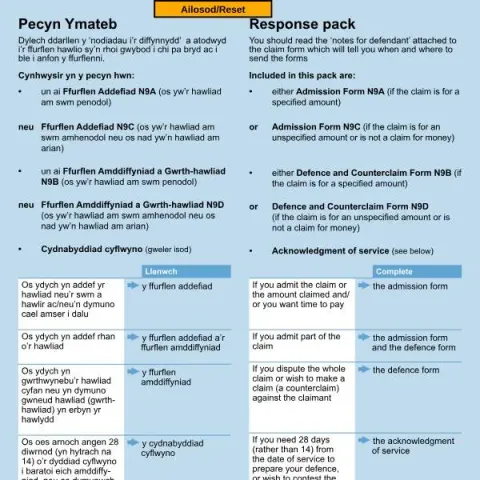
Understanding the N9 Form: Request for Additional Time to File a Defence in UK Courts
The N9 form, officially titled Ask for more time to file a defence ('acknowledgment of service'), is a crucial document used within the UK legal system, specifically managed by the HM Courts and Tribunals Service. This form allows defendants to request an extension of the standard time limit to respond to a claim made against them. Recognising when and how to use this form can be vital in ensuring proper legal procedures and avoiding default judgments.
Purpose and When to Use the N9 Form
The primary purpose of the N9 form is to formally ask the court for additional time to file a defence after being served with a claim form. Typically, the standard response period is 14 days from the date of service. However, defendants may need more time due to various reasons such as needing to gather evidence, seek legal advice, or assess the claim's validity.
Using the N9 form is essential if:
- You wish to delay filing your defence beyond the initial 14-day period.
- You want to contest the court’s jurisdiction, which means challenging whether the court has the authority to hear the case.
- You need an extended period, usually up to 28 days, to prepare your response.
Failing to submit the acknowledgment of service or a defence within the required timelines may result in a judgment being entered against you, so timely submission of this form is critical.
Who Should Fill Out the N9 Form?
The N9 form is intended for defendants who have been served with a claim form and need to request more time to respond. It can be completed by the defendant themselves or by their solicitor or legal representative acting on their behalf. The form requires details such as the defendant’s full name, date of birth, address, and contact information, as well as the court and claim details.
It is important to accurately complete the form to avoid delays or complications. If the defendant's details differ from those on the claim form, these should be clearly indicated.
How to Complete the N9 Form
Completing the N9 form involves several key steps:
- Tick the appropriate box to indicate your intention:
- To defend all or part of the claim.
- To contest the court’s jurisdiction.
- Provide your personal details including full name, date of birth, address, and contact information.
- Sign and date the form at the designated sections, either as the defendant or on behalf of a firm or company.
- Include the court details such as the name of the court, claim number, and claimant’s details.
It is advisable to read the accompanying notes for defendants carefully, as these provide guidance on the deadlines and the importance of submitting the form correctly.
Where and How to Submit the N9 Form
The completed N9 form should be sent to the court handling the case. The court office is typically open between 10 am and 4 pm, Monday to Friday. When submitting, ensure that you address your correspondence to the Court Manager and quote the claim number to ensure proper processing.
Submission can be made in person, by post, or through other court-approved methods. It is recommended to keep copies of the completed form and any correspondence for your records.
Fill in your form directly online
No printing: type your details into the boxes of the official form, tick, then download the PDF ready to send.
- 1Type into the form boxes
- 2Tick in one click
- 3Save and download the PDF
Consequences of Not Acting on the N9 Form
If you file the acknowledgment of service (N9) but do not submit a defence within 28 days of the date of service, the court may enter judgment against you. Similarly, if you fail to dispute the court’s jurisdiction within 14 days of filing the acknowledgment, it will be assumed that you accept the court’s authority, and a judgment may be entered accordingly.
Therefore, timely and accurate completion and submission of the N9 form are essential to protect your rights and interests in the legal proceedings.
Common Errors to Avoid
- Not ticking the correct box to reflect your intentions.
- Failing to sign and date the form properly.
- Sending the form after the deadline, risking a default judgment.
- Incorrectly addressing or not quoting the claim number when submitting to the court.
By carefully following the instructions and deadlines, you can ensure your request for extra time is properly considered, giving you the opportunity to prepare an effective defence or contest the court’s jurisdiction.