Navigating the Notice of Request for Periodical Payments Order
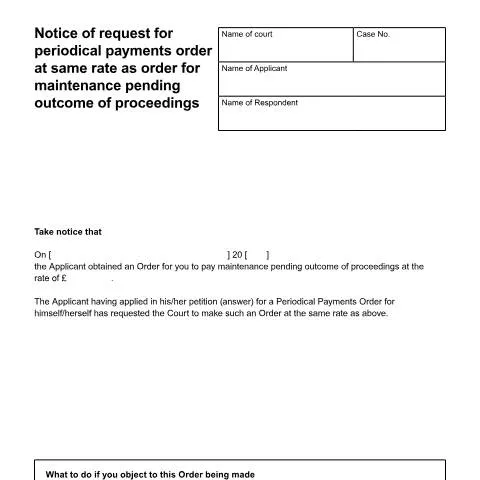
Understanding the intricacies of the Notice of Request for Periodical Payments Order at Same Rate as Order for Maintenance Pending Outcome of Proceedings (Form I) is crucial for those involved in family law matters within the UK. This document serves as a pivotal communication tool within the legal framework, particularly for individuals experiencing maintenance disputes during ongoing proceedings. Its implications can significantly impact financial arrangements, especially when the final outcome of a case is pending.
Key Concepts Underlying the Notice
At the heart of this notice are several essential concepts that participants must grasp:
- Periodical Payments Order (PPO): This is a court order requiring one party to pay another a specified amount regularly, primarily for maintenance. These payments support the financial needs of the recipient, often in circumstances involving separation or divorce.
- Maintenance Pending Outcome: This refers to temporary financial support awarded to a party while the final decision in their case is yet to be reached. It is crucial for maintaining living standards during the often-prolonged legal process.
- Objection Procedure: The notice outlines the rights of the respondent to object to the proposed order. Understanding the timeframe and requirements for lodging such objections is vital to protect one's interests.
Understanding the Audience: Who Should Take Note?
This notice is not just a routine formality; it is tailored for specific audiences, notably:
- Applicants: Individuals requesting maintenance or periodical payments.
- Respondents: Those who are required to pay maintenance and may wish to contest the request.
Whether you are the applicant seeking financial relief or the respondent facing a potential obligation, the contents of this form directly relate to your situation, emphasizing the need for clarity and action.
Step-by-Step Analysis of the Notice's Content
The notice encapsulates several critical components that warrant careful examination:
| Section | Description |
|---|---|
| Court Details: | The notice begins with essential information, including the name of the court and the case number, which helps identify the relevant proceedings. |
| Applicant and Respondent Names: | Clear identification of the individuals involved ensures that there is no ambiguity regarding the parties in the case. |
| Maintenance Rate: | The notice specifies the maintenance amount previously ordered, which is the basis for the requested periodical payments. |
| Objection Notification: | This section outlines the process for the respondent to object to the order, including the 14-day timeframe to communicate their objections to the judge. |
The Intersection with Other Legal Documents
It is imperative to recognize how this notice interacts with other related documents in the family court system. Notable connections include:
- Form E: This financial disclosure document is often submitted during divorce proceedings and can provide crucial financial context for the judge when deciding on maintenance.
- Child Maintenance Service (CMS) Calculations: While separate from the court process, understanding CMS calculations may provide both parties with insights into the financial obligations they face.
- Financial Remedy Orders: Any final financial orders made by the court will dictate the long-term maintenance arrangements, and the initial notice serves as a temporary measure leading to this.
Implications of the Notice on Financial Responsibilities
Receiving this notice has direct consequences for both the applicant and the respondent:
- For the Applicant:
- This notice is a formal step towards securing financial support during proceedings, and it sets a critical precedent for the amount claimed.
- The applicant should prepare for potential objections and gather evidence to reinforce their request.
- For the Respondent:
- The respondent must evaluate their financial capacity to meet the proposed payments, and if necessary, prepare to dispute the order.
- Failure to act within the stipulated 14-day period could result in the court making a default order without further consultation.
Limitations of the Notice: What Is Not Covered?
While the notice provides critical information and outlines procedural steps, it is essential to understand its limitations:
- No Legal Advice: The notice does not provide legal counsel, so individuals should consider consulting a solicitor for specific guidance related to their circumstances.
- Scope of Maintenance: The notice pertains only to temporary maintenance pending the outcome of proceedings and does not cover ongoing obligations after the case concludes.
- Potential for Variability: The agreed amount may differ from the eventual periodical payments order, depending on the judge's ruling.
Effective Strategies for Responding to the Notice
Addressing this notice requires a proactive approach. Here are effective strategies to consider:
- Review the Notice Thoroughly: Ensure that all the details are accurate, including names, case numbers, and payment amounts.
- Gather Financial Evidence: Collect documentation that supports your financial position; this can include payslips, bank statements, and any relevant financial disclosures.
- Consult with Professionals: Engaging with family law solicitors or financial advisors can provide essential insights that may influence your response to the notice.
- Timely Objection Submission: If you intend to object, ensure your submission is well within the 14-day window and is formatted correctly to avoid any delays.
Final Thoughts on the Notice of Request for Periodical Payments Order
Understanding the Notice of Request for Periodical Payments Order at the Same Rate as Order for Maintenance Pending Outcome of Proceedings (Form I) plays a crucial role in the landscape of family law in the UK. Both applicants and respondents should approach this document with diligence, recognizing its immediate and long-term implications on financial obligations and rights.
Being informed and prepared enhances one's ability to navigate the complexities of family proceedings effectively, ensuring that individuals can advocate for their financial interests appropriately.
Understanding the Procedures for Filing a Notice of Request for a Periodical Payments Order
When seeking a periodical payments order (PPO) at the same rate as a maintenance order pending the outcome of proceedings, it's essential to understand the detailed procedures involved. The process begins by filing a Notice of Request for a Periodical Payments Order, commonly referred to as Form I. This is a formal document whereby one party requests the court to grant regular payments to support their financial needs during ongoing litigation.
Firstly, ensure you have a clear understanding of your financial circumstances and the amount of support requested. It is critical to provide detailed evidence to substantiate your claim. This may include documentation of income, expenses, and any financial obligations. The court will review your financial situation alongside the needs of the other party to assess the reasonableness of your request.
Additionally, the Notice must comply with the Family Procedure Rules (FPR) which govern family law matters in England and Wales. For example, the appropriate court forms are available online through the HM Courts & Tribunals Service (HMCTS) website, and they should be filled out accurately to avoid delays. After completing Form I, you must submit it to the court that is handling your case. Keep in mind that there are specific rules regarding the service of documents; generally, you must serve the other party with copies of your application at least 14 days before the hearing.
Potential Challenges and Counterarguments in Court Proceedings
In court proceedings relating to requests for periodical payments, it is vital to anticipate potential challenges or counterarguments from the opposing party. They may contend that the requested amount is excessive or not justified based on your financial circumstances or needs. To prepare for this, it’s advisable to gather comprehensive evidence supporting your claim and countering any arguments the other party may raise.
For instance, prepare to illustrate how the requested payments align with your current living expenses and any other financial commitments you may have. It could be beneficial to outline any changes in your circumstances that warrant an increase in financial support. In family law, judges often consider the principle of fairness, meaning both parties' financial situations will be evaluated. Thus, having a clear and logical argument that demonstrates why the requested payments are necessary is crucial.
Moreover, if the other party has a significant income or assets, they may be more inclined to argue against the order. Understanding the financial position of the opposing party can help you prepare a rebuttal to their claims. You should aim to present a detailed account of your financial requirements while remaining realistic about what can be granted by the court given the other party's situation.
Post-Order Adjustments and Modification Procedures
Once a Periodical Payments Order is granted, it is important to understand that such orders are not necessarily set in stone. Circumstances can change, and so can the needs of both parties involved. If there are significant changes in your financial situation, whether an increase in income, a new job, or changes in living expenses, you may be eligible to request a modification of the PPO.
To initiate a modification, you will typically need to file an application with the court, providing evidence of the changes in your circumstances. This may involve submitting a new Form I or another relevant court document, detailing the modifications you seek and the rationale behind them. The court will evaluate the request by considering factors such as the reasonableness of your new financial needs, any changes in the payer's financial status, and the overall fairness of the arrangement.
Understanding the process of modification can significantly impact the support you receive. Furthermore, if the paying party experiences a decrease in income or other financial difficulties, they may also petition for a decrease in the amount payable under the PPO. It is vital to stay informed about your rights and obligations, as well as to maintain accurate records of all financial transactions related to the order.
In summary, while navigating the complexities of a periodical payments order can be daunting, familiarizing yourself with the processes involved, potential challenges, and modification procedures can empower you to advocate effectively for your financial needs.