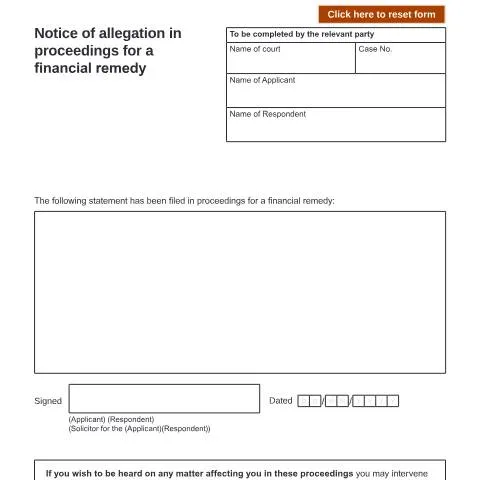
Navigating the Complex Terrain of Financial Remedy Proceedings: A Deep Dive into the Notice of Allegation
In the realm of financial remedy proceedings, clarity and understanding are paramount. The Notice of Allegation in Proceedings for a Financial Remedy: Form F serves as a crucial document for parties involved in family law disputes concerning financial settlements. This guide unpacks the nuances of the Form F, illuminating its role, the procedural implications it carries, and how to navigate its stipulations effectively.
Understanding the Context: The Role of Form F in Financial Remedy Proceedings
The Form F is not merely a document; it’s a structured means of asserting allegations related to financial remedies during family court proceedings. This form is filed within the context of applications for financial settlements, be it divorce or separation, and is pivotal in laying the groundwork for the subsequent legal process.
Typically, this form is filed by either party—the Applicant or the Respondent—to present allegations that might affect the court's decision regarding financial arrangements. Understanding when and why to utilize this form can significantly impact the trajectory of your case.
The Implications of Filing a Notice of Allegation
Filing a Notice of Allegation can carry serious implications. It is important to recognize that this document not only conveys assertions but also can influence how the court views the parties involved, especially regarding financial disclosure and honesty. The courts take allegations seriously; hence, factual accuracy is essential.
- Transparency: Complete and honest allegations promote fairness in the proceedings.
- Potential Consequences: Unsupported allegations can lead to penalties, including costs being awarded against the party making the allegation.
- Intervention Rights: Filing this notice opens up the opportunity for other parties with vested interests to intervene.
Decoding the Contents: What to Expect from the Notice
Form F contains specific sections that require attention. Navigating these sections effectively is key to ensuring your allegations are recognized and properly processed by the court.
Key Components of the Form F
The form typically includes the following key components:
- Case Information: The name of the court and the case number are essential for identifying the proceedings.
- Party Names: Both the Applicant and Respondent must be identified clearly.
- Allegations: A detailed section where the applicant outlines the specific allegations being made.
- Signature and Date: A signed declaration from the involved parties substantiates the authenticity of the document.
Essential Terminology: Key Legal Terms and Their Implications
To navigate the proceedings effectively, it is vital to grasp the key legal terms associated with the Form F. Misinterpretation of these terms can lead to procedural errors and impact the overall outcome.
Key Terms Explained
| Term | Definition |
|---|---|
| Allegation | An assertion made by a party in a legal proceeding, which requires substantiation. |
| Financial Remedy | A legal order regarding the distribution of financial resources between parties, often in a divorce context. |
| Intervention | The act of a third party entering the proceeding to protect their interests. |
| Pleadings | Formal written statements of the parties' claims or defenses. |
Timing is Everything: Understanding Deadlines Related to Form F
In legal proceedings, timing can be the difference between success and failure. The Form F dictates specific timelines that must be adhered to carefully.
Critical Deadlines
Upon receiving the Notice of Allegation, parties must act swiftly:
- Seven-Day Rule: You must apply for directions within seven days of receiving the Notice. This period includes the day of receipt, so count carefully!
- Filing Response: If you wish to contest the allegations, ensure your response is filed within the stipulated time frame set by the court.
Practical Steps: How to Use the Notice of Allegation Effectively
To utilize the Form F effectively, follow these practical steps to navigate the process smoothly:
Step-by-Step Utilization of Form F
- Review the Document: Thoroughly read the notice and understand the allegations made against you or the financial remedies sought.
- Gather Evidence: Compile relevant evidence or documentation that supports your position regarding the allegations.
- Consult Legal Counsel: Engage with a solicitor who specializes in family law to understand your rights and obligations under the law.
- Prepare Your Response: Draft a formal response if contesting the allegations, ensuring to adhere to the legal standards required for rebuttals.
- Submit On Time: Be diligent in submitting your response to the court within the seven-day window.
Common Scenarios: Who Benefits from the Notice of Allegation?
The Form F addresses a variety of situations and stakeholders in family law proceedings. Understanding who can benefit from this notice framework is crucial.
Beneficiaries of the Process
- Applicants: Individuals seeking a financial remedy can use the Form F to assert their rights effectively.
- Respondents: Those responding to allegations can use the form to contest claims and present their case adequately.
- Intervenors: Third parties with a legitimate interest can leverage the Form F to intervene and protect their rights.
Avoiding Pitfalls: Misinterpretations and Misuse of the Form F
Misinterpretation or misuse of the Form F can significantly affect the outcome of family law proceedings. It's pivotal to understand common pitfalls that can arise during this process.
Common Misinterpretations
- Assuming Inactivity is a Strategy: Failing to respond will not benefit your case; it may strengthen the other party’s position.
- Ignoring the Seven-Day Rule: Delaying action can lead to missed opportunities to contest allegations, adversely affecting court perceptions.
- Underestimating the Importance of Evidence: Allegations must be backed by factual evidence; unfounded claims can lead to court penalties.
Conclusion: Taking the Next Steps with Confidence
Understanding the Form F and its implications in financial remedy proceedings is essential for all parties involved. By navigating this document with care, meeting deadlines, and engaging with legal counsel, individuals can assert their rights and interests more effectively. As you proceed, remain attentive to the nuances of family law and how they intersect with your case, ensuring a robust approach to your financial remedy proceedings.
Understanding the Purpose and Importance of Form F
Form F, formally known as the Financial Remedy Application Form, is an essential document in family law cases in the UK where financial remedies are sought in divorce or separation proceedings. It serves as a mechanism for both parties to disclose their financial circumstances fully and transparently. The form is pivotal in assisting the court to assess the financial position of both parties and, ultimately, to decide on the appropriate financial remedy.
Each party involved in the proceedings must complete and file Form F, detailing their assets, liabilities, income, and expenses. The importance of Form F cannot be overstated; it ensures that all relevant financial details are disclosed. Courts rely on this information to make informed decisions regarding spousal maintenance, division of property, and other financial considerations that arise during divorce proceedings.
Understanding the intricate details of Form F is crucial. It not only includes personal financial details but also requires parties to provide supporting documentation, such as payslips, bank statements, and evidence of additional assets. Failure to include accurate and complete information can lead to serious repercussions, including potential sanctions from the court or an unfavourable decision in the financial remedy process.
Common Pitfalls and How to Avoid Them When Completing Form F
Completing Form F accurately is critical for the success of your financial remedy application. However, many applicants make common mistakes that can jeopardise their case. Here are some pitfalls to watch for and strategies to avoid them.
Fill in your form directly online
No printing: type your details into the boxes of the official form, tick, then download the PDF ready to send.
- 1Type into the form boxes
- 2Tick in one click
- 3Save and download the PDF
One common error is underreporting assets or income. Whether intentionally or accidentally, underreporting can lead to the court questioning your credibility and may result in penalties. To avoid this, ensure you gather comprehensive information about all your assets, including joint accounts, properties, and investments. Being thorough in your disclosures builds trust with the court.
Another frequent issue is the improper submission of required supporting documents. Form F requires numerous attachments, including tax returns, business accounts, and proof of income. Failing to attach these documents or providing outdated versions can delay proceedings or result in your application being dismissed. To mitigate this risk, create a checklist of all necessary documents and confirm that they are current and relevant before submission.
Moreover, clarity and completeness are paramount. Each section of Form F must be filled out with precision. Incomplete forms can lead to additional hearings or requests for further information, prolonging the resolution of your financial remedy application. It's advisable to read through the form multiple times, seeking feedback from legal counsel or a trusted adviser.
The Role of Financial Disclosure in Form F Proceedings
Financial disclosure is a fundamental element in proceedings involving Form F. This process requires both parties to provide comprehensive details about their financial situations, which is essential for the court to make fair decisions regarding financial remedies. The lack of adequate financial disclosure can lead to misunderstandings and complications, ultimately affecting the outcome of the case.
The courts expect full and frank disclosure; this means both parties must reveal all relevant financial information, even if it is unfavourable or seemingly unimportant. This includes not only income and assets but also liabilities, such as debts or mortgages. The rationale behind this requirement is to ensure that financial remedies are based on a complete picture of both parties' financial circumstances.
In terms of legal obligations, the Family Procedure Rules mandate that parties undertake this duty of disclosure proactively. Failure to comply may lead to significant repercussions, including the court imposing a financial remedy that is less favourable because of incomplete information. Furthermore, non-disclosure can lead to serious sanctions, including contempt of court, which could adversely impact your legal standing in the proceedings.
Parties should adopt best practices for financial disclosure. This includes maintaining organized records throughout the divorce process, ensuring all financial documents are up-to-date and accessible. It is also beneficial to engage with financial professionals or legal advisors who can provide guidance tailored to your unique situation. Their expertise can be invaluable, especially in complex financial matters involving businesses or investments.