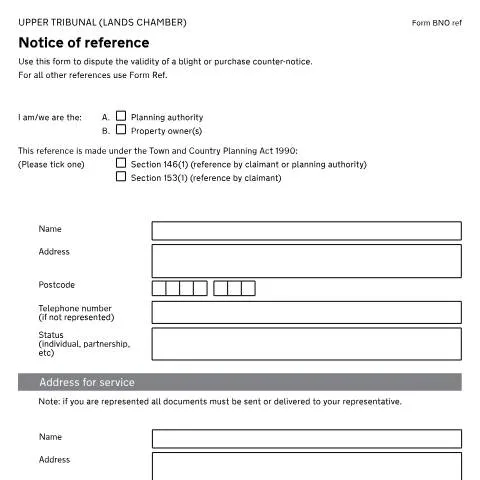
Navigating the T374 Notice of Reference: A Comprehensive Overview
When faced with the complexities of property disputes, particularly those involving the validity of blight or purchase counter-notices, understanding the Notice of Reference relating to the validity of a blight or purchase counter notice (Form T374) is essential. This document serves as a critical tool in the dispute resolution process within the framework of the Town and Country Planning Act 1990. This article aims to dissect the nuances of Form T374, providing a detailed guide on its contents, applicability, and procedural context.
Understanding the Purpose of Form T374
Form T374 is designed to initiate a formal challenge regarding decisions made by planning authorities related to blight notices and counter-notices. Blight notices are typically issued when a property owner claims that their property has been adversely affected by public planning proposals, which could diminish its value. In response, planning authorities may issue a purchase counter-notice to deny such claims.
The primary purpose of the T374 is to formally dispute the validity of these counter-notices. However, it is important to recognize the limitations of this form. It specifically pertains to disputes under specific sections of the Town and Country Planning Act, namely:
- Section 146(1): Reference by claimant or planning authority
- Section 153(1): Reference by claimant
This specificity means that the T374 may not be applicable for all planning disputes, emphasizing the importance of understanding when and how to use it effectively.
Step-by-Step Guide to Utilizing Form T374
Engaging with Form T374 involves several critical steps, each of which must be followed meticulously to ensure that your case is presented effectively to the tribunal. Here, we outline a detailed procedure for utilizing this notice:
1. Determine Your Status and Interest
Before filling out Form T374, it is important to ascertain your status. The form requires you to indicate whether you are a:
- A. Planning authority
- B. Property owner(s)
Your status will dictate the subsequent steps and the nature of your interests in the property involved in the dispute.
2. Providing Essential Information
The next section of the form requires comprehensive details regarding the property in question. This includes:
- Description of the property (e.g., dwelling house, commercial property)
- Approximate area
- Postal address or location
Being thorough in this section is crucial, as it gives the tribunal context regarding the specific case being referred.
3. Articulating Your Case
One of the most significant sections of the T374 involves outlining your case. This includes:
- A statement specifying which grounds of objection in the counter-notice you believe are invalid.
- A full statement detailing the facts supporting your argument.
- Any relevant points of law on which you intend to rely at the hearing.
It is essential to attach this documentation as it forms the foundation of your dispute. If you are unable to provide your statement of case upon submitting the T374, you must apply for an extension of time, which incurs an additional fee.
| Action | Details | Consequence of Non-compliance |
|---|---|---|
| Submit your statement of case | Include all relevant facts and legal points. | Potential dismissal of your case. |
| Request an extension if necessary | File this request with the tribunal and pay the fee. | Failure to do so may result in your case being struck out. |
4. Preparing for the Hearing
Once your notice is submitted, the preparation for a potential hearing begins. Form T374 allows you to indicate whether you intend to call expert witnesses. If you foresee the need for more than one expert, be aware that you will require permission from the tribunal.
Moreover, the form also prompts you to select the type of procedure you wish to follow:
- A. Standard procedure
- B. Special procedure
- C. Simplified procedure
- D. Written representation procedure
Your choice should be based on the complexity of your case and your preferences regarding the speed and formality of the proceedings.
Common Procedural Questions and Considerations
Understanding the procedural landscape surrounding Form T374 can significantly enhance your chances of a successful outcome. Below are some common procedural questions that often arise:
What Happens After Submission?
Once your Form T374 is submitted, it is essential to note that the tribunal will review the details and prepare for the case management stage. During this phase, a range of procedural directions may be issued, which can affect how your case proceeds.
Can You Change Procedures?
It is possible to apply for a change in procedure during the course of the proceedings. You must articulate your reasons for seeking a procedural change, notify all other parties involved, and pay an interlocutory application fee. The tribunal retains discretion over whether to grant such requests.
Fees and Costs Involved
Submitting Form T374 incurs specific fees, including a reference filing fee, which currently stands at £313. Should you require additional services, such as expert witnesses or hearings, further costs may be applicable. It is vital to account for these when preparing your case.
Identifying Key Stakeholders and Their Roles
Understanding who is involved in the process and their respective roles can clarify the dynamics of your case.
Planning Authority
The planning authority is typically the primary respondent to the notice of reference. Their response and documentation will shape the proceedings. As a claimant, it is crucial to be well-informed about the authority's stance and any counter-evidence they may present.
Other Interested Parties
In some cases, other stakeholders may have an interest in the property, such as leaseholders or business tenants. It is essential to identify these parties early in the process, as their involvement can influence the outcome and the arguments presented in the tribunal.
Interpreting the Guidance Notes and Avoiding Common Missteps
Form T374 is often accompanied by guidance notes that provide essential information regarding the submission process, hearing arrangements, and overall expectations. Here are a few critical points to consider:
Read Carefully
Always ensure you have read the accompanying guidance notes thoroughly. Many users overlook this step, leading to avoidable mistakes in their submissions.
Importance of Timeliness
Meeting deadlines is paramount. Delays in submission or failure to respond to requests for additional documentation can jeopardize your case. Be proactive in gathering all necessary materials and addressing tribunal communications.
Clarity in Communication
Ensure that all communications with the tribunal and other parties are clear and precise. Ambiguities in your case or documentation can lead to misunderstandings and procedural delays.
Connecting with Other Relevant Documentation
Having a comprehensive approach to your dispute means being aware of how Form T374 interacts with other documents within the planning and tribunal framework.
Related Forms and Notices
It is advisable to be familiar with other related forms, such as the blight or purchase notice and any counter-notices received. These documents are integral to your case and may need to be referenced or attached during your submission.
Engaging Legal Representation
Consider the advantages of securing legal representation, especially if your case is complex. A solicitor or experienced professional can navigate the procedural nuances of the tribunal and enhance your arguments significantly.
Fill in your form directly online
No printing: type your details into the boxes of the official form, tick, then download the PDF ready to send.
- 1Type into the form boxes
- 2Tick in one click
- 3Save and download the PDF
Making the Most of Your Form T374 Submission
Submitting Form T374 is not merely a procedural step; it is an opportunity to assert your rights and challenge decisions that may adversely impact your property interests. By understanding the form’s components, following the procedural steps diligently, and being aware of potential pitfalls, you can enhance your chances of a favorable outcome in your dispute.
As you prepare to undertake the submission process, remember that the tribunal’s focus will be on the evidence and arguments presented. A well-structured, comprehensive submission can set the stage for a successful resolution to your property dispute.
Understanding the Blight Notice Process
The blight notice process is integral in the context of property acquisition by public authorities under the compulsory purchase orders. Blight occurs when the use of land is significantly hampered by the actions of an authority, leading to a decrease in its value. Affected landowners can serve a blight notice to the relevant authority, compelling them to purchase their property at its full market value. However, navigating this process can be complex.
Under Section 149 of the Town and Country Planning Act 1990 (as amended), a blight notice (Form T374) must articulate specific grounds under which the notice is deemed valid. It’s essential that landowners understand their rights and the implications of serving such a notice. This includes being aware of the time limits for serving a notice and the potential impact on property valuation. If the authority rejects the notice, the landowner can appeal, which is where Form T374 becomes relevant.
Moreover, the blight notice can apply to various types of land, including residential, commercial, or agricultural. Each category may come with its own nuances regarding valuation and compensation. Landowners should seek expert advice when preparing Form T374, ensuring they provide compelling evidence that substantiates their claims of blight. This process often includes rigorous documentation outlining how the proposed works by the authority have directly affected their property.
Key Considerations for Filing Form T374
Filing Form T374 is not merely a procedural step; it requires careful attention to detail and compliance with legal standards. One of the primary considerations is the timeframe in which the blight notice must be served. Generally, it must be served within a specific period following the publication of the relevant compulsory purchase order or proposals for significant public works. For property owners, this often involves keeping abreast of local planning announcements and public consultations.
Additionally, landowners should be mindful of the information they must include in Form T374, such as their personal details, the specifics of the property in question, and the nature of the blight being claimed. Clarity and precision are paramount. Any ambiguity could lead to dismissal of the notice, resulting in the loss of potential compensation.
Furthermore, if a counter-notice is issued, landowners must understand the distinction between blight and counter-notice validity. A counter-notice must also meet stringent criteria, and landowners have the right to challenge it. This may lead to a tribunal hearing, where Form T374 may again come into play, typically acting as a reference point in the dispute resolution process.
Appeal Process: What Happens After the Notice?
If a blight notice is challenged with a counter-notice, the appeal process becomes crucial. The initial response to a blight notice will dictate the next steps, and landowners need to be ready to engage in discussions or negotiations with the public authority involved. It is important to document all correspondence meticulously. This can serve as evidence should the matter escalate to a formal appeal.
The appeal is generally handled by the Upper Tribunal (Lands Chamber), where both parties will present their cases. The tribunal will consider the validity of the blight notice based on the evidence provided, including any valuations submitted and the circumstances surrounding the purported blight. Landowners must prepare for this process by gathering supporting documents that clarify the impact of the public authority's actions on their property.
Additionally, there is often a prescribed timeframe within which to lodge an appeal against a counter-notice. This timeline is typically set out in the notification of the counter-notice, and adherence to these deadlines is critical for maintaining the right to appeal. Failure to respond in time can lead to the loss of rights to contest the authority's stance, underscoring the importance of timely action and professional guidance throughout the process.
In conclusion, while navigating the process of serving a blight notice using Form T374 may seem daunting, understanding the intricacies of the process from filing through to appeal can empower landowners to assert their rights effectively. Knowledge of timelines, requirements, and potential outcomes is key in ensuring that they receive the compensation they are entitled to in situations where their property is adversely affected by public actions.