Understanding the Notice of Proceedings and Acknowledgement of Service under the Married Women’s Property Act 1882 and the Civil Partnership Act 2004
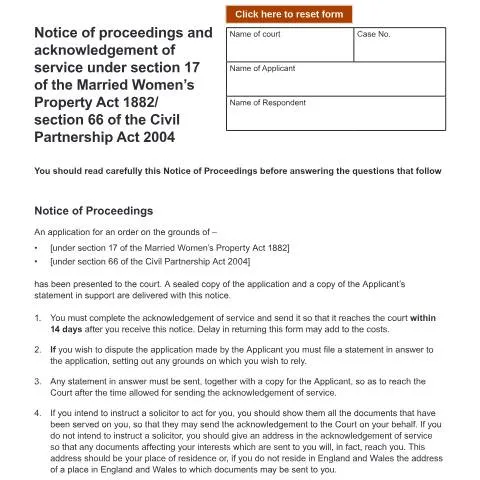
The Notice of Proceedings and Acknowledgement of Service (Form D50A) is an official document issued by the HM Courts & Tribunals Service in England and Wales. It pertains to legal actions concerning property rights under the Married Women’s Property Act 1882 and the Civil Partnership Act 2004. This notice is an essential part of the legal process for individuals involved in property-related disputes or applications involving these statutes.
Scope and Purpose of the Document
This form serves as a formal notification to the respondent—either the individual or the legal entity against whom an application has been made—that a legal case has been initiated. Its primary purpose is to ensure that the respondent is aware of the proceedings and understands their rights and obligations within the process.
Specifically, the notice addresses cases where an application has been filed to seek a court order under:
- Section 17 of the Married Women’s Property Act 1882
- Section 66 of the Civil Partnership Act 2004
The notice includes details about the case, such as the names of the applicant and respondent, the case number, and the court handling the matter. It also provides instructions on how the respondent can respond to the application.
Key Components and Instructions for Respondents
Receiving and Responding to the Notice
Upon receipt of the notice, the respondent must complete the acknowledgement of service form within 14 days. This form confirms whether the respondent has received the application and whether they intend to oppose it.
If the respondent wishes to oppose the application, they must file a formal statement of grounds, known as a statement in answer, which should be sent to the court along with a copy for the applicant. This process allows the respondent to present their case and any relevant evidence or legal arguments.
Instructing Legal Representation
If the respondent chooses to instruct a solicitor, they should provide their legal representative with all relevant documents served with the notice. The solicitor will then handle the formal response submission on their behalf.
For respondents not represented by solicitors, the notice requires providing an address in England or Wales where official correspondence can be sent. It is crucial to keep this address updated with the court to ensure timely communication.
Legal Obligations and Timelines
The respondent must return the acknowledgment of service within 14 days of receiving the notice. Failure to do so may result in increased legal costs or adverse implications in the case.
Additionally, any response or statement in answer must be received by the court after the acknowledgment of service but within the period specified by the court’s procedures. This ensures the case progresses efficiently and fairly for all parties involved.
Fill in your form directly online
No printing: type your details into the boxes of the official form, tick, then download the PDF ready to send.
- 1Type into the form boxes
- 2Tick in one click
- 3Save and download the PDF
Implications for the Respondent
This notice signifies the beginning of a formal legal process concerning property rights under the specified statutes. Respondents should carefully read all documents attached to the notice and consider seeking legal advice if they wish to oppose the application.
Understanding and adhering to the procedures outlined in the notice is essential to protect one's legal rights and interests. Respondents should also be aware of the importance of timely communication with the court and any legal representatives involved.
Conclusion
The Notice of Proceedings and Acknowledgement of Service under the Married Women’s Property Act 1882 and the Civil Partnership Act 2004 is a crucial document in property-related legal disputes. It ensures transparency and fairness by formally informing the respondent of ongoing proceedings and outlining their responsibilities in the process. Respondents are advised to read the notice carefully, comply with the deadlines, and seek legal guidance if necessary to navigate the legal process effectively.