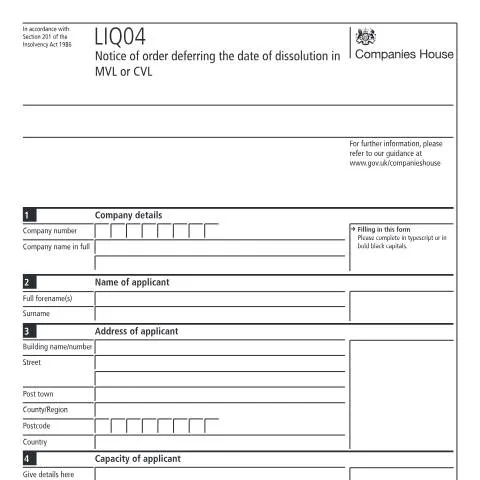
Understanding the LIQ04 Notice: A Critical Step in Company Dissolution
In the complex process of winding down a company, one essential document that comes into play is the LIQ04, officially titled "Notice of Order Deferring the Date of Dissolution." This notice is pivotal for directors and stakeholders navigating the intricacies of a company’s dissolution under the provisions outlined in the Insolvency Act 1986. Understanding the nuances and implications of this document is crucial for those involved in the winding-up process, whether in a Members’ Voluntary Liquidation (MVL) or a Creditors’ Voluntary Liquidation (CVL).
Unpacking the Legal Framework: Section 201 of the Insolvency Act 1986
The LIQ04 notice is grounded in Section 201 of the Insolvency Act 1986. This section provides the legal basis for deferring the dissolution date of a company, allowing for more time to settle outstanding matters, such as finalising accounts or addressing claims against the company. This extension is crucial for ensuring that all liabilities are addressed before the company ceases to exist completely.
- Purpose of the Extension: The deferral aims to protect creditors and ensure compliance with legal obligations.
- Duration of the Deferral: The court order will specify how long the dissolution date is deferred, which can vary depending on the circumstances.
Key Situations Necessitating the LIQ04 Notice
Several scenarios might necessitate the issuance of a LIQ04 notice. Understanding these situations can help stakeholders determine when to utilise this document:
- Pending Legal Issues: If there are unresolved legal matters concerning the company, a deferral may be required.
- Completion of Liquidation Processes: Companies may need additional time to complete asset distributions or settle debts.
- Creditors’ Claims: If claims from creditors are still being processed, the company might seek a deferral to ensure all claims are addressed.
Document Preparation: Essential Components of the LIQ04 Notice
When preparing the LIQ04 notice, it is vital to include specific details that ensure clarity and compliance with legal standards. The following components are crucial:
- Company Details: Include the full name and registration number of the company as registered with Companies House.
- Applicant Information: The name and address of the applicant, who could be a director or liquidator, must be clearly stated.
- Court Order Details: The notice must reference the court order deferring the dissolution date, including the date of the order.
Interpreting the LIQ04: Common Misunderstandings and Clarifications
Even experienced professionals can encounter challenges interpreting the LIQ04 notice. Here are some common misunderstandings along with clarifications:
- Not a Final Liquidation: It’s essential to understand that filing a LIQ04 does not signify the completion of the liquidation process. It merely postpones the dissolution date.
- Public Record Implications: Information submitted on the LIQ04 will appear on the public record. Stakeholders should be mindful of this transparency when submitting sensitive information.
Utilising the LIQ04 in the Liquidation Process: Step-by-Step Guidance
Successfully incorporating the LIQ04 notice into the liquidation process involves a series of methodical steps. Here is a structured approach:
- Consult with Legal Advisors: Engage with legal or financial advisors to assess the necessity of the LIQ04 notice.
- Draft the Notice: Compile all required information as outlined earlier, ensuring accuracy and completeness.
- Obtain Court Approval: File the necessary application with the court and obtain a formal order granting the deferral.
- Submit the LIQ04 Notice: After receiving the court order, submit the LIQ04 notice to Companies House, preferably at their Cardiff address to expedite processing.
- Monitor the Process: Keep track of the liquidation progress, ensuring compliance with all requirements until the final dissolution is achieved.
Linkages with Other Documentation in the Liquidation Process
Understanding how the LIQ04 interacts with other documents in the liquidation process can enhance compliance and efficiency. Here are key documents to consider:
| Document | Purpose | Relationship to LIQ04 |
|---|---|---|
| LIQ01 | Application to appoint a liquidator | The starting point for the liquidation process before a deferral can be considered. |
| LIQ02 | Declaration of solvency (MVL) | Necessary for members’ voluntary liquidation, indicating liquidity status before proceeding to dissolution. |
| LIQ03 | Notice of appointment of a liquidator | Formal notice of the liquidator's appointment; may necessitate subsequent LIQ04 notifications if issues arise. |
Practical Considerations Post-Submission of the LIQ04 Notice
Once the LIQ04 notice has been submitted, there are several ongoing responsibilities to consider:
- Adhere to the Court Order: Ensure that all actions taken during the deferral period align with the stipulations of the court order.
- Communicate with Stakeholders: Keep shareholders and creditors informed about the status of the liquidation process and any developments.
- Prepare for Final Dissolution: As the new dissolution date approaches, ensure that all outstanding issues are resolved to facilitate the final steps of liquidation.
The Importance of Accuracy in the LIQ04 Notice
Accuracy in all submitted documents is paramount. A common pitfall is submitting forms that contain errors or missing information, which can lead to delays or rejections. Here are tips to ensure the LIQ04 is completed effectively:
- Verify Company Details: Double-check that the company name and number match the records held by Companies House.
- Attach Documentation: Ensure that a copy of the court order is attached as required.
- Sign and Date: The applicant must sign and date the notice, which is a critical step in validating the submission.
Final Thoughts: Navigating the Process with Confidence
Successfully navigating the LIQ04 process requires a clear understanding of its purpose, implications, and the interconnectedness with other documentation in the dissolution proceedings. Directors and stakeholders must approach this step with diligence, ensuring that every requirement is met to safeguard their interests and those of creditors. By following the guidance outlined in this article, individuals can approach the task of deferring a company’s dissolution with confidence and clarity, leading to a more orderly and compliant winding-up process.
Understanding the LIQ04 Form and Its Purpose
The LIQ04 form is crucial for limited companies in the United Kingdom that wish to defer their dissolution date. This may arise for various reasons, such as needing additional time to settle outstanding debts, completing the final accounts, or ensuring compliance with legal obligations. When a company decides to dissolve, it typically files the necessary paperwork with Companies House, including a notice of dissolution. However, circumstances can change, and a deferral may become necessary.
The primary purpose of the LIQ04 form is to formally notify Companies House of the intention to delay the dissolution process. By filing this form, the company essentially requests a pause, allowing it to address any remaining issues effectively. It is important to note that this form must be filled out accurately and submitted within the prescribed timeframe to avoid further complications in the dissolution process.
Fill in your form directly online
No printing: type your details into the boxes of the official form, tick, then download the PDF ready to send.
- 1Type into the form boxes
- 2Tick in one click
- 3Save and download the PDF
Completing the LIQ04 involves providing specific details regarding the company, including its registered name, registration number, and reasons for the deferral. Furthermore, it is essential to provide a new proposed date for dissolution, which should be realistic and allow sufficient time to address outstanding matters. Failure to submit the LIQ04 may result in the company being dissolved without addressing those obligations, which could have legal and financial ramifications for directors and shareholders.
Common Reasons for Deferring Dissolution
There are various circumstances under which a company may seek to defer its dissolution, and understanding these can help directors make informed decisions. Here are some of the more prevalent reasons:
- Settlement of Debts: One of the most common reasons for a deferral is the need to settle outstanding debts. Companies often face financial challenges that delay their ability to clear debts, whether to suppliers, creditors, or HMRC. By deferring dissolution, directors can ensure that all financial obligations are met, which is crucial for protecting the company’s reputation and avoiding legal repercussions.
- Final Accounts Preparation: Companies must prepare and file final accounts before dissolution. In cases where the financial records are incomplete or require additional time for auditing, a deferral becomes necessary. This allows time for accurate reporting, which is essential for compliance with the Companies Act 2006.
- Legal Compliance and Investigations: Sometimes, a company may be under investigation by HMRC or another regulatory body. If there are ongoing inquiries or compliance checks, it might be advisable to defer dissolution until these matters are resolved to avoid potential penalties or issues that could arise from premature dissolution.
- Asset Realization: Some companies may have assets that need to be sold or liquidated before dissolution. If the sale processes are taking longer than anticipated, submitting a LIQ04 allows the company to extend its operational life while maximizing asset recovery.
- Shareholder Considerations: In situations where there are multiple shareholders, decisions regarding the dissolution may require substantial negotiation and agreement. A deferral can provide the necessary time to ensure that all shareholders have agreed to the dissolution and that their interests are adequately considered.
Steps to Complete and Submit the LIQ04 Form
Completing the LIQ04 form can seem daunting at first glance, but by following a structured approach, it can be managed effectively. Below are the steps to guide you through the process:
- Gather Relevant Information: Begin by collecting all necessary information, such as the company’s registered name, registration number, current status, and the proposed new date for dissolution. Ensure that you have a clear rationale for the deferral to include in the form.
- Obtain Necessary Approvals: Depending on the company’s structure, it may be necessary to obtain approval from the board of directors or shareholders before submitting the LIQ04 form. Take the time to ensure that all stakeholders are on board with the decision to defer the dissolution.
- Complete the LIQ04 Form: Carefully fill out the LIQ04 form, ensuring that all sections are completed accurately. Pay close attention to the details provided in the explanation for the deferral, as this will be crucial for Companies House to understand your situation.
- Check for Completeness: Before submission, double-check that all required signatures are in place (if necessary) and that all information is accurate. Errors or omissions can lead to delays or complications.
- Submit the Form: Once you are satisfied with the completed form, submit it to Companies House. The submission can typically be done via post or through the online services provided by Companies House, depending on the preference and the specifics of your company situation.
- Follow Up: After submission, it is vital to monitor for any correspondence from Companies House. Ensure that you receive confirmation of the deferral and keep a record for your files. Should any issues arise, address them promptly to avoid misunderstandings.
In conclusion, deferring a company’s dissolution using the LIQ04 form can be a strategic move that enables directors to manage outstanding responsibilities and ensure compliance. Understanding the rationale behind this decision, alongside a thorough approach to completing the LIQ04, is essential for a smooth process.