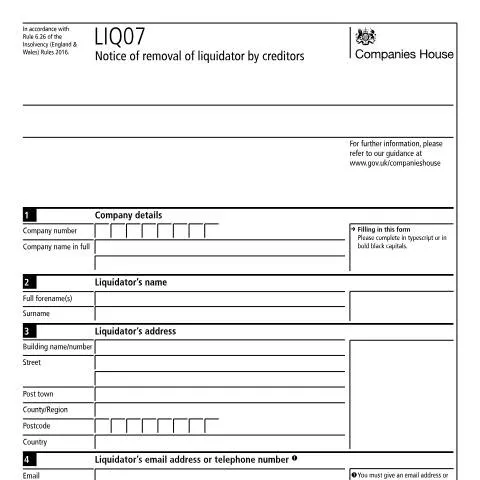
Understanding the LIQ07: The Notice of Removal of Liquidator by Creditors
When a company finds itself in financial distress, the appointment of a liquidator is often a necessary step. However, circumstances can change, leading creditors to take the decision to remove a liquidator. The LIQ07 document serves as a formal notice of this action, and understanding its implications, requirements, and context is essential for all stakeholders involved.
The Context of Liquidation and the Role of the Liquidator
Liquidation is a process where a company's assets are sold off to pay creditors when it can no longer meet its financial obligations. The liquidator plays a crucial role in this process, managing the sale of assets and ensuring that the proceeds are distributed fairly among creditors. However, there are instances where creditors may no longer have confidence in the liquidator's ability to perform their duties effectively.
Reasons for removing a liquidator can vary, including concerns about mismanagement, a potential conflict of interest, or simply a lack of communication. The LIQ07 is the formal mechanism through which creditors can initiate this process, ensuring that their voices are heard in the management of the company’s liquidation.
Navigating the LIQ07: Key Components Explained
The LIQ07 form requires specific details to ensure clarity and adherence to legal standards. Here’s a breakdown of essential components included in the notice:
Essential Company and Liquidator Details
Company Information: This includes the full name of the company and its registration number. It is vital that this information matches the public register held by Companies House to avoid any administrative hiccups.
Liquidator's Information: The notice must include the full name and address of the liquidator. This ensures that there is no ambiguity regarding who is being removed and provides a clear line of communication.
Reason for Removal: Creditors are required to provide a reason for the removal of the liquidator. This is crucial as it can affect the proceedings and the choice of a new liquidator if one is to be appointed.
Contact Information: Although not mandatory, providing an email address or contact number is encouraged. This can facilitate any follow-up queries from Companies House regarding the notice.
Process Flow: From Notice to Implementation
Understanding how to properly execute the LIQ07 notice is critical. Here’s a structured approach to completing the process:
Step-by-Step Process of Filing LIQ07
Gather Necessary Information: Ensure that you have the complete details of the company and liquidator, along with valid reasons for their removal.
Complete the LIQ07 Document: Fill out the LIQ07 form, ensuring that all information is accurate and the signatures are in place.
Submission to Companies House: The completed LIQ07 can be sent to any address of Companies House, though sending it to their Cardiff office is recommended for efficiency.
Await Confirmation: After submission, Companies House will process the notice and update the public records accordingly. It’s advisable to keep a copy of the submitted notice for your records.
Legal Framework and Implications of the LIQ07
The LIQ07 operates within the framework established by the Insolvency (England & Wales) Rules 2016. Understanding this legal backdrop is crucial for all parties involved.
Key Legal Considerations
Insolvency Rules Compliance: The LIQ07 must conform to Rule 6.26, which outlines the required process for the removal of a liquidator. Failure to comply with these rules could result in the invalidation of the notice.
Public Record Transparency: All information provided in the LIQ07 will become part of the public record. This transparency is necessary to ensure accountability but also means that any sensitive information should be considered thoughtfully.
Rights of Creditors: Creditors have the right to challenge the actions of liquidators, underscoring their role in the insolvency process. The LIQ07 is a tool that empowers creditors to take a stand when they believe that a liquidator is not acting in their best interests.
Identifying Stakeholders: Who Is Affected By the LIQ07?
While the LIQ07 is a formal notice directed at Companies House, its implications extend beyond just the document itself.
Key Stakeholders
Creditors: The primary users of the LIQ07, creditors must band together to initiate its use and represent their collective interests.
Liquidators: The individuals facing removal need to be aware of the process and prepare for the implications of being removed from a position of responsibility.
Companies House: As the regulatory body overseeing company registrations and compliance, Companies House plays a critical role in processing the notice and maintaining the integrity of public records.
New Liquidators: If creditors decide to appoint a new liquidator, they must be aware of the potential challenges and the need for a smooth transition to avoid further complications in the liquidation process.
Challenges and Potential Pitfalls
Navigating the LIQ07 process comes with its set of challenges. Understanding these can prevent unnecessary delays or complications.
Common Pitfalls to Avoid
Incomplete Information: Submitting an LIQ07 with missing or inaccurate details can lead to rejection and delay the removal process.
Lack of Consensus Among Creditors: If the creditors are not united in their decision to remove the liquidator, it can create confusion and undermine the validity of the notice.
Misunderstanding the Legal Framework: Being uninformed about the insolvency rules can lead to procedural mistakes, potentially jeopardizing the entire removal process.
Resources for Further Guidance
While the LIQ07 provides a structured approach to removing a liquidator, creditors and companies alike should be aware of the resources available to assist them.
Helpful Resources
Companies House Website: The official site offers guidance on the processing of the LIQ07 and other related forms, making it a valuable resource for checking compliance and updates.
Insolvency Practitioners: Engaging with a qualified insolvency practitioner can provide insights and help navigate the complexities surrounding liquidation and the removal of liquidators.
Legal Advisors: Consulting with legal experts who specialize in insolvency can ensure that creditors fully understand their rights and the implications of their decisions.
Conclusion: The Importance of the LIQ07 in the Liquidation Process
The LIQ07 is not just a bureaucratic formality; it represents a critical juncture in the liquidation process, empowering creditors to make necessary changes when confidence in a liquidator wanes. Through a clear understanding of its components, careful adherence to the legal framework, and a proactive approach to the filing process, stakeholders can navigate this important aspect of corporate insolvency effectively.
Understanding the Role of a Liquidator in the UK
Before diving into the process of removing a liquidator, it’s crucial to understand the role that liquidators play within the context of insolvency proceedings in the UK. A liquidator is appointed to manage the winding-up of a company when it becomes insolvent, which means it cannot pay its debts as they fall due. Their primary responsibility is to ensure that creditors are paid to the maximum extent possible from the liquidation of company assets.
Liquidators have a range of duties under the Insolvency Act 1986, including:
- Realising assets: This involves selling off the company's assets to generate funds.
- Distributing funds: Once the assets are sold, the liquidator must distribute the proceeds to creditors, prioritising payments according to statutory requirements.
- Conducting investigations: Liquidators are also required to investigate the company's affairs to identify any wrongdoing that could affect the outcome of the liquidation process.
- Reporting to creditors: Liquidators must keep creditors informed about the progress of the liquidation and provide regular updates on the financial situation.
Given the significant power and responsibilities that liquidators hold, it is essential for creditors to feel confident in their appointed liquidator. If at any point creditors feel that the liquidator is not fulfilling their duties adequately, they have the right to intervene and seek their removal, necessitating a clear understanding of the procedural requirements involved.
Procedural Steps for Removal of a Liquidator
The process of removing a liquidator as outlined in the LIQ07 form requires adherence to specific steps designed to ensure fairness and compliance with the legal framework. Here’s a detailed examination of these steps:
1. Convening a Creditor Meeting: The first step in the process involves convening a meeting of creditors. This can be initiated by creditors holding at least 10% of the total debt owed or by the liquidator themselves. The meeting must provide clear notice to all creditors informing them of the purpose of the gathering—namely, the proposal to remove the liquidator.
This notice must be sent out a minimum of 14 days before the meeting to ensure adequate time for creditors to prepare. The notice should include details such as:
- The date and time of the meeting.
- The venue where the meeting will be held, which can be physical or virtual.
- The reasons for the proposed removal.
- Instructions on how creditors can vote and any proxy arrangements if they cannot attend.
2. Voting During the Meeting: At the meeting, creditors will have the opportunity to discuss the issues surrounding the liquidator’s performance and to vote on the proposal for their removal. Each creditor's voting power is determined by the amount they are owed, with larger creditors having more weight in the decision-making process.
For the removal to be effective, a majority in value of the creditors present and voting must agree to the motion. It’s imperative for all creditors to understand the implications of their vote and to ensure they make a collective decision that best serves their interests.
3. Completing Form LIQ07: If the creditors vote in favour of the removal, the next step is to complete the LIQ07 form. This form must be signed by the person who called the meeting and must detail the outcome of the vote, including the number of votes for and against. In addition, it should outline the reasons for removal as discussed during the meeting.
This form must be sent to the relevant office of Companies House along with any required documents, including a liquidator's resignation letter if applicable, within 14 days of the meeting. It’s crucial to ensure that all information provided is accurate and complete since any discrepancies may lead to further complications or delays.
Potential Challenges and Considerations
Removing a liquidator is not without its challenges, and creditors must navigate several considerations to ensure a smooth process. Here are some key factors to bear in mind:
1. Liquidator's Response: Upon receiving notice of the removal, the liquidator may choose to contest the decision. They have the right to provide their account of events and defend their position. This can lead to further complications, particularly if the liquidator believes that they are acting in the best interests of the creditors but the creditors do not share that view.
2. Timing and Financial Implications: Timing is of the essence in any liquidation process. Delaying the removal of a liquidator can have significant financial ramifications for creditors, as it may prolong the winding-up process and diminish the chances of recovering owed debts. Creditors should also consider the financial impact of appointing a new liquidator or the potential need for additional funds to support the continuing liquidation process.
3. Communication is Key: Throughout the removal process, effective communication among creditors is vital. Establishing a clear line of dialogue can help unify creditors and facilitate decision-making. Using secure platforms for communication can also help protect sensitive information and maintain confidentiality.
In conclusion, while the mechanics of removing a liquidator through Form LIQ07 may seem straightforward, the underlying complexities require careful consideration and a thorough understanding of the legal framework. It is advisable for creditors to seek professional guidance to navigate these challenges effectively and ensure that their interests are adequately represented during the process.